


The world's eyes turned to New Delhi this week as India hosted what it billed as one of the largest artificial intelligence gatherings ever assembled: the India AI Impact Summit 2026. Held primarily February 16-20, 2026, with core sessions February 19-20 at the Bharat Mandapam convention center, the five-day event brought together over 250,000 registered attendees (with reports of 500,000+ total visitors), global tech leaders, and representatives from over 20 countries.
- India’s “third way” approach in the global AI race
- Massive AI investments and big tech partnerships announced
- Logistics issues, viral moments, and India AI summit controversies
- From AI safety to real-world impact and deployment
- India’s AI journey: key milestones from 2018 to 2026
- India’s geopolitical balancing act in AI and technology alliances
- Why the Global South is central to the future of AI
- What the summit means for India’s role in the AI future
Beyond the fanfare and billion-dollar pledges, the summit revealed both India’s ambitious AI aspirations and the challenges it faces in realizing them.
India’s “third way” approach in the global AI race
In a world increasingly defined by the AI rivalry between the United States and China, India is positioning itself as something different; a bridge between superpowers and a voice for the Global South.
Prime Minister Narendra Modi made this clear in his inaugural address, likening artificial intelligence to nuclear power: immense in its potential for both harm and good.
“If AI becomes directionless, it will lead to destruction,” Modi warned, emphasizing that the key question is not what AI might do someday, but what it can do now to serve humanity, as reported by NBC News.
Unlike America’s homegrown AI giants or China’s manufacturing scale and control of rare-earth supply chains, India is leveraging different strengths: a vast pool of IT talent, a massive domestic market, and digital public infrastructure that in some areas surpasses that of developed nations, according to reporting by The New York Times.
Massive AI investments and big tech partnerships announced
Despite early logistical hiccups, the summit attracted major global figures. Google CEO Sundar Pichai, OpenAI CEO Sam Altman, Microsoft President Brad Smith, and Anthropic CEO Dario Amodei attended, alongside heads of state including French President Emmanuel Macron, Brazilian President Luiz Inácio Lula da Silva (both attended as scheduled).

The event produced significant investment announcements and proposals:
$210 billion pledged by Indian conglomerates Reliance and Adani for AI and data infrastructure
$15 billion proposed by Google for an AI hub and data campus in Visakhapatnam
The Indian government targeting $200 billion in AI investment over the next two years
Major partnership announcements included:
OpenAI signing an agreement with the Tata Group, making Tata’s data-center business its first major customer in India
Anthropic partnering with Infosys and opening an office in Bengaluru
Google announcing research and education partnerships tied to its Gemini AI ecosystem
“The excitement here has been incredible,” Sam Altman noted during the India AI summit (per reports).
Logistics issues, viral moments, and India AI summit controversies
For all its ambition, the India AI summit faced logistical strain and viral controversies that dominated headlines:
Traffic gridlock
New Delhi’s already congested roads became nearly immovable. CNBC reports described severe traffic gridlock as one of the most challenging environments.
Bill Gates withdrawal
Microsoft co-founder Bill Gates withdrew from his scheduled keynote hours before speaking, citing scrutiny over his ties to Jeffrey Epstein amid recent reports.
Awkward photo-op moment
A staged photo opportunity featuring tech leaders holding hands drew online attention when competitors Sam Altman and Dario Amodei hesitated, leaving a noticeable gap. Altman later said he was momentarily unsure of the protocol.
Robot dog controversy
Galgotias University was reportedly removed from the India AI summit after a staff member incorrectly suggested that a robotic dog produced by Chinese firm Unitree had been developed by the institution. The incident quickly circulated online and drew political criticism.
Overcrowding and visa issues
With attendance in the hundreds of thousands, attendees reported long lines, security confusion, visa delays, and overcrowding. IT Minister Ashwini Vaishnaw publicly apologized for the day-one disruptions.
Notable absences
Nvidia CEO Jensen Huang cancelled his appearance, slightly diminishing the summit’s expected star power.
From AI safety to real-world impact and deployment
Unlike the 2023 Bletchley Park summit in the United Kingdom, which focused on existential AI risks, or the 2025 Paris gathering centered on coordinated action, this India AI summit represented a strategic evolution. The emphasis shifted toward implementation, measurable outcomes, and deployment across the Global South.
This reframing reflects developing nations’ priorities: not only managing AI’s risks but harnessing its benefits in agriculture, healthcare, education, and economic development.
Two voluntary commitments emerged:
using data to assess AI’s economic impact
improving AI performance across languages and cultural contexts
“It is critical to understand what works, what doesn’t, and who benefits,” said Iqbal Dhaliwal of MIT’s Abdul Latif Jameel Poverty Action Lab.
India’s AI journey: key milestones from 2018 to 2026
2018–2020: Foundation laid through the National AI Strategy by NITI Aayog
2021–2022: AI Centres of Excellence established in critical sectors
2023: India achieves the world’s highest AI skill penetration ranking
March 2024: ₹10,372 crore IndiaAI Mission launched with seven pillars
2025: AI governance guidelines and infrastructure expansion
February 2026: AI Impact Summit announces a $200 billion investment vision
India’s geopolitical balancing act in AI and technology alliances
The India AI summit underscored India’s delicate balancing act between competing global powers.
The United States sent Michael Kratsios, Director of the White House Office of Science and Technology Policy, who announced initiatives including an AI-focused Peace Corps program and World Bank financing to support AI adoption in developing countries. He emphasized that AI governance must reflect local needs.

China did not send top leadership, with the summit coinciding with Lunar New Year celebrations. Meanwhile, India formally joined Pax Silica, a U.S.-led coalition focused on resilient supply chains for critical minerals.
Some Indian analysts pushed back against remarks by U.S. adviser Sriram Krishnan suggesting the American AI stack should serve as the foundation for allied systems, arguing India should develop sovereign foundational models to avoid long-term dependence.
Why the Global South is central to the future of AI
Perhaps the summit’s most significant achievement was centering voices from Latin America, Africa, and Asia, regions that control roughly 15% of global AI computing power but represent most of the world’s population.
“It’s good for the world that AI is not viewed solely as a race between the U.S. and China,” said Jakob Mkander of the Tony Blair Institute for Global Change.
Leaders from Spain, Bolivia, Mauritius, Sri Lanka, and other nations emphasized the desire to chart independent AI pathways reflecting local languages, cultures, and traditions.
What the summit means for India’s role in the AI future
The India AI Impact Summit 2026 was a study in contrasts: grand ambitions paired with logistical strain, billion-dollar commitments alongside viral moments, and serious policy dialogue punctuated by social-media spectacle.
Yet beneath the surface drama lies a meaningful shift in the global AI conversation. India demonstrated that the future of artificial intelligence will not be written solely in Silicon Valley or Shenzhen. With its vast talent base, digital infrastructure, and positioning between developed and developing worlds, the country is carving out a distinct role in the AI era.
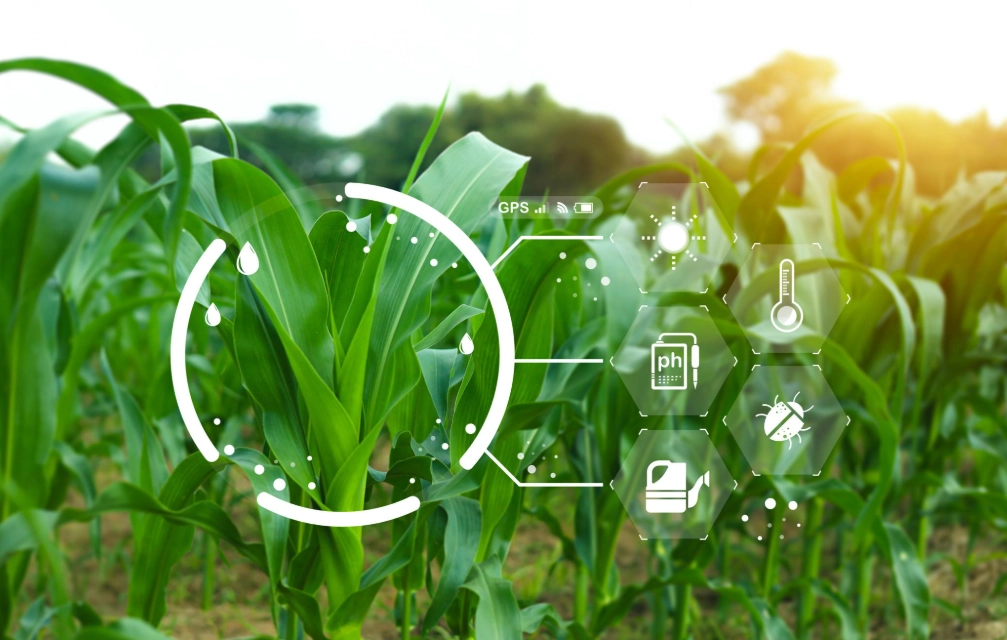
Showcasing Indian AI applications in agriculture, security, disability assistance, and multilingual access, Modi emphasized the country’s growing technological capacity:
“The solutions presented here are powerful examples of Made in India strength and innovation.”
Whether India can translate this week’s announcements into measurable progress and execute future events with greater logistical precision, remains to be seen. What is clear, however, is that the world’s most populous nation is no longer content to sit on the sidelines of the AI revolution.
The summit concluded with broad global endorsement of India’s responsible AI vision, setting the stage for implementation and continued dialogue on AI’s role in serving humanity.
As the global AI landscape evolves, India is no longer just participating in the future; it is helping define it.



Comments