

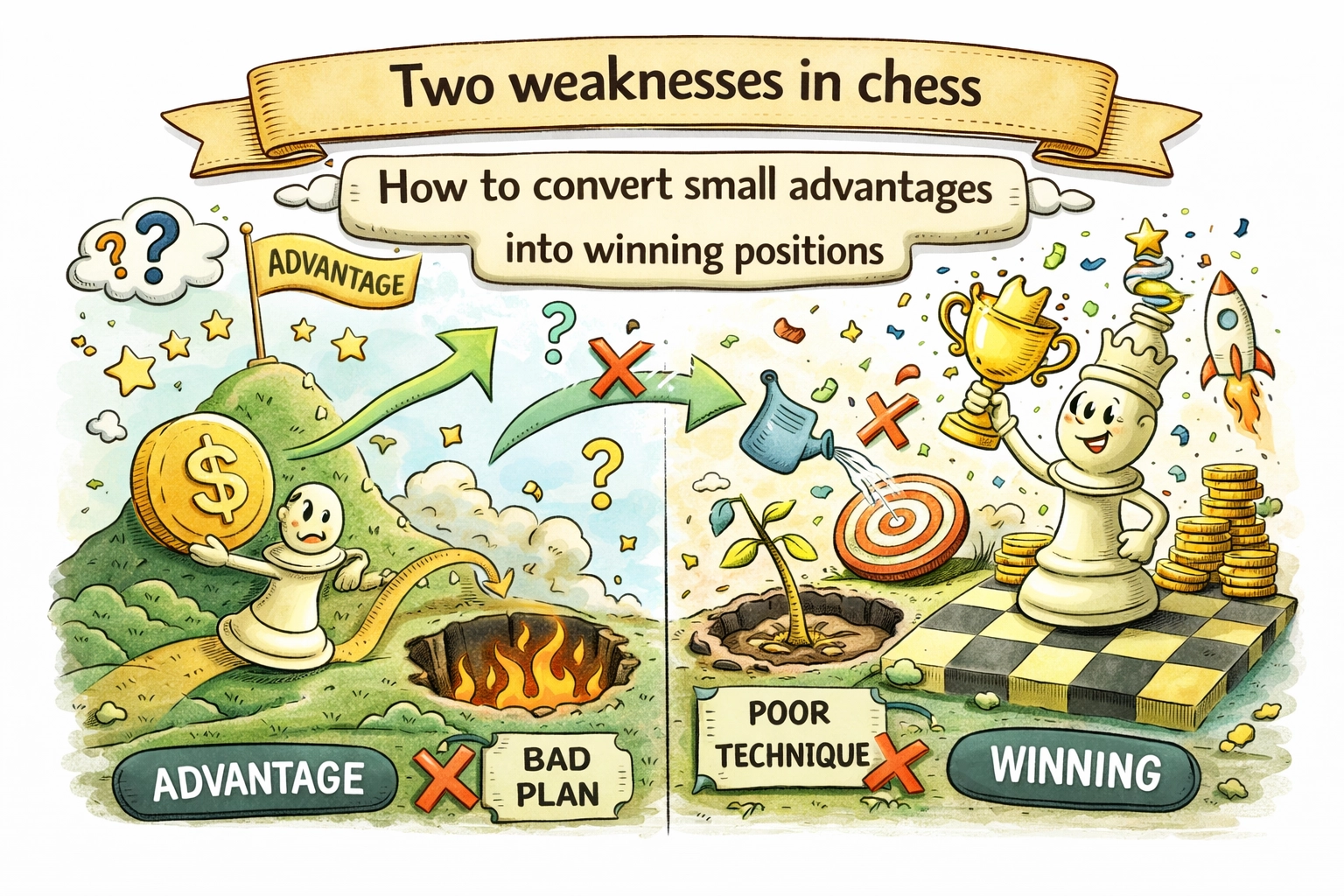
If you have been playing chess for a while and participating in competitive matches, you must have faced a very specific, frustrating situation. You play a brilliant opening, you outplay your opponent in the early middlegame, and you secure a clear, undeniable advantage. Perhaps you have given them an isolated pawn, or you have secured a beautiful outpost for your knight. You feel confident that the game is yours. However, as the game progresses, your opponent simply hunkers down. They put all their pieces around that single weakness, defending it with their lives. Suddenly, your attack hits a brick wall. No matter how hard you try to push, the position remains totally blocked. Eventually, the game ends in a draw, and you are left wondering what went wrong.
Welcome to the Enthuziastic guide on one of the most powerful concepts in chess strategy. At Enthuziastic, we believe in deep, structured learning to elevate your skills. Today, we are going to explore the ultimate solution to the problem of a stubborn defender: the principle of two weaknesses. This concept is the secret weapon of grandmasters. It is the core foundation of positional play in chess and the most reliable method for converting small advantages into clear, unstoppable wins.
By the end of this comprehensive guide, you will exactly know how to stretch your opponent’s defences, how to navigate the board with patience, and how to master endgame technique by creating multiple targets. Let us dive deep into the beautiful and logical world of advanced chess strategy.
- Understanding the core: what is a "weakness" in chess?
- Pawn structure weaknesses
- Weak squares and outposts
- Passive and badly placed pieces
- Why a single weakness is usually not enough to win
- The power of concentrated defence
- The fortress mentality and stable positions
- The grand idea: creating a second weakness
- Shifting play from one side to another
- Forcing the opponent to fight on multiple fronts
- Fixing and attacking the first weakness
- How to restrict the opponent before expanding play
- The absolute importance of patience and control
- Stretching the opponent’s position to the breaking point
- Overloading defensive pieces
- Creating serious coordination problems
- Application in different phases of the game
- Mastering the middlegame imbalances
- Opening new lines and attacking different sectors
- Perfecting your endgame technique
- Using distant weaknesses and king activity
- Practical examples of two weaknesses in action
- Exploiting isolated, doubled, and backward pawns
- Combining weak squares with poor piece placement
- Switching the attack from queenside to kingside
- The psychological pressure on the defender
- Why defending multiple weaknesses is mentally exhausting
- How relentless pressure leads to natural mistakes
- Common mistakes players make when trying to win
- Attacking only one weakness repeatedly
- Rushing the attack instead of improving the position
- Carelessly creating weaknesses in their own position
- How to train and master this concept
- Studying the games of classical masters
- Practising targeted positional exercises
- Analysing your own games for missed opportunities
- Building a true strategic mindset
- Learning to think in complete plans rather than single moves
- Understanding exactly when to switch targets
- Developing extreme patience and precision
- Frequently asked questions (FAQs)
Understanding the core: what is a "weakness" in chess?
Before we can even talk about creating a second weakness, we must deeply understand what a weakness actually is. In simple terms, a weakness in chess is any element in your position or your opponent's position that requires constant defence and cannot defend itself easily. It is a long-term defect that the opponent can target and exploit. Weaknesses generally fall into a few distinct categories, and recognising them is the first step in learning how to convert advantage in chess.
Pawn structure weaknesses
Pawns are the soul of chess, as the great Philidor once said. Because pawns cannot move backward, every pawn move leaves a permanent mark on the board. When pawns are pushed carelessly, they leave behind weaknesses.
An isolated pawn is one of the most common weaknesses. This is a pawn that has no friendly pawns on the adjacent files to protect it. Because it cannot be protected by another pawn, it must be defended by valuable pieces like knights, rooks, or bishops. This ties those pieces down to a passive, defensive role.
Doubled pawns occur when two pawns of the same colour end up on the same file. They are often clumsy, they block each other, and they are notoriously difficult to defend in an endgame.
Backward pawns are those that have been left behind by their neighbours and cannot safely advance. The square directly in front of a backward pawn often becomes a beautiful outpost for the enemy pieces. When you learn to spot these structural defects, your understanding of positional play in chess improves drastically.
Weak squares and outposts
A weakness is not always a physical piece or a pawn; sometimes, it is simply an empty square on the board. A weak square is a square in the opponent's territory that can no longer be defended by their pawns. If you can firmly plant one of your pieces especially a knight on such a square, it becomes a monstrous outpost.
An outpost deep in the enemy camp radiates immense pressure. It controls key diagonals and files, restricts the opponent's movement, and constantly threatens tactical combinations. The opponent will spend enormous energy trying to dislodge your piece from this weak square. If they cannot, that weak square becomes a permanent, bleeding target in their position.
Passive and badly placed pieces
Sometimes, a perfectly healthy pawn structure can hide a terrible weakness: a badly placed piece. Imagine a bishop that is entirely blocked by its own pawns. We call this a "bad bishop." It functions more like a tall pawn than an active piece.
Similarly, a knight stranded on the edge of the board, or a rook trapped in a corner with no open files to explore, are serious weaknesses. While these pieces might not be physically captured right away, they are practically useless for defending the rest of the board. A piece that is tied down purely to passive defence is a weakness in itself because it cannot contribute to any active counterplay.
Why a single weakness is usually not enough to win
Now that we know what a weakness is, we must address the most common frustration among club players. You find a weakness in your opponent’s camp, let us say an isolated pawn on d5. You bring your rook to attack it. Your opponent brings their rook to defend it. You bring your other rook. Your opponent brings their other rook. You add a knight; they add a knight.
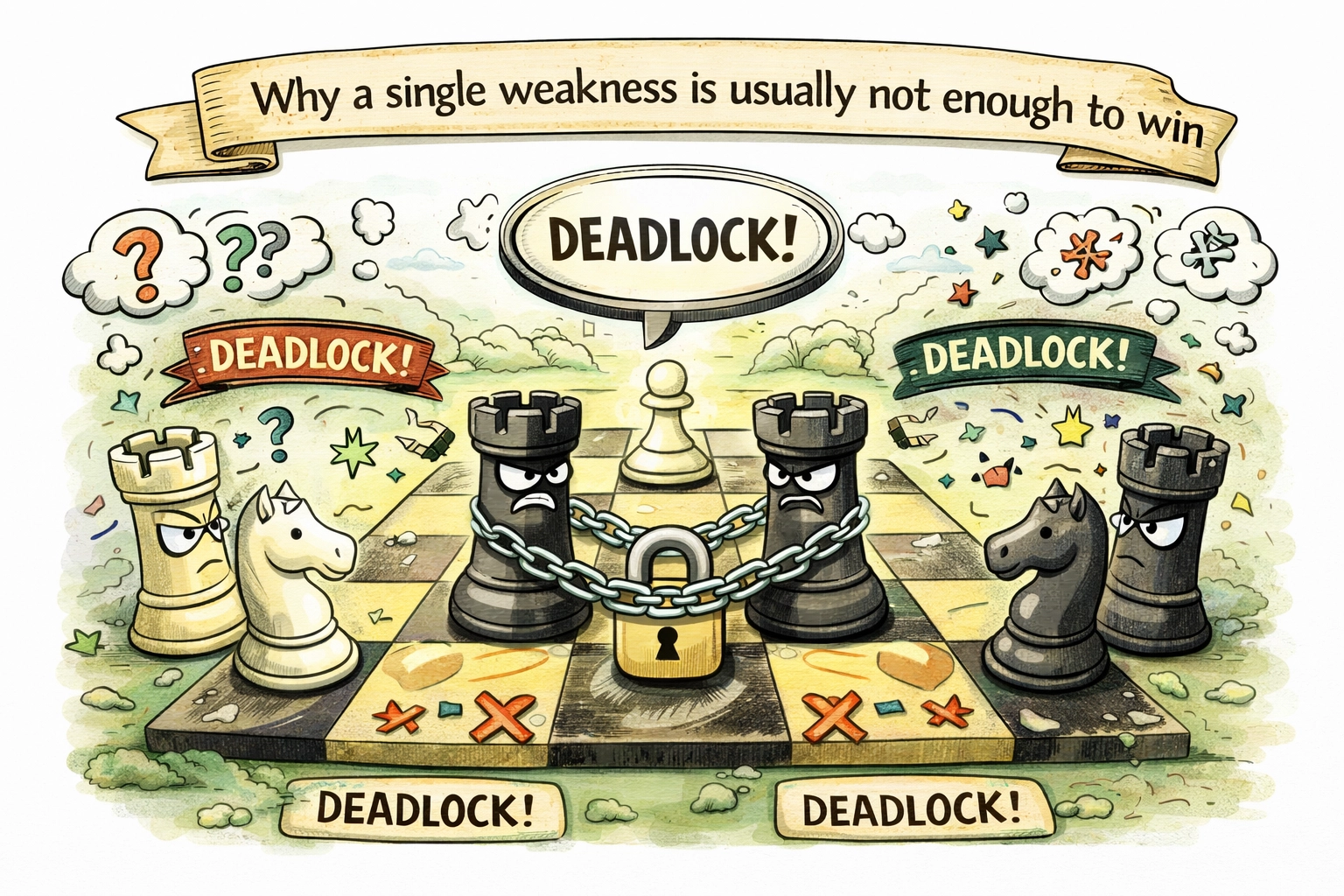
What happens now? The position is completely deadlocked.
The power of concentrated defence
A single weakness is usually completely defendable. The chessboard is limited in size, and there are only so many pieces you can bring to bear on one specific square. If your opponent has only one problem to worry about, they can concentrate all their defensive resources in that single sector of the board.
In chess, defending is often easier than attacking if the attack is entirely predictable. When you point all your pieces at one target, your opponent knows exactly what your plan is. They do not have to guess, they do not have to calculate complex variations, and they do not have to worry about the other side of the board. They simply stack their pieces in front of the weakness and wait.
The fortress mentality and stable positions
When all resources are poured into defending one point, the position achieves a state of equilibrium or stability. Even if you have a slight positional advantage maybe your pieces are slightly more active this advantage cannot be mathematically converted into a win if the position is locked.
The defender builds a fortress. A fortress is a position where the attacking side cannot make any progress despite having an advantage. To break a fortress, you need a battering ram, but if the single gate to the fortress is heavily guarded, you will only break your own pieces trying to get in. This is why pushing endlessly against a single weakness is a strategic dead end.
The grand idea: creating a second weakness
This brings us to the most beautiful and elegant concept in chess strategy: the principle of two weaknesses.
The logic is beautifully simple yet incredibly profound. If your opponent can easily defend one weakness because they can concentrate all their pieces in one area, what happens when you create a completely new weakness on the opposite side of the board?
Suddenly, their concentrated defence is a massive liability. The pieces that are happily defending the first weakness on the queenside are miles away from the new threat on the kingside.
Shifting play from one side to another
The true art of how to convert advantage in chess lies in the ability to shift the battleground. Once you have forced your opponent into a passive position by attacking their first weakness, you do not force a breakthrough immediately. Instead, you slowly and methodically start opening a second front.
Imagine you are applying pressure on a weak queenside pawn. Your opponent's rooks and knights are clustered on the a-file and b-file. Seeing this, you suddenly play a pawn break on the f-file or g-file on the kingside. You open a new file for your rooks.
Because your opponent's pieces are awkwardly placed on the queenside, they cannot easily travel across the board to meet this new threat. They are forced to make a terrible choice: either abandon the defence of the queenside (which means losing the first weakness) or ignore the kingside (which means getting crushed on the newly opened front).
Forcing the opponent to fight on multiple fronts
Military generals throughout history have known that fighting a war on two fronts is incredibly difficult. The chessboard is no different. The principle of two weaknesses is essentially the art of stretching your opponent's army until it snaps.
When you force the opponent to defend multiple fronts, their pieces become hopelessly overloaded. They cannot coordinate effectively. A knight that is trying to jump between defending a pawn on a3 and a weak square on f6 will quickly run out of tempos. The defender's position will lose its stability, the fortress will crumble, and the tiny cracks will widen into massive holes.
Fixing and attacking the first weakness
While creating a second weakness sounds exciting, you cannot simply jump around the board randomly. There is a very strict, methodical process required to make the principle of two weaknesses work.
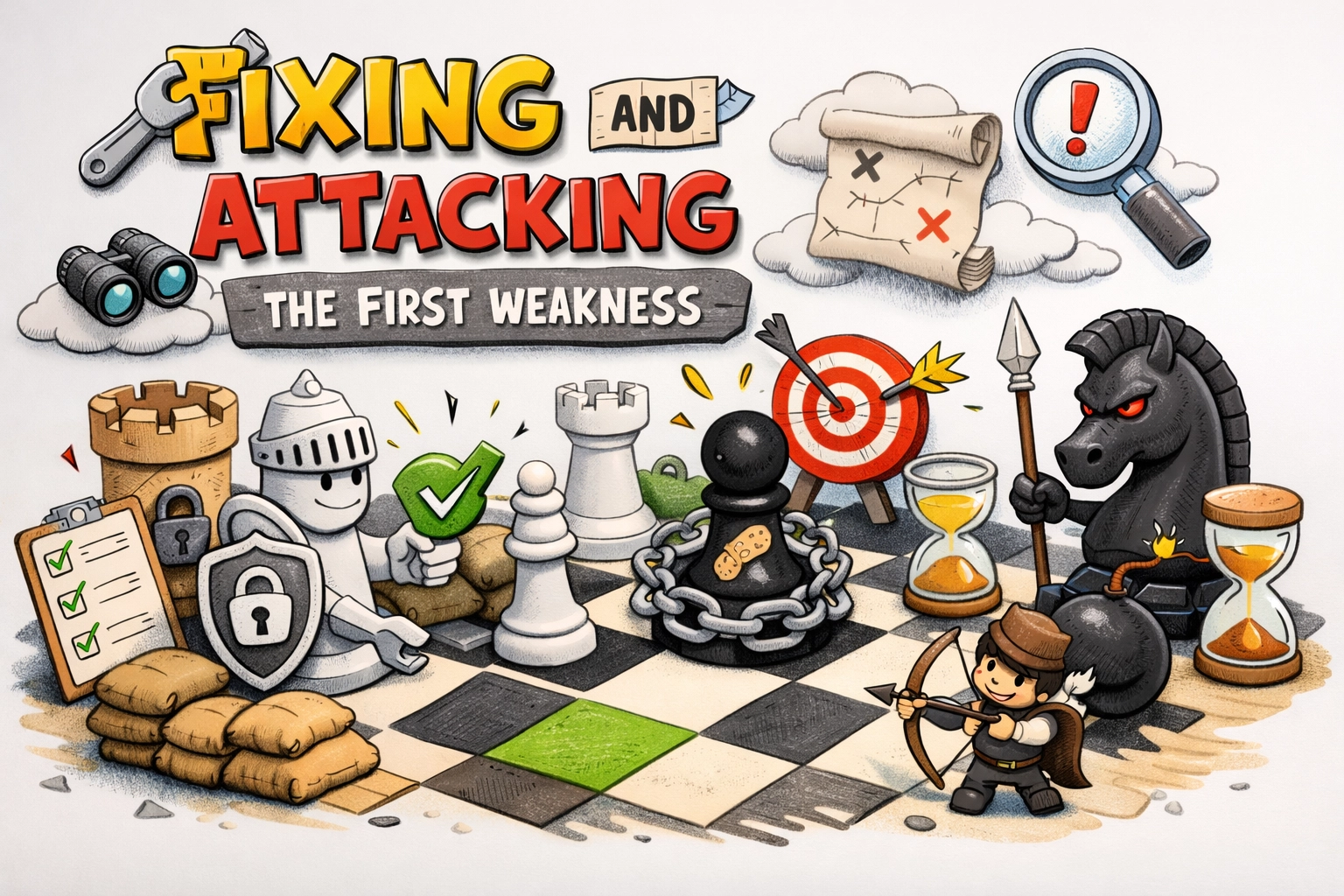
Before you can create the second weakness, you must fully secure your advantage against the first one. We call this "fixing" the weakness.
How to restrict the opponent before expanding play
Fixing a weakness means making sure that the opponent cannot easily get rid of it. If they have a backward pawn, you must place your pieces or pawns in such a way that they can never push that backward pawn forward to trade it off.
You must physically restrain their counterplay. You place a strong blockading piece directly in front of their weak pawn. You take absolute control of the open files leading to their weak squares. By doing this, you ensure that the first weakness is permanent. Only when the first weakness is perfectly fixed, and the opponent's pieces are hopelessly tied down to defending it, do you look to expand your play elsewhere.
If you try to create a second weakness before fixing the first one, the opponent might seize the opportunity to liquidate the first weakness, completely destroying your advantage.
The absolute importance of patience and control
If there is one quality you need to master positional play in chess, it is extreme patience. The principle of two weaknesses is not a tactical trick that wins the game in three moves. It is a slow, suffocating squeeze.
When you have tied the opponent down, there is no need to rush. You have the luxury of time because your opponent has no active counterplay; they are simply reacting to your moves. Take your time to improve the position of every single piece you have. Centralise your king in the endgame. Move your rook to a slightly better square. Push a pawn to gain slightly more space.
Only when your pieces are perfectly placed should you initiate the action to create the second weakness. Patience ensures that when the decisive moment comes, your opponent will have absolutely no resources left to survive.
Stretching the opponent’s position to the breaking point
The execution of the principle of two weaknesses is often referred to as the "pendulum effect." You swing your attack to the left, and the opponent rushes left to defend. Then, you swiftly swing your attack to the right, and the opponent stumbles trying to run to the right.
Overloading defensive pieces
The most direct tactical result of the principle of two weaknesses is overloading. Overloading happens when a single defending piece is tasked with doing two important jobs at once.
For example, imagine the opponent's bishop is the only piece stopping your rook from invading the queenside. At the same time, that same bishop is required to guard a vital pawn on the kingside. That bishop is overloaded. It is physically impossible for one piece to perform two defensive tasks against coordinated, shifting attacks. By simply moving your attacking pieces from one side to the other, you expose the overloaded piece, forcing it to abandon one of its duties.
Creating serious coordination problems
As you stretch the play across the entire board, the opponent's pieces will step on each other's toes. In their desperation to rush from the queenside to the kingside and back again, their pieces will become uncoordinated. Rooks will get trapped behind their own pawns. Knights will end up on awkward edge squares.
This lack of coordination is fatal. While your pieces are harmoniously dancing from one side of the board to the other using the space advantage you have carefully built, the opponent's pieces will be tripping over themselves. This geometric superiority is exactly how you convert a small advantage into a crushing victory.
Application in different phases of the game
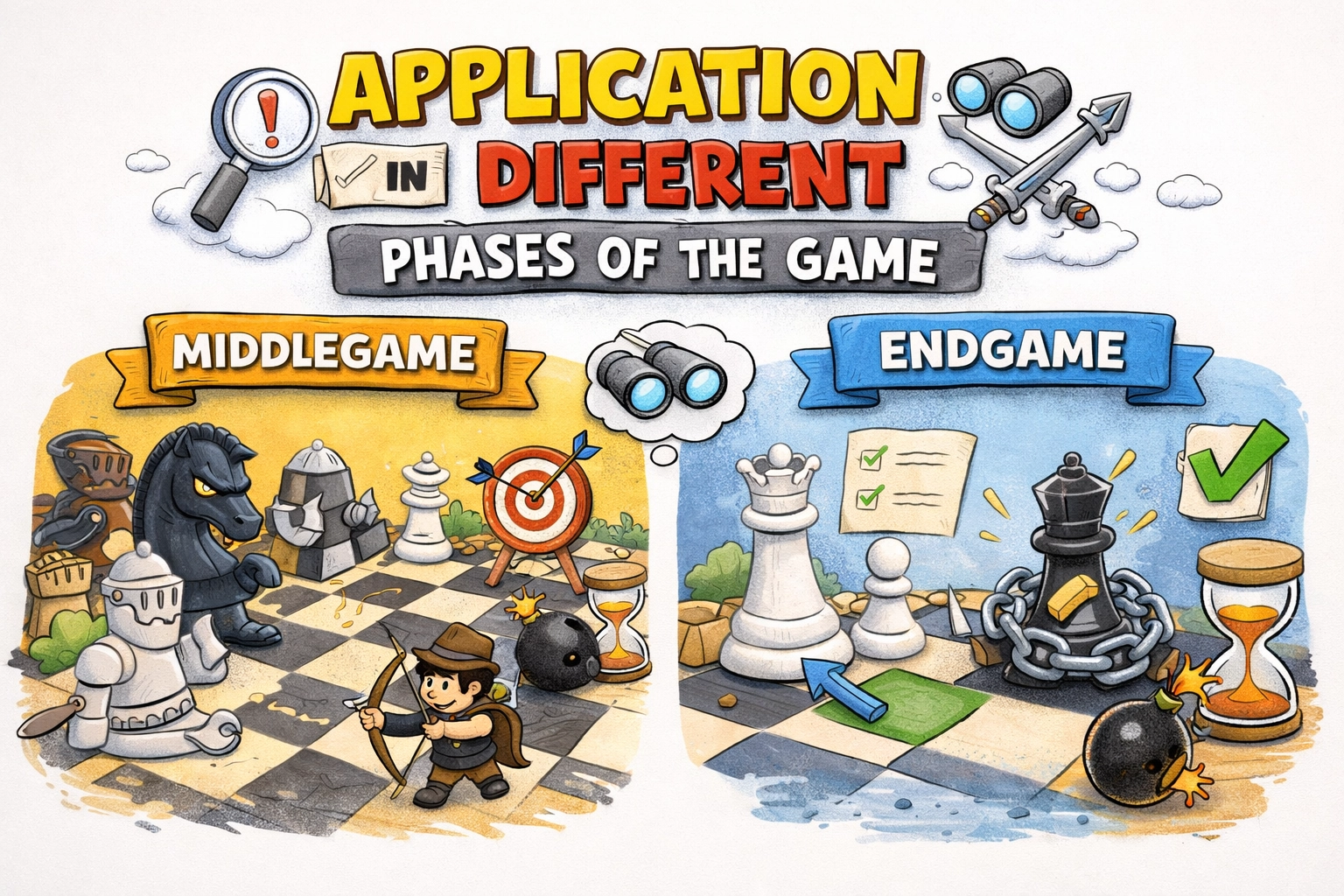
The beauty of the principle of two weaknesses is that it is a universal law of chess strategy. It applies strictly in both the middlegame and the endgame. However, the way you implement it changes depending on how many pieces are left on the board. Let us explore how to adapt this strategy to different game phases.
Mastering the middlegame imbalances
In the middlegame, there are still many pieces on the board, including the queens. Therefore, the second weakness you create is very often an attack against the opponent's king.
You might start the game by squeezing the queenside, gaining space, and attacking a weak pawn structure. The opponent will naturally bring their knights, bishops, and maybe their queen to the queenside to hold the line. Once their king is left relatively unguarded, you can launch a sudden pawn storm or piece sacrifice on the kingside.
Opening new lines and attacking different sectors
During the middlegame, creating a second weakness often involves opening new files or diagonals. You use pawn breaks to tear open the pawn cover in a different sector of the board. Because the opponent's pieces are far away, they cannot contest the newly opened lines. Your rooks will infiltrate, your bishops will cut across the board, and the opponent's position will simply collapse under the multi-directional pressure.
Perfecting your endgame technique
The principle of two weaknesses is perhaps most famous as an endgame technique. In fact, many chess coaches at Enthuziastic will tell you that it is virtually impossible to win most balanced endgames without creating a second weakness.
In the endgame, the king becomes a powerful attacking piece. With the queens off the board, the king is no longer in danger of being checkmated quickly, so it can march up the board and aggressively participate in the attack.
Using distant weaknesses and king activity
A classic endgame scenario involves an "outside passed pawn." If you have a passed pawn on the a-file (the extreme left side of the board), the opponent's king will usually have to walk all the way over there to stop it from promoting. That outside passed pawn is the first weakness.
While the enemy king is busy dealing with the pawn on the a-file, your king is free to walk over to the kingside (the right side of the board) and gobble up all the opponent's remaining pawns. The kingside pawns become the second weakness. The opponent cannot save their kingside pawns because their king is tied down miles away on the queenside. This is the ultimate, purest demonstration of the principle in action.
Practical examples of two weaknesses in action
To truly grasp this concept, let us look at some practical scenarios that occur constantly in everyday chess games. Understanding these patterns will heavily improve your chess strategy.
Exploiting isolated, doubled, and backward pawns
Let us say your opponent plays the French Defense or the Caro-Kann, and through a series of exchanges, they are left with an isolated queen's pawn (IQP) on d5.
Your first step is to fix it. You place your knight securely on d4. Your opponent defends the d5 pawn with a rook and a bishop. The position is stable.
Now, you begin the second phase. You notice that their kingside has been slightly weakened. You start advancing your h-pawn (h4-h5) to create a hook or open the h-file. Alternatively, you switch play to the queenside and attack their a7 or b7 pawn. The opponent, whose pieces are clumped around the centre trying to save the d5 pawn, will watch helplessly as you break through on the flanks.
Combining weak squares with poor piece placement
Imagine a position where the opponent has played too many pawn moves, leaving huge holes in their position. You plant a dominant knight on f5. The opponent is terrified of this knight and places a rook and bishop nearby to ensure it doesn't do any immediate damage.
Their pieces are now passive. You then notice their bishop is completely trapped behind their own pawns on the queenside it is a bad bishop. You have found your two weaknesses: the pressure from the f5 square (which ties down their pieces) and their hopelessly bad bishop. You simply trade down into an endgame where your hyper-active knight easily dances around their tragic bishop, picking off pawns one by one.
Switching the attack from queenside to kingside
This is the classic pendulum swing. You build up immense pressure on the queenside b-file. You double your rooks. The opponent rushes their rooks to the b-file to defend.
Suddenly, you play a strong central pawn break, or you quickly swing your queen and a knight toward the enemy king on the g-file. The rooks that the opponent placed on the b-file are now entirely out of play. They cannot slide across the board because their own pawns block them. You win by launching a devastating, unopposed mating attack on the kingside while their pieces are stuck on the queenside.
The psychological pressure on the defender
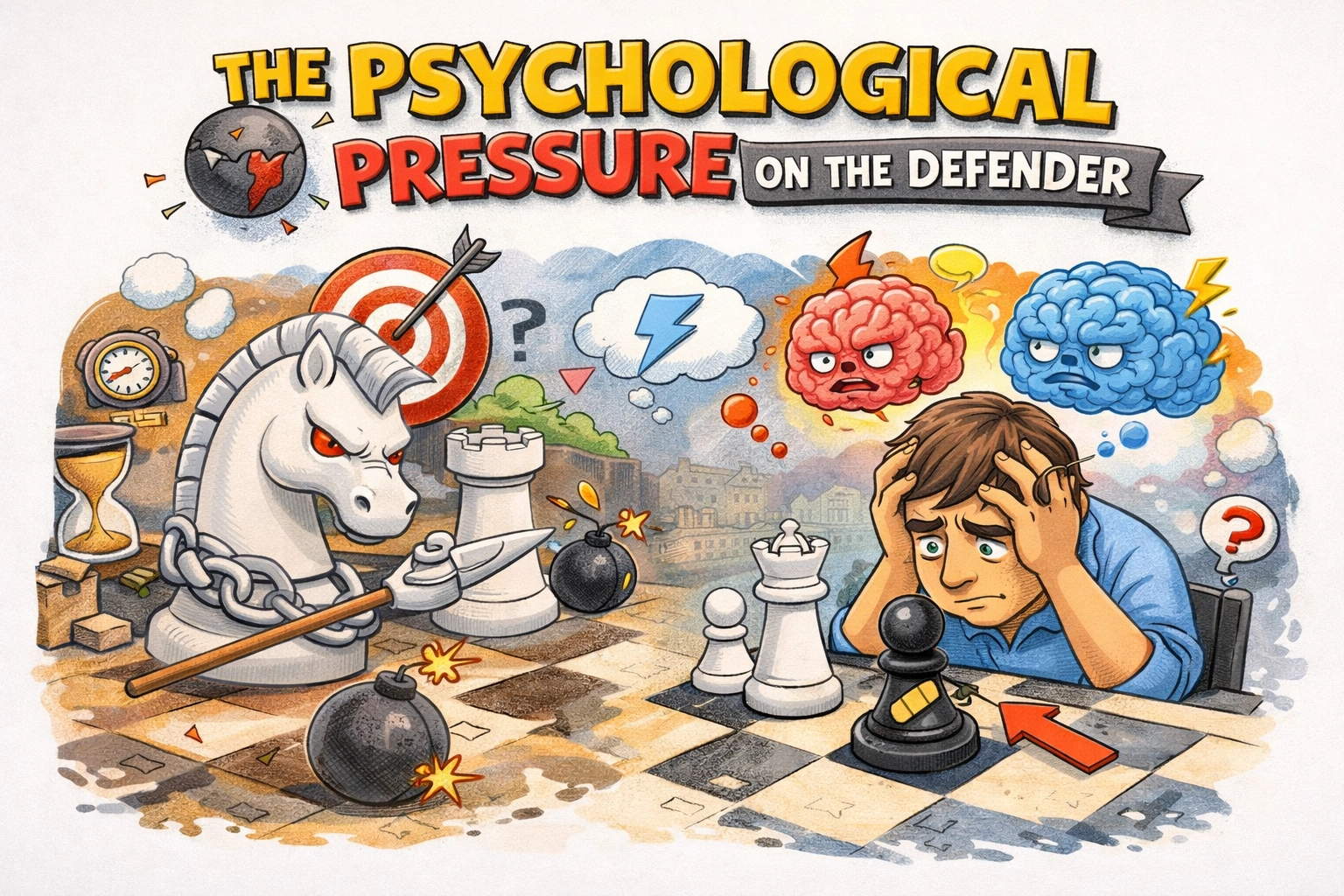
Chess is not played by computers; it is played by humans. And humans have emotions, nerves, and a limited amount of mental energy. The principle of two weaknesses is as much a psychological weapon as it is a tactical one.
Why defending multiple weaknesses is mentally exhausting
Defending is inherently difficult in chess. When you are defending, you are not imposing your will; you are constantly trying to guess your opponent's plans.
Defending a single weakness is hard enough, but defending two weaknesses on opposite sides of the board is a nightmare. The defender has to calculate constantly. "If I move my rook to defend the kingside, does the queenside pawn fall? If I keep my king on the queenside, will I get checkmated on the kingside?"
This constant back-and-forth calculation drains the mental stamina of the defender. As the clock ticks down, the exhaustion becomes unbearable.
How relentless pressure leads to natural mistakes
Because of this intense mental fatigue, the defender is almost guaranteed to make a mistake. They will eventually miscalculate a variation, place a piece on the wrong square, or simply crack under the pressure and give up a pawn just to relieve the tension.
When you apply the principle of two weaknesses, you do not always need to find a brilliant, engine-level tactical checkmate. You just need to keep turning the screws, shifting the pressure left and right, until the human sitting across from you simply collapses from the weight of having to defend an impossible position. This is the hallmark of a seasoned, mature chess player.
Common mistakes players make when trying to win
Even when players are aware of this incredible principle, they often fail to execute it properly. At Enthuziastic, we observe several common mistakes that prevent players from learning how to convert advantage in chess successfully.
Attacking only one weakness repeatedly
This is the most frequent error. A player gets an advantage, sees a weak pawn, and gets tunnel vision. They spend the next thirty moves trying every possible combination to capture that one pawn. They completely ignore the rest of the board.
The opponent easily builds a fortress, and the game ends in a dead draw. Always remember: if the front door is heavily locked and guarded, stop banging your head against it. Go around to the back door.
Rushing the attack instead of improving the position
Impatience ruins more winning positions than bad calculation. When players decide to create a second weakness, they often rush. They push pawns too quickly, opening the position before their pieces are ready to support the attack.
If you open a second front before your pieces are optimally placed, you might accidentally give your opponent the counterplay they desperately need to escape. Always improve your worst-placed piece before starting a new attack.
Carelessly creating weaknesses in their own position
In their eagerness to stretch the opponent, players sometimes over-extend. They push their pawns wildly to attack the opponent's king, forgetting that by pushing those pawns, they are leaving their own king exposed.
When applying the principle of two weaknesses, you must ensure that your own fortress is solid. Prophylaxis the art of preventing your opponent's ideas is crucial. Make sure your king is safe and your pawns are solid before you begin torturing your opponent across the board.
How to train and master this concept
Reading about positional play in chess is one thing, but mastering it on the board requires dedicated practice. Here is how you can train yourself to automatically think about multiple weaknesses during your games.
Studying the games of classical masters
The best way to understand this principle is to watch the absolute best do it. The third World Chess Champion, Jose Raul Capablanca, was famously known as the human chess machine precisely because of his flawless endgame technique and his mastery of this principle. Study his games.
Similarly, Anatoly Karpov and Magnus Carlsen are modern masters of the slow squeeze. Look at how they win endgames that look completely drawn to a normal player. They patiently fix the structure, slowly walk their king up the board, create a distraction on one side, and then decisively strike on the other. Observing these patterns repeatedly will ingrain them in your brain.
Practising targeted positional exercises
Instead of only solving tactical puzzles (find the checkmate in 3), start solving positional puzzles. Use chess books or online tools that focus on strategy. Set up a board where you have a clear positional advantage, and try to find the plan to convert it. Practise playing out these positions against a computer engine. The computer will defend tenaciously, forcing you to use the principle of two weaknesses perfectly to secure the win.
Analysing your own games for missed opportunities
This is vital for your growth. Every time you draw a game where you felt you had an advantage, go back and analyse it. Ask yourself: "Did I spend too much time attacking one side of the board? Was there a moment where I could have opened a second front?"
Identifying your own mistakes is the fastest way to stop making them in future tournaments. Discuss your games with stronger players or coaches at Enthuziastic to get a fresh perspective on how you could have stretched the play.
Building a true strategic mindset
To truly incorporate the principle of two weaknesses into your game, you need to change the way you think about chess fundamentally. You must transition from playing purely move-by-move to playing with deep, overarching plans.
Learning to think in complete plans rather than single moves
When you sit at the board, do not just look for immediate threats. Start asking yourself broad, strategic questions. "What is the worst-placed piece in my opponent's camp?" "Which side of the board do I have more space on?" "If I attack the queenside, how will they respond, and what will that leave undefended on the kingside?"
Thinking in plans means having a roadmap for the next ten or fifteen moves. Creating a second weakness is always a long-term plan, never a single-move trick.
Understanding exactly when to switch targets
The timing of the pendulum swing is an art form. If you switch targets too early, the opponent will not be sufficiently tied down, and they will easily readjust. If you switch too late, the opponent might have fully consolidated their fortress, leaving no entry points.
You must learn to feel the tension in the position. The moment to strike on the second front is exactly when the opponent's pieces are stretched to their absolute maximum limit on the first front.
Developing extreme patience and precision
Finally, you must embrace the grind. Winning a game of chess through pure strategy and endgame technique is deeply satisfying, but it requires cold, calculating patience. Do not be afraid of a long game. Enjoy the process of slowly improving your position. Celebrate the small victories gaining a single file, forcing a knight to a bad square, fixing a pawn structure.
By accumulating these tiny, microscopic advantages and continuously forcing your opponent to react to multiple threats, you will become a terrifying opponent to face across the board.
The principle of two weaknesses is your key to unlocking the next level of your chess journey. Practise it, study it, and watch as your ability to convert small advantages transforms into an unstoppable winning machine. Happy learning with Enthuziastic!
Frequently asked questions (FAQs)
1. What exactly is the principle of two weaknesses in chess?
The principle of two weaknesses is a fundamental chess strategy which states that a single weakness in an opponent's position is usually perfectly defendable because the defending side can concentrate all their forces to protect it. To win a game, the attacking player must create a second weakness, ideally on the opposite side of the board. This forces the defending pieces to stretch themselves too thin, making it impossible to defend both targets simultaneously, leading to a collapse of the position.
2. How do I know if I have a small advantage in a chess game?
A small advantage is not always material (like being up a pawn). Often, it is positional. You might have a small advantage if you control more space, if your pieces are placed more actively towards the centre, if you control an open file with your rooks, or if your opponent has structural damage like doubled or isolated pawns. Recognising these subtle advantages is the first step toward knowing when to apply winning strategies.
3. Why is patience so important when using this strategy?
Patience is absolutely critical because the principle of two weaknesses relies on slowly suffocating the opponent. If you rush and force an attack prematurely, you might accidentally open the position and allow the opponent's passive pieces to become active. Patience ensures that you fully fix the first weakness and ideally position all your attacking pieces before opening the second front, giving the opponent zero chances for counterplay.
4. Can this principle be applied in rapid or blitz games?
While it is much harder to execute perfect positional play under extreme time pressure, the core concept remains highly effective in rapid and blitz chess. In fast games, creating multiple targets is actually a brilliant way to induce blunders. When an opponent has to quickly calculate how to defend two different sides of the board with only seconds on the clock, they are highly likely to drop a piece or miss a critical tactic.
5. What is the difference between this principle and a standard double attack?
A double attack (like a knight fork) is a short-term tactical operation where one piece attacks two targets simultaneously, usually winning material immediately. The principle of two weaknesses is a long-term, positional strategy. It is not about a single move attacking two things; rather, it is about shifting the entire flow of the game over many moves to stretch the opponent's defensive structure until it breaks.
6. How do I improve my endgame technique to convert these advantages better?
Improving endgame technique requires dedicated study of fundamental endgames (like rook and pawn endings) and studying the games of endgame masters like Capablanca, Smyslov, Karpov, and Carlsen. You must practise playing balanced endgames against a strong computer engine. Focus specifically on learning how to use your king actively and understanding the extreme power of the "outside passed pawn," which naturally acts as a built-in second weakness for the defender.
7. Is it possible to win if my opponent creates no obvious weaknesses?
This is where advanced positional play in chess shines. Strong opponents will try not to create weaknesses voluntarily. In such cases, your job is to slowly restrict their pieces, gain space, and provoke them into making a weakening pawn move. By constantly applying pressure and creating annoying threats, you force the opponent to react, and eventually, the pressure will cause structural damage that you can exploit.

Comments