

Introduction
Dear parents, we all know that feeling. A birthday is coming up, or perhaps a festival like Diwali or Christmas, and we are scrolling through online stores or walking through the aisles of a toy shop, looking for that "perfect" gift. We see rows of flashing electronic gadgets, expensive video games, and plastic toys that we know will break or be forgotten within a week. In our hearts, we want something more. We want a gift that lasts. We want a gift that grows with our child. We want a gift that says, "I believe in your potential."
At Enthuziastic, where we constantly strive to build a Global People to People Live Learning Network, we believe that the best gifts are the ones that open doors to new worlds. And today, we want to talk to you about a gift that has stood the test of time for over 1,500 years. It is not a tablet, and it does not need a charger. It is a chess set.
You might be thinking, "Chess? Isn't that for geniuses or very serious adults?" Let us assure you, that is a myth. Gifting a chess set to your child is one of the most loving, strategic, and valuable investments you can make in their future. It is more than just a board with 64 squares; it is a playground for the mind, a gym for the brain, and a teacher of life lessons that no textbook can cover. In this blog, we will take a deep journey into why a simple chess set might just be the best gift you ever give to your little one.
The Value Of Gifting A Chess Set To Children
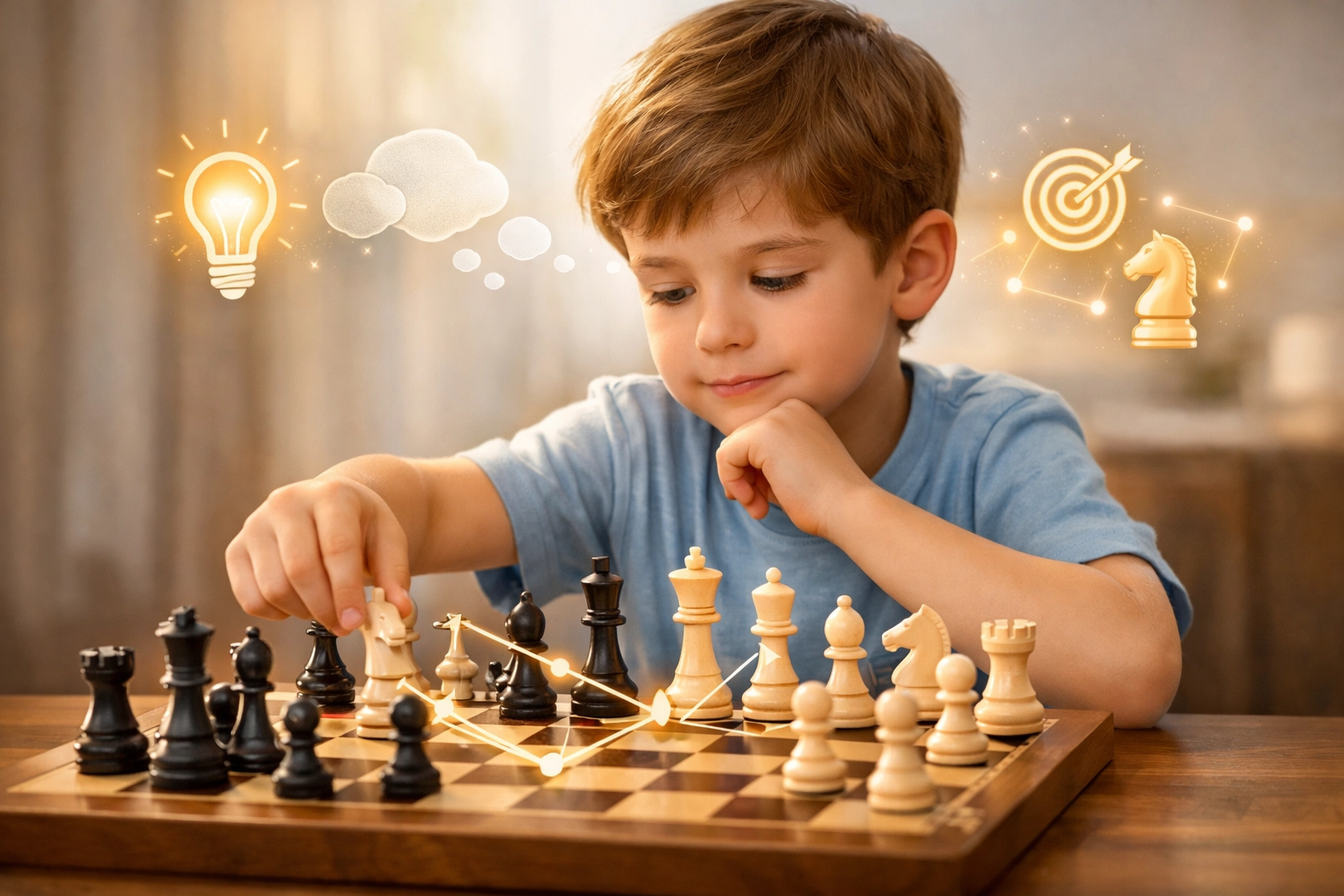
When you hand a child a chess set, you are not just giving them a game. You are handing them a tool for life. In India, we often focus heavily on academic tuition, coding classes, and rote learning. While these have their place, they often miss the "soft skills" that truly determine success in the 21st century skills like critical thinking, patience, and emotional maturity.
A chess set acts as a silent mentor. Unlike a video game where the screen does the thinking for you, or a passive toy that entertains for a moment, a chess set demands engagement. It asks the child, "What is your plan?" It respects the child’s intelligence. When a six-year-old sits in front of a board, they are the commander of their army. They are responsible for the safety of their King and the activity of their Queen. This sense of responsibility is rare in modern toys.
Moreover, a chess set is a "forever gift." A plastic car will lose a wheel; a doll might lose its charm as the child grows up. But a good wooden or magnetic chess set? That can stay with them from age five to age fifty. It sits on the shelf as a constant invitation to think, to play, and to connect.
Cognitive Benefits: The Brain Gym
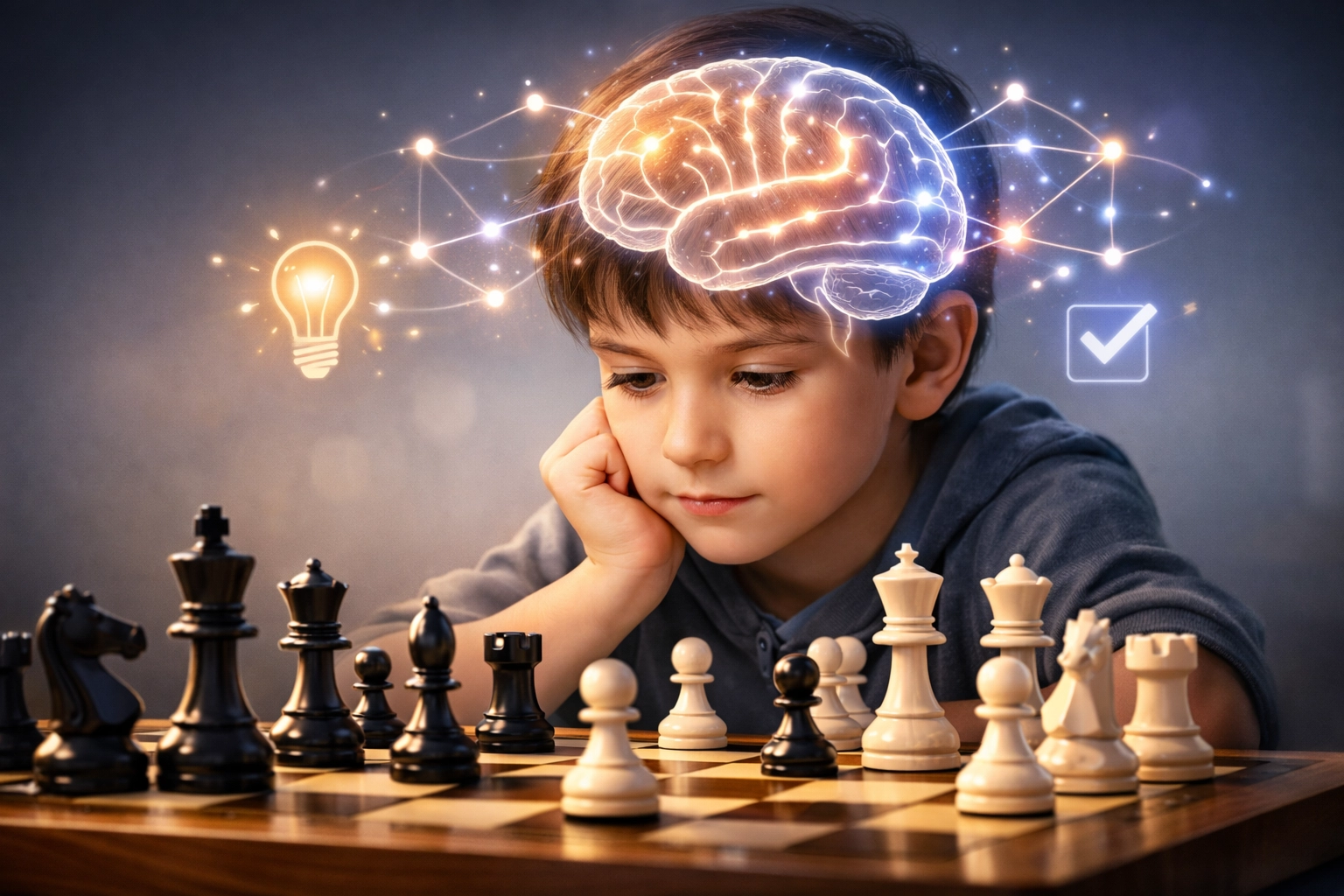
Let us talk about what happens inside your child’s brain when they play. You have likely heard that chess makes kids smarter. But how?
First, it builds Pattern Recognition. When a child first plays, they see chaos. But slowly, they start seeing shapes a "fork," a "pin," a "checkmate net." This ability to spot patterns is the same skill needed to solve complex math problems or debug a line of code later in life.
Second, it enhances Memory. To play well, a child must remember the rules of how the Knight moves in an 'L' shape or how the Bishop zooms diagonally. As they get better, they remember opening traps and past mistakes. This is active memory training, far superior to memorizing answers for a test because it is tied to an activity they enjoy.
Third, and perhaps most importantly for parents worried about exams, is Sustained Focus. In a world of 30-second reels and constant notifications, our children’s attention spans are shrinking. Chess is the antidote. You cannot play chess while scrolling on a phone. You must sit, look, and think. If your mind wanders for even ten seconds, you might lose your Queen. This natural consequence teaches a child to focus deeply for 10, 20, or even 30 minutes at a time. This "deep work" capability is a superpower in today's distracted world.
Emotional Resilience And Sportsmanship
Life is not always about winning. In school, we often protect children from failure. Everyone gets a participation certificate. But the real world is different, and chess is a safe simulation of the real world.
When a child loses a game of chess, there is no referee to blame. There is no "bad luck" or "glitch" in the game. They lost because the opponent thought better or because they made a mistake. This is a hard pill to swallow, but it is necessary. It teaches Accountability.
At Enthuziastic, we love seeing children learn the art of the handshake. Before the game, you shake hands to show respect. After the game whether you won or lost you shake hands again. This simple ritual teaches Sportsmanship. It teaches a child that their worth is not defined by a win or a loss, but by the effort they put in. They learn to say, "Good game," smile, and set up the pieces again. This emotional resilience, the ability to bounce back after a defeat, is what we call a "Growth Mindset."
Choosing The Right Chess Set For Your Child
Now that we are convinced of the "Why," let us look at the "How." If you go to a market or search online, you will find hundreds of options. It can be confusing. Do you buy the glass one? The magnetic one? The expensive wooden one? Here is a practical guide for parents.
Safety, Size, And Durability
The first rule is safety, especially if you have younger children in the house.
Size Matters: For a child learning to play, avoid the tiny "pocket" sets. They are too fiddly. You want a board that is substantial enough so they can clearly see the squares. A standard board size of 12 inches to 16 inches is usually perfect for home use. The pieces should be large enough to grasp comfortably. This helps with their motor skills picking up a Pawn and placing it precisely on a square requires dexterity.
Choking Hazards: If you have toddlers (siblings) around, ensure the pieces are not small enough to be swallowed.
Durability: Children can be rough. They might drop a piece; they might bang the Queen on the table in excitement. Glass sets are beautiful, but they are for decoration, not for a 7-year-old’s daily practice. We recommend high-quality plastic or solid wood. They can take a beating and still look good.
Age-Appropriate Recommendations
For the Beginner (Ages 4-7): Look for a sturdy plastic set with clear, distinct pieces. Sometimes, "Staunton" design (the standard style) is best because it avoids confusion. If you buy a themed set (like superheroes or cartoons), the child might get confused about which piece is the Bishop and which is the Rook. Stick to the classic look first.
For the Traveler (Ages 7-12): A Magnetic Chess Set is a lifesaver. Whether you are on a train journey to your hometown or just sitting in the car waiting for a class to finish, a magnetic board keeps the pieces in place. It prevents the frustration of a game getting ruined by a sudden bump. This is a highly practical choice for active families.
For the Enthusiast (Ages 12+): If your child shows a real interest, consider investing in a nice wooden set with a folding board. There is something very satisfying about the "thud" of a wooden piece on a wooden board. It makes the child feel like a professional. It signals to them, "I take your hobby seriously."
Budget And Buying Tips
You do not need to spend thousands of rupees. A decent tournament-standard vinyl mat and plastic pieces are what actual professionals use in tournaments, and they are very affordable. They are indestructible, easy to roll up, and easy to clean.
Buying Tip: Look for "weighted" pieces if your budget allows. Weighted pieces have a little bit of metal inside the base. They feel heavier and don't tip over easily. This adds a wonderful tactile quality to the game that children love.
Integrating Chess Into Family Learning And Education
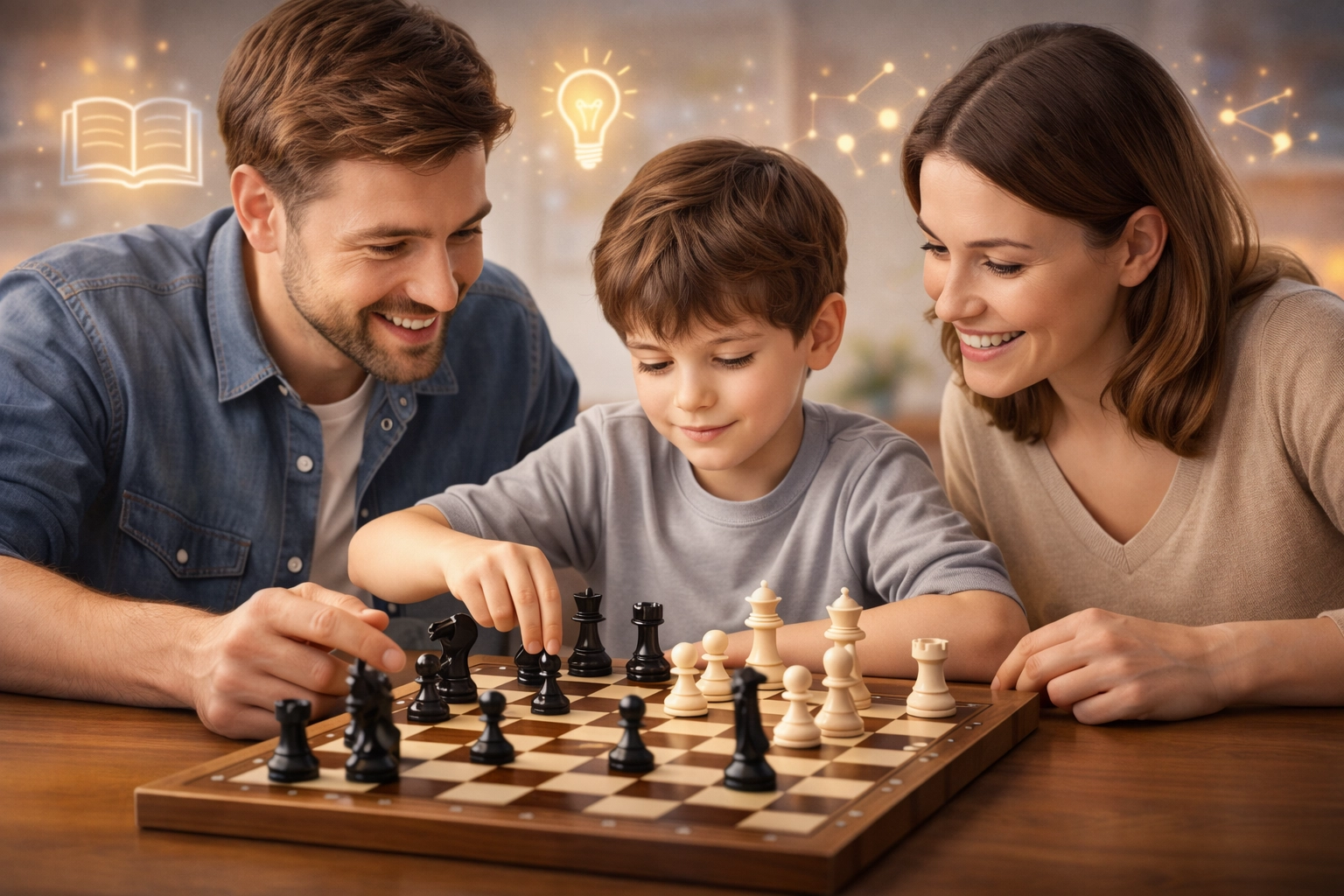
Gifting the set is just step one. If you just hand it to them and walk away, it might gather dust. To truly unlock its power, you need to integrate it into your family life.
Making Chess A Family Activity
In many Indian households, Sunday is family day. Why not start a new tradition? "Sunday Chess Mornings."
Instead of everyone watching TV or being on their separate phones, sit down with a cup of chai (or milk for the kids) and play a game. If you don't know how to play, even better! Learn together. Let your child teach you. There is no greater confidence booster for a child than teaching their parent a skill.
You can organize a mini "Family Tournament." Make a simple chart on a piece of paper. Mummy vs. Pappu, Daddy vs. Didi. The winner gets a small treat maybe they get to choose what is for dinner. This creates a positive association with the game. It becomes about laughter, connection, and bonding, not just dry logic.
Chess As A Tool For Logic And Math
Did you know the chessboard is essentially a graph? It has an X-axis (letters a-h) and a Y-axis (numbers 1-8).
Math Skills: You can teach coordinates easily. "Move your Knight to f3." This is geometry in action.
Calculation: Ask your child, "If you take this Pawn, and he takes your Bishop, who has more points?" (Queen=9, Rook=5, Bishop/Knight=3, Pawn=1). This is basic arithmetic, but it is happening fast and with a purpose.
Strategic Thinking: Chess teaches "If-Then" logic. "If I move here, then he will move there." This is the foundation of coding and algorithmic thinking.
Bringing Chess Into School Life
There are also many local tournaments in cities across India. Taking your child to a tournament is an experience in itself. Seeing hundreds of other children sitting silently, thinking deeply, is inspiring. It shows them that being "smart" and "thoughtful" is cool.
Emotional And Educational Impact Of Chess
Building Confidence And Self-Esteem
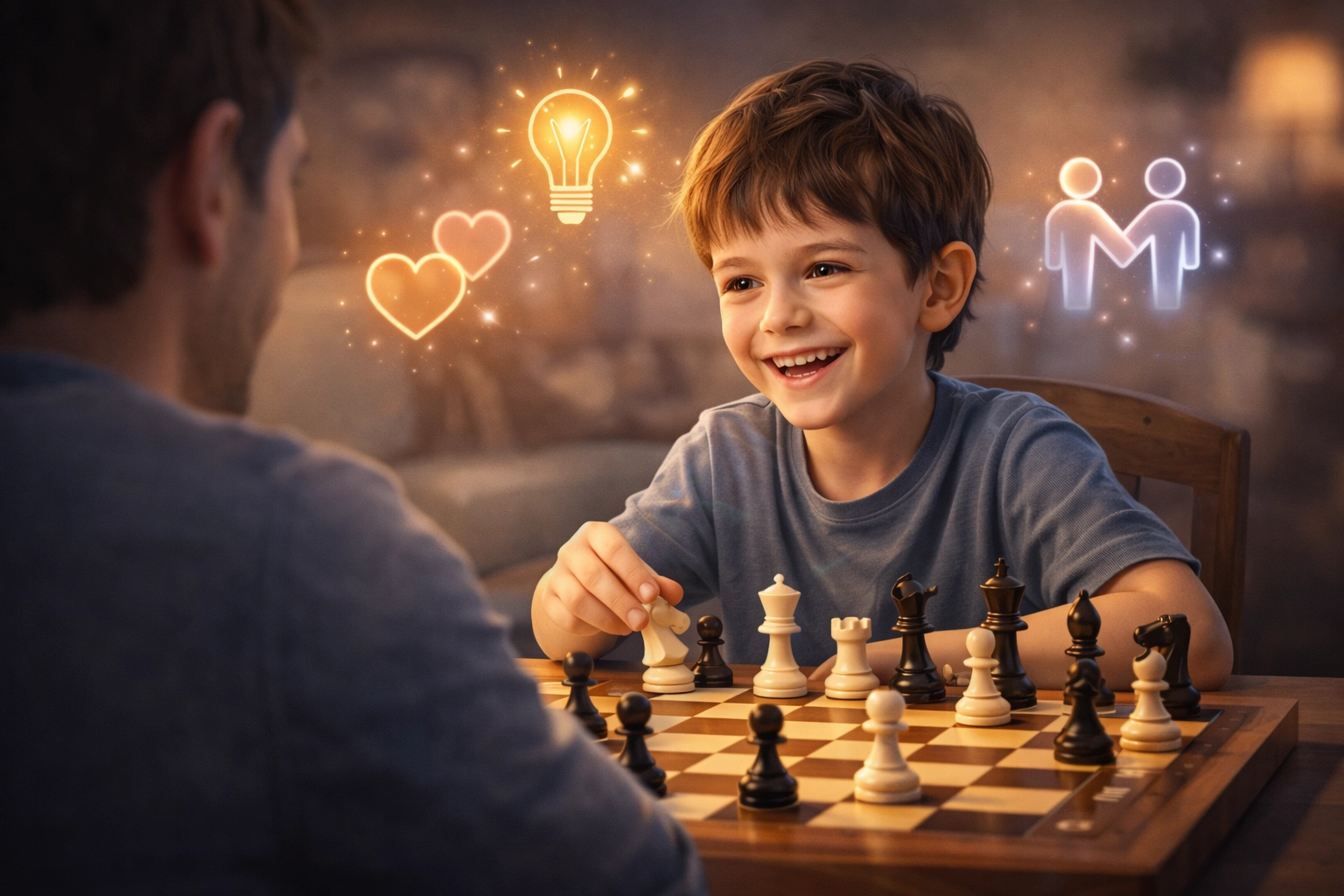
There is a specific look on a child’s face when they execute a checkmate for the first time. It is a mix of shock and pure pride. "I did that. I solved the puzzle."
This confidence spills over into other areas. A child who can face a difficult opponent on the board feels more ready to face a difficult math problem or a stage performance. They learn that problems have solutions if you look hard enough. They learn that they are capable of deep thought.
Discipline And The Growth Mindset
Chess requires patience. You cannot rush. If you play too fast, you lose. This naturally calms down a hyperactive mind. It teaches discipline not the discipline of "sit still because I said so," but the internal discipline of "I need to sit still to win this game."
Furthermore, it teaches them to handle mistakes. We all make "blunders." In life, we might fail a test or miss a goal. In chess, you might lose your Queen. The question is, do you flip the board and cry? Or do you take a deep breath, adjust your strategy, and try to fight for a draw? This resilience is the greatest gift of all.
Conclusion
Gifting a chess set is a small gesture with a massive impact. It is an invitation to your child to enter a world of strategy, beauty, and logic. It is a promise that you value their intellect. It is a tool that will help them navigate the complexities of life with patience and foresight.
So, the next time you are looking for a gift, look past the batteries and the screens. Look for the black and white squares. Give them a chess set, and watch them grow, move by move, into the thoughtful, resilient leaders of tomorrow.
At Enthuziastic, we are all about learning together. If you get a set, we would love to hear your stories of family games and "aha!" moments. Happy gaming!
Frequently Asked Questions (FAQs)
1. What is the best age to introduce a chess set to a child? Most experts agree that 5 to 6 years old is a great age to start. At this age, children can understand the basic rules and have developed enough patience to sit for a short game. However, even younger children (3-4 years) can play with the pieces to get familiar with them, provided there are no choking hazards.
2. My child gets upset when they lose. Should I let them win? It is a common dilemma! Occasionally letting them win to build confidence is okay for very young beginners. However, it is better to play fair but offer "handicaps" (like playing without your Queen) to make it an even fight. This way, they earn their victory. Use losses as teaching moments to explain that even Grandmasters lose.
3. Is a wooden chess set better than a plastic one? For serious play and durability, heavy plastic sets (tournament style) are actually excellent and very easy to maintain. Wooden sets are beautiful and offer a great tactile feel, making them perfect for gifts, but they can be more expensive and require care.
4. Can chess really help with my child's school grades? While chess isn't a magic wand, studies have shown a strong correlation between chess and improved performance in math and reading. The skills developed in chess focus, pattern recognition, and logical deduction transfer very well to academic subjects.
5. How do I get my child interested if they find it "boring" at first? Don't force the rules immediately. Start with mini-games. For example, play "Pawn Wars" (only Pawns on the board, first to reach the other side wins). This simplifies the game and makes it fast and fun. As they master piece movements, introduce the full game.
6. Are magnetic chess sets good for home use? Yes! Magnetic sets are fantastic because the pieces don't slide around if the table is bumped. They are also versatile, allowing you to move the game from the living room to the garden or take it on a family holiday without losing pieces.
7. Where can I learn chess to teach my child? You don't need to be an expert! There are many free online resources, YouTube channels, and beginner books. You can also join learning networks like Enthuziastic where we encourage collaborative learning. Learning with your child is often more fun than just teaching them.

Comments