
Welcome to Enthuziastic – Global People to People Live Learning Network.
Whether you are someone who plays a quick game with family on a Sunday afternoon or a serious tournament player looking to increase your rating, we all want to know the top ways to get better at chess. Chess is a beautiful game of logic, creativity, and patience. But let us be honest, getting better at it can sometimes feel like a very big mountain to climb.
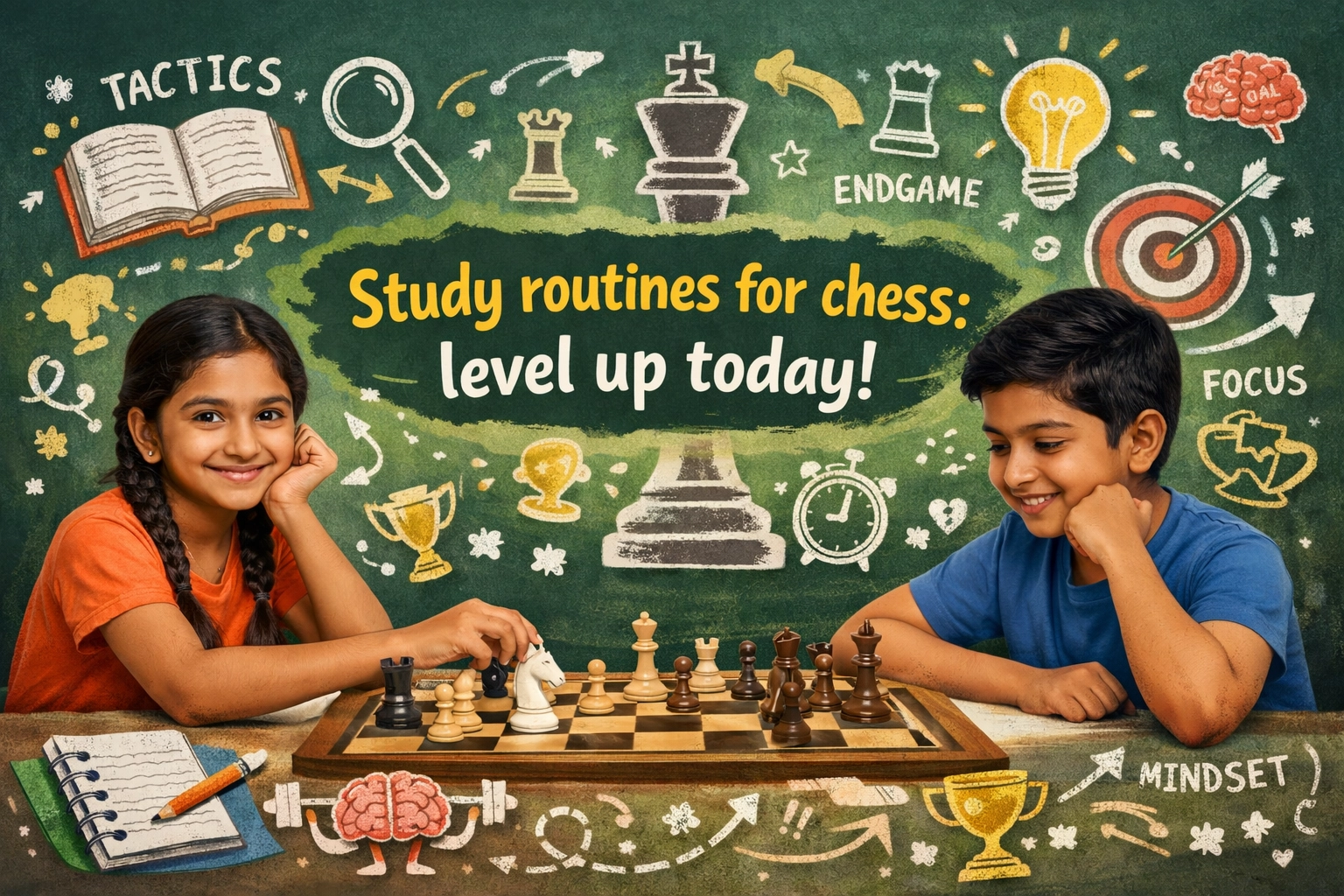
If you have been playing for a while and feel like you are stuck at the same level, do not worry. This happens to lakhs of chess players around the world. The good news is that with the right guidance, anyone can improve. In this detailed guide, we will walk together through the best chess improvement tips, practical techniques, and study routines for chess that actually work.
- Introduction to chess improvement
- Set clear goals and build good habits
- Strengthen your tactical foundation
- Study routines for chess strategy and positional concepts
- Deepen opening knowledge with purpose
- Improve endgame skills for practical results
- Analyse your games with reflection
- Play regularly with intention
- Use training resources wisely
- Build the right mindset
- Frequently asked questions about chess improvement
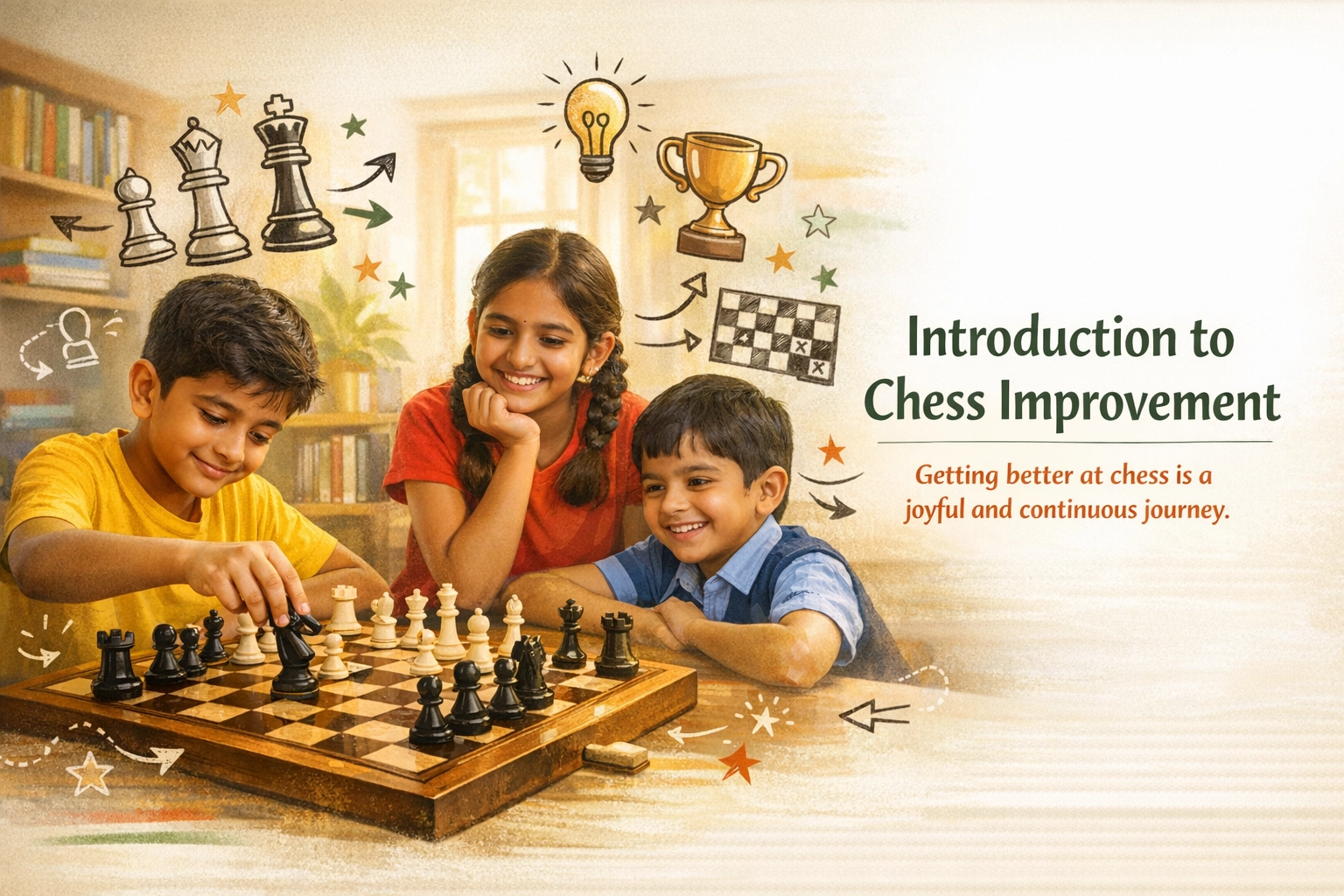
Introduction to chess improvement
Getting better at chess is a journey. At Enthuziastic, we believe that learning should always be a joyful and continuous process. Let us first understand why we should aim to improve and how a proper plan makes all the difference.
Why improving at chess matters for players of all levels
Chess is not just a game; it is a mental workout. When you focus on improving chess skills, you are actually training your brain to think a few steps ahead. This helps in real life too, like when you are making decisions at work or managing your daily schedule. For beginners, getting better means you stop losing pieces easily and start enjoying the real fight on the board. For intermediate players, improvement brings the joy of understanding deep strategies and pulling off beautiful combinations.
Even if you just play for fun, winning a well-played game gives a great feeling of satisfaction. When you invest time in chess training techniques, you slowly start seeing patterns that were completely invisible to you before. It is like learning a new language. At first, it is just random letters, but soon you start reading poetry.
How a structured approach beats random study
Many of us just play game after game online, hoping we will naturally get better. Or maybe we watch a random ten-minute video on a chess trap and think our rating will shoot up. Unfortunately, random study gives random results.
Think of it like preparing for exams. If you just open any page of any book without a syllabus, you will feel confused. A structured approach means having a proper study plan. It means you divide your time properly between tactics, strategy, endgames, and playing. When you follow structured study routines for chess, your brain connects the dots much faster. You build a solid foundation where each new concept rests on something you already understand.
Set clear goals and build good habits
Before we touch the chess pieces, we need to set our minds right. Goal setting and habit building are the hidden secrets of all grandmasters.
Importance of setting measurable goals
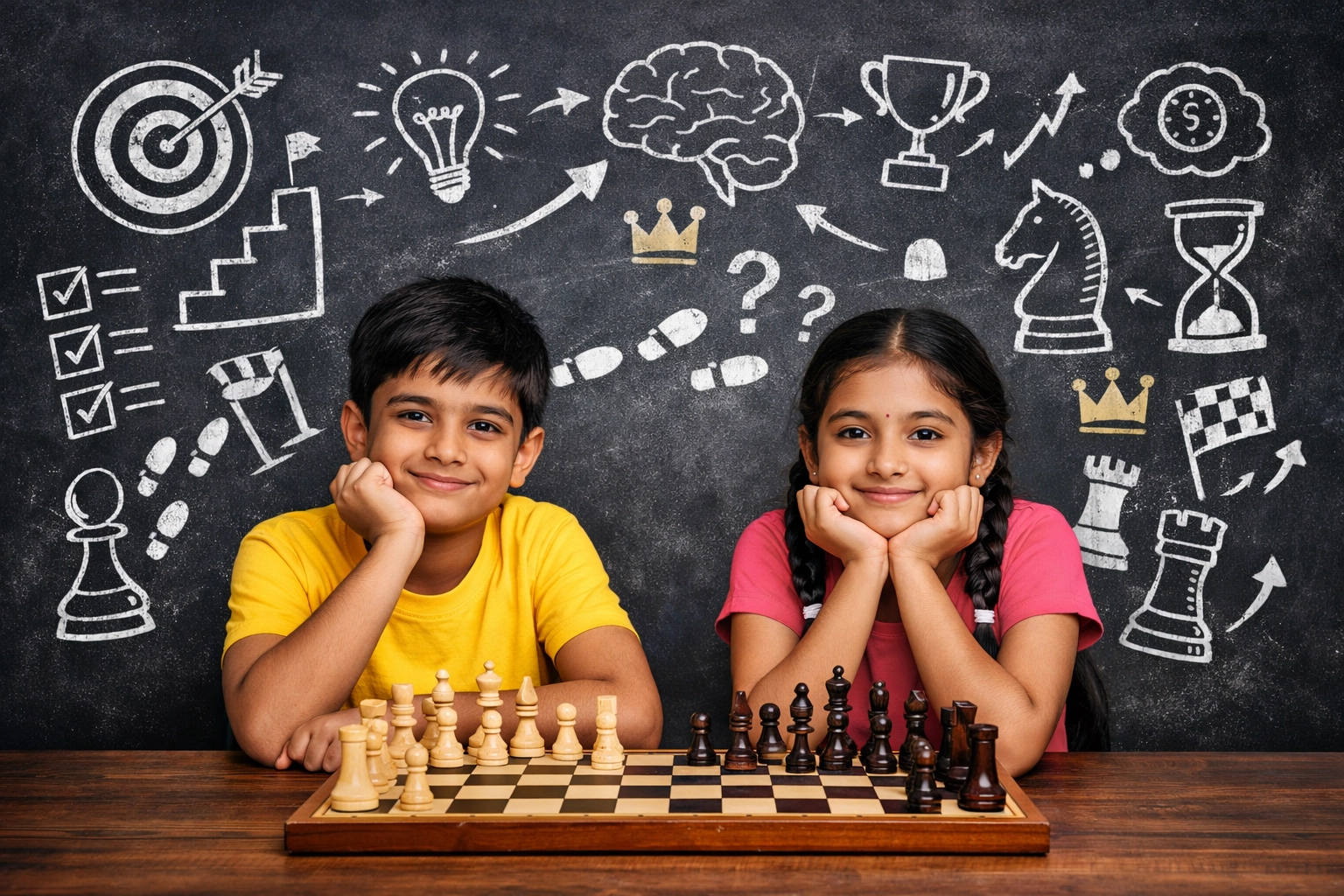
If you want to reach somewhere, you need to know your destination. Setting a goal like "I want to be good at chess" is too vague. Instead, set measurable goals. For example, "I want to increase my rapid rating by 100 points in three months" or "I want to solve twenty tactical puzzles every day without fail."
Measurable goals give you a target to hit. If you are a tournament player, your goal could be scoring at least fifty percent in your next local competition. If you are learning, your goal could be mastering one specific opening for white and one for black by the end of this month. When you achieve these small milestones, it gives you a big confidence boost and keeps you motivated to learn more.
How consistent habits lead to steady improvement
We often look for a magic trick to improve quickly. But the real magic is consistency. Doing just thirty minutes of proper chess study every day is far better than studying for five hours on a Sunday and touching the board again only next week.
Good habits shape your progress. Make it a daily habit to solve a few puzzles with your morning tea. Make it a habit to analyze your game immediately after you finish playing, instead of starting a new game instantly. At Enthuziastic, we always tell our learners that steady, regular steps take you much further than sudden, tiring leaps. Consistency builds your chess muscle memory.
Strengthen your tactical foundation
Chess is often said to be a ninety percent tactic. If you leave your queen hanging, no amount of deep strategic knowledge will save the game.
Why tactics are central to chess and how pattern recognition helps
Tactics are short sequences of moves that lead to an immediate advantage, like winning a piece or delivering a checkmate. Forks, pins, skewers, and discovered attacks are the basic tools of the trade. If you want to know the fastest ways to get better at chess, it is improving your tactical vision.
When you solve tactics regularly, you are building pattern recognition. During a real game, you do not have time to calculate every single possibility. But if your brain has seen a specific checkmating pattern a hundred times in practice, it will instantly spot it on the board. It is just like driving on a familiar road; your hands and feet know exactly what to do when a speed breaker comes.
Practical exercises for daily tactical training
To improve your tactics, you need practical, daily exercises. Start by doing puzzle streaks or puzzle rushes on chess websites. Do not just guess the move. Sit on your hands, look at the board, and try to calculate the entire sequence in your head before moving a piece.
A great exercise is the "woodpecker method." This means solving a set of puzzles, and then solving that exact same set again faster, and then again even faster. This drills the tactical patterns deep into your subconscious mind. Spend at least fifteen to twenty minutes daily just crunching tactics. It is the perfect warm-up before you play any real games.
Study routines for chess strategy and positional concepts
Once you stop blundering pieces, the game moves to a higher level. This is where strategy comes in. Strategy is the long-term plan, while tactics are the short-term actions to execute that plan.
How strategic understanding complements tactics
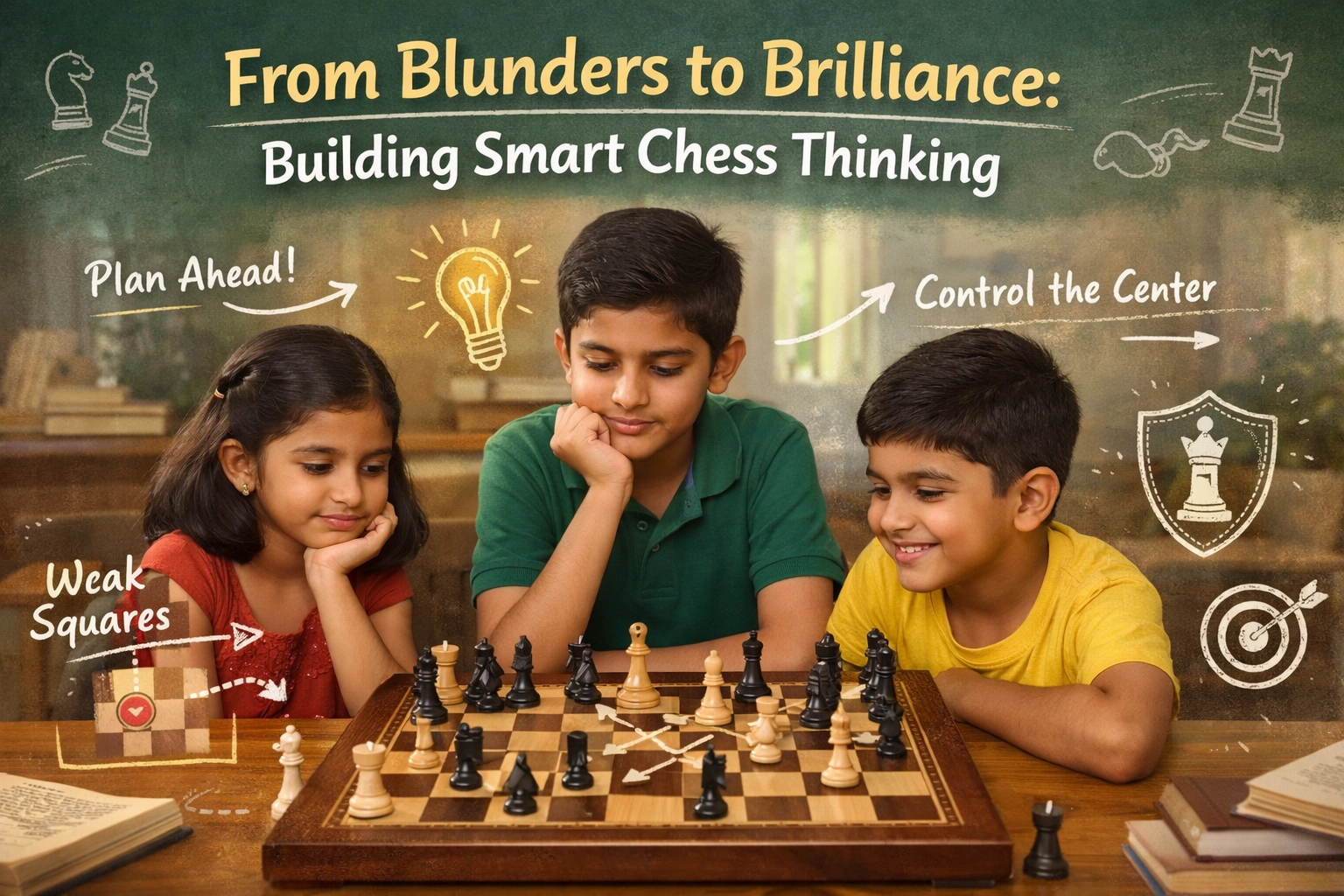
Imagine you are commanding an army. Tactics are the actual fights happening on the battlefield, but strategy is deciding where the battlefield should be. A good strategic position naturally creates opportunities for tactical strikes. If your pieces are poorly placed, no tactical tricks will help you.
When you learn strategy, you learn how to improve your position slowly. You understand where your pieces belong. Sometimes in a chess game, there is no immediate tactic available. During these quiet moments, positional understanding tells you what to do next, like improving your worst-placed piece or controlling the center.
Key strategic ideas such as piece activity, pawn structure, and open files
Let us break down some key strategic concepts that are essential for improving chess skills.
First is piece activity. An active piece controls many squares and creates problems for the opponent. A passive piece is stuck behind its own pawns. Always ask yourself, "Which of my pieces is the least active, and how can I make it better?"
Second is pawn structure. Pawns are the soul of chess. They cannot move backward, so every pawn move creates a permanent change in the position. Learn about isolated pawns, doubled pawns, and passed pawns. A good pawn structure gives your pieces safe outposts to operate from.
Third is open files and diagonals. Rooks belong on open files (columns with no pawns). Bishops belong on long open diagonals. Putting your rook on an open file is like putting your car on an empty highway; it can use its full power. Understanding these simple positional ideas will completely change how you view the chessboard.
Deepen opening knowledge with purpose
The opening is the first phase of the game. It sets the stage for the middlegame. However, many players approach opening study completely wrong.
Why opening study should include understanding ideas, not just memorising moves
A very common mistake is trying to memorize twenty moves deep into a complex opening variation. The problem is, your opponent might play a completely unexpected move on move four. If you only memorized the lines and do not understand the ideas behind them, you will be completely lost.
Instead of rote memorization, learn the purpose behind the opening. Why did we move this pawn? Which square are we fighting for? Where does this bishop want to go eventually? When you understand the main ideas and typical middlegame plans of an opening, you can easily navigate the game even if your opponent surprises you. Understanding is always stronger than simple memory.
How to build a repertoire suited to your style and goals
A chess repertoire is a set of openings you rely on as white and black. To build a good repertoire, you need to know yourself. Are you an aggressive player who loves to attack the king? Or are you a quiet, solid player who likes positional maneuvering?
If you love attacking, you might enjoy openings like the King's Gambit or the Sicilian Defense. If you like solid play, the Queen's Gambit or the Caro-Kann Defense might be better for you. Choose openings that suit your natural style. Do not change your openings every single week. Pick a few solid lines, play them consistently, learn from your mistakes in those specific structures, and slowly deepen your knowledge.
Improve endgame skills for practical results
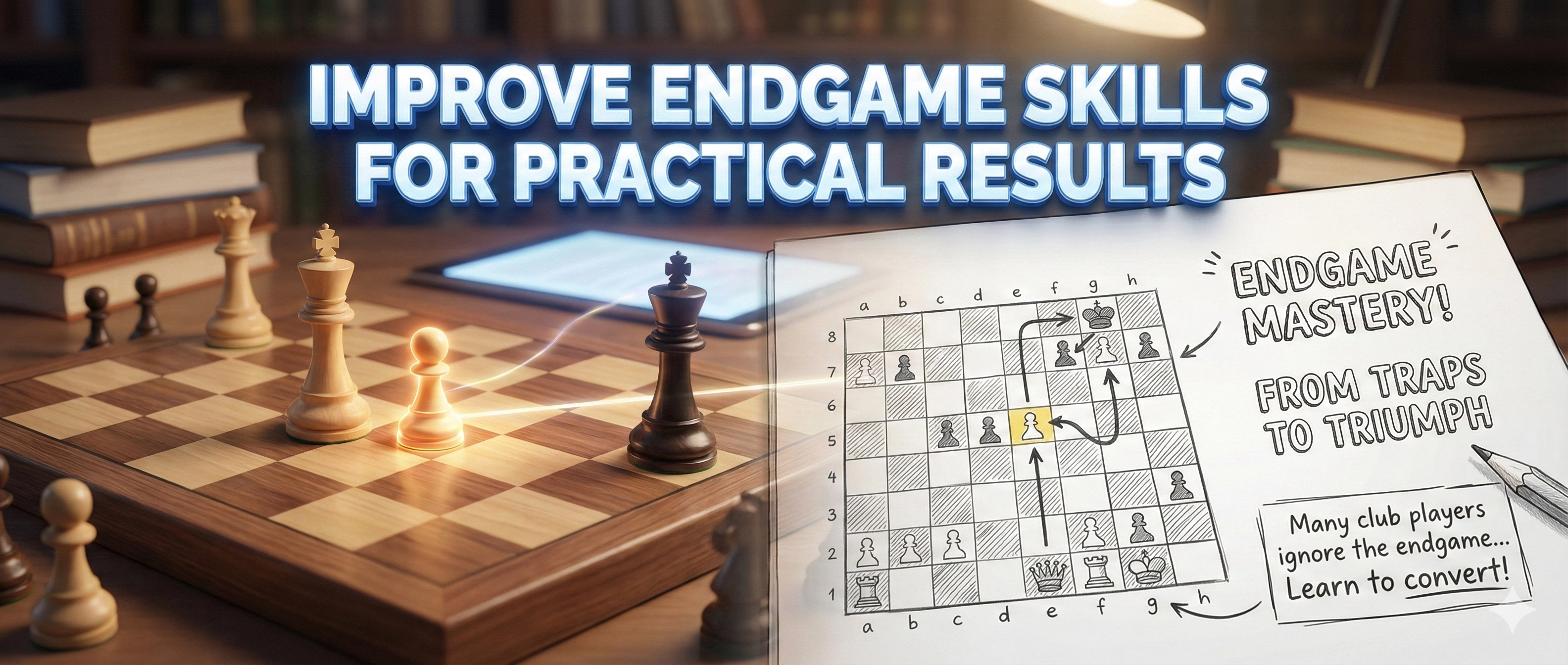
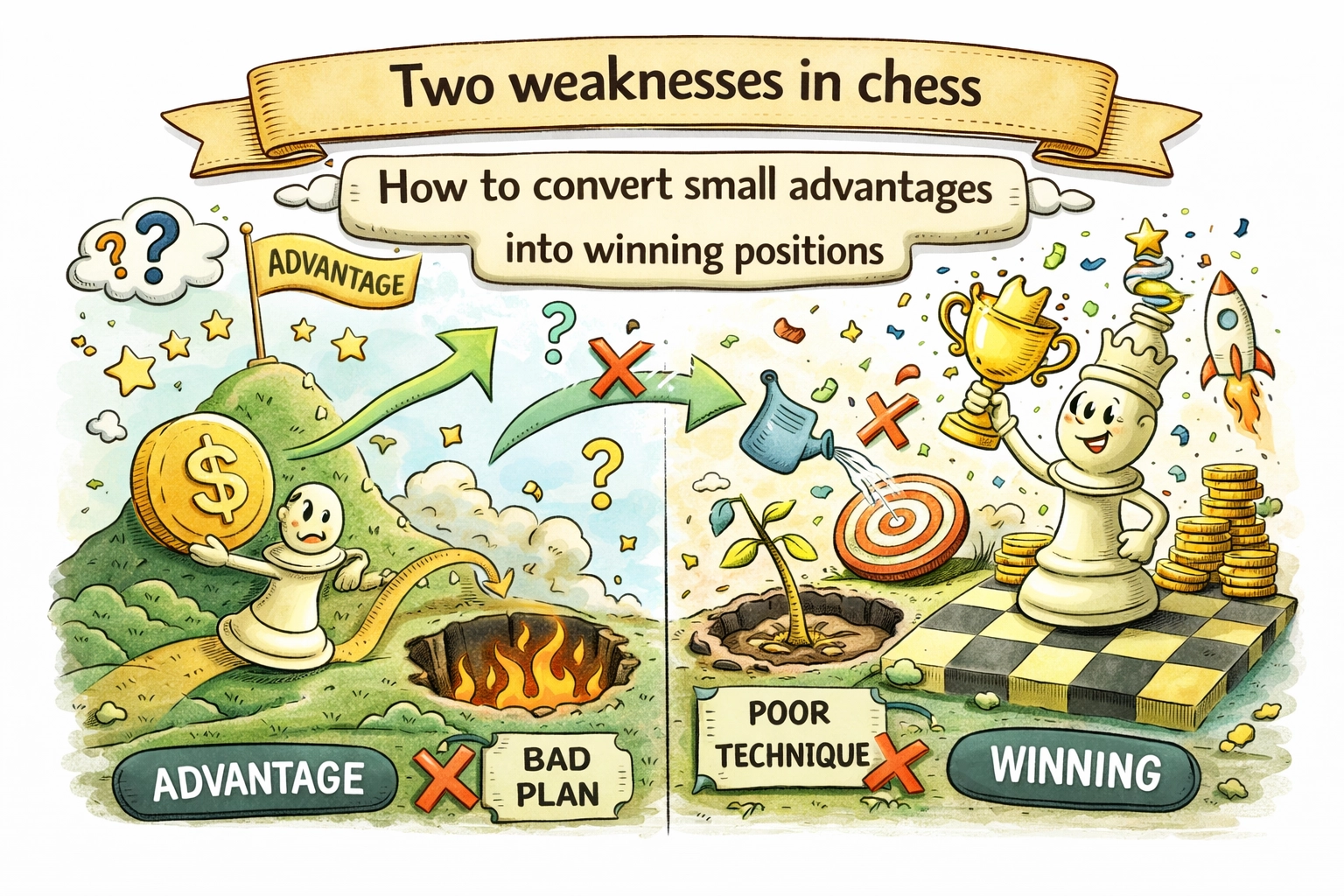
Many club players completely ignore the endgame. They study traps and attacks, but if the game simplifies, they do not know how to convert a winning advantage.
Value of knowing basic and advanced endgames
The endgame is where true chess mastery shines. In the endgame, the board is empty, and the king becomes a powerful attacking piece. A strong player can draw a worse endgame and win an equal one.
Knowing your basic endgames is non-negotiable. You must know how to checkmate with a king and queen versus a king, and a king and rook versus a king. If you do not know these, all your hard work in the opening and middlegame is wasted. Advanced endgames teach you how to squeeze water from a stone. Studying endgames also improves your calculation skills because the pieces are fewer, and you can calculate deeper without getting confused.
Drills and routines for endgame mastery
To master endgames, start with king and pawn endgames. Learn the concept of "opposition" and the "rule of the square." These are fundamental.
Set up a drill for yourself. Place a random endgame position on a digital board against the computer, and try to win it against maximum difficulty. It will be frustrating at first, but it is one of the best chess training techniques. Work your way up to rook endgames, which are the most common type of endgames in practical play. Read a basic endgame manual and practice the positions actively. Do not just read it like a novel; set up a real board and move the pieces.
Analyse your games with reflection
Playing games is fun, but if you do not look back at what happened, you will keep repeating the exact same errors for years.
How reviewing your own games reveals recurring mistakes
Every game you play contains a lesson specifically designed for you. When you review your games, you start seeing bad habits. Maybe you notice that you always lose focus around move thirty. Or maybe you realize that you struggle against players who attack on the queenside.
By analyzing your losses, you find the gaps in your knowledge. Did you lose because of a tactical oversight? Did you play the opening wrong? Or did you misplay a completely won endgame? Identifying the cause of your losses is the fastest way to get better at chess. Do not just analyze your lost games, though. Analyze your wins too. Sometimes you win because the opponent made a bigger mistake, not because your play was perfect.
When and how to use analysis tools and engines
Today, we have powerful chess engines that can tell us the best move in a microsecond. But beware, engines can be a double-edged sword. If you turn on the engine immediately after a game, it will give you the answer, but your brain does no work.
The correct way to use analysis tools is to first analyze the game yourself. Go through the moves and try to figure out where things went wrong. Write down your thoughts and the variations you calculate. Only after you have done your own thinking, turn on the engine. Compare the engine's suggestions with your own thoughts. Use the engine as a strict teacher who corrects your homework, not as a shortcut to get the answers.
Play regularly with intention
Studying is important, but chess is ultimately a practical game. You have to test your skills in the heat of battle.
Why playing more games helps improvement
Knowledge without practice is useless. When you play regularly, you apply the chess improvement tips you have learned. You get used to time pressure, psychological stress, and dealing with unexpected replies from humans.
Playing builds your practical intuition. You learn how to manage your time on the clock. You learn how to stay calm when your opponent launches a scary-looking attack. The more you play, the more comfortable you become at the board. But there is a catch: playing meaningless bullet games for hours does not help you improve. You must play with intention.
How to balance online, over-the-board, and study games
To get the most out of playing, you need a healthy balance. Online chess is great because you can find an opponent anytime. Play longer time controls online, like rapid (10 or 15 minutes per side). This gives you enough time to actually think and apply your study routines for chess.
Over-the-board (physical) chess is a completely different experience. Looking at a 3D board changes your perspective, and playing face-to-face with a human teaches you emotional control. Try to visit a local chess club or play with friends.
Treat some of your games as "study games." In these games, do not care about the result or your rating. Your only goal is to apply a new opening you learned or a new strategic concept. Balancing serious play, fun play, and study is key to consistent progress.
Use training resources wisely
We are lucky to live in an age where there is an abundance of chess knowledge available. But this can also be overwhelming.
Utilising books, videos, coaches, and apps for targeted training
There are thousands of books, millions of videos, and dozens of apps promising to make you a master. At Enthuziastic, we recommend using a mix of resources, but choosing them carefully.
Chess books are fantastic for deep, focused study. When reading a book, turn off your phone, set up a real board, and play through the variations slowly. It builds deep concentration.
Videos and live streams are great for visual learners and for grasping the general ideas of an opening quickly.
Chess apps are brilliant for your daily tactical puzzles and practicing on the go.
If you are serious about fast-tracking your progress, getting a chess coach is a huge advantage. A coach can instantly spot your weaknesses and design personalized study routines for chess tailored just for you.
How to choose the right resource for your needs
Do not try to read five books at once. Pick one good book suited to your rating level and finish it. If you are a beginner, do not buy a book meant for grandmasters; it will only discourage you.
When choosing a video series or an app, look for content that forces you to interact and solve problems, rather than just passively watching. Your training resources should match your current goals. If your goal this month is to improve endgames, put aside the opening books and focus only on endgame resources. Stay focused and avoid jumping from one shiny new course to another.
Build the right mindset
Finally, the most important piece of the chess puzzle is the one sitting in the chair: you. Your mindset determines how far you will go.
Handling losses, setbacks, and plateaus with resilience
Chess can be a cruel game. You can play brilliantly for forty moves, make one mistake, and lose the game. It is easy to feel frustrated and angry. But handling losses gracefully is a hallmark of a strong player.
When you lose, do not take it personally. Accept that the opponent played better or that you made an error. A loss is simply an opportunity to learn. Sometimes, you will hit a plateau, where your rating stays exactly the same for months. This is completely normal. A plateau usually means your brain is absorbing new information, and soon, a breakthrough will happen. Stay patient, trust your study routines for chess, and keep working hard.
Techniques to stay focused and motivated
Staying motivated over a long period requires discipline. Remind yourself why you love the game. Watch beautiful games played by legends like Mikhail Tal or Viswanathan Anand to get inspired.
Take breaks when you feel burned out. If you are on a losing streak, stop playing for the day. Go for a walk, drink some water, and clear your head. Chess fatigue is real. Celebrate your small victories. If you played a game with ninety percent accuracy, be proud of it, even if you ended up drawing the game. Stay connected with a community of chess lovers, like our learners at Enthuziastic, to share your progress and learn from each other. Enjoy the beautiful game, play with a clear mind, and the results will naturally follow.
Frequently asked questions about chess improvement
What is the fastest way to get better at chess as a beginner?
The fastest way for beginners to improve is by focusing entirely on avoiding one-move blunders and practicing basic tactical puzzles daily. Learning simple opening principles (controlling the center, developing pieces, castling early) and understanding basic checkmates will drastically improve your game.
How many hours a day should I study chess to see improvement?
Consistency is much more important than raw hours. Even 30 to 45 minutes of focused daily practice is enough for most club players to see steady improvement. Ensure this time is structured properly, mixing tactics, game analysis, and playing.
Are puzzle rushes and blitz games good for chess training?
Puzzle rushes are excellent for building quick pattern recognition. However, playing too many blitz or bullet games can harm your chess in the long run, as it encourages superficial thinking. It is better to play rapid games (10+ minutes) where you have time to calculate and apply your strategic knowledge.
When should I start memorising deep opening theories?
Unless you are approaching a very high rating (like 2000+ Elo), memorizing deep, 15-move opening theories is not necessary. Instead, focus on the opening principles, main ideas, and typical middlegame plans associated with your chosen openings.
How do I stop blundering winning positions?
Blunders often happen due to a lack of concentration, time pressure, or relaxing too early when winning. To stop blundering, always assume your opponent has a tricky counterplay. Make it a habit to do a quick "blunder check" (asking yourself what your opponent is threatening) before every single move.
Do I really need a chess coach to get better?
You do not strictly need a coach to improve, as there are abundant free resources and books available. However, a good coach can significantly speed up your progress by pointing out your specific weaknesses, providing targeted study material, and keeping you accountable.
Why does my chess rating keep fluctuating so much?
Rating fluctuations are perfectly normal. They can happen due to fatigue, tilt (playing while emotional), or simply trying out new openings and strategies that you have not mastered yet. Focus on improving your understanding of the game rather than watching the rating number every day.
What is the most important phase of a chess game?
While all phases are connected, many grandmasters believe the endgame is the most crucial for practical results. Strong endgame skills allow you to save worse positions and smoothly convert small advantages into wins, directly impacting your overall success rate.
Comments