

Welcome to Enthuziastic – Global People to People Live Learning Network.
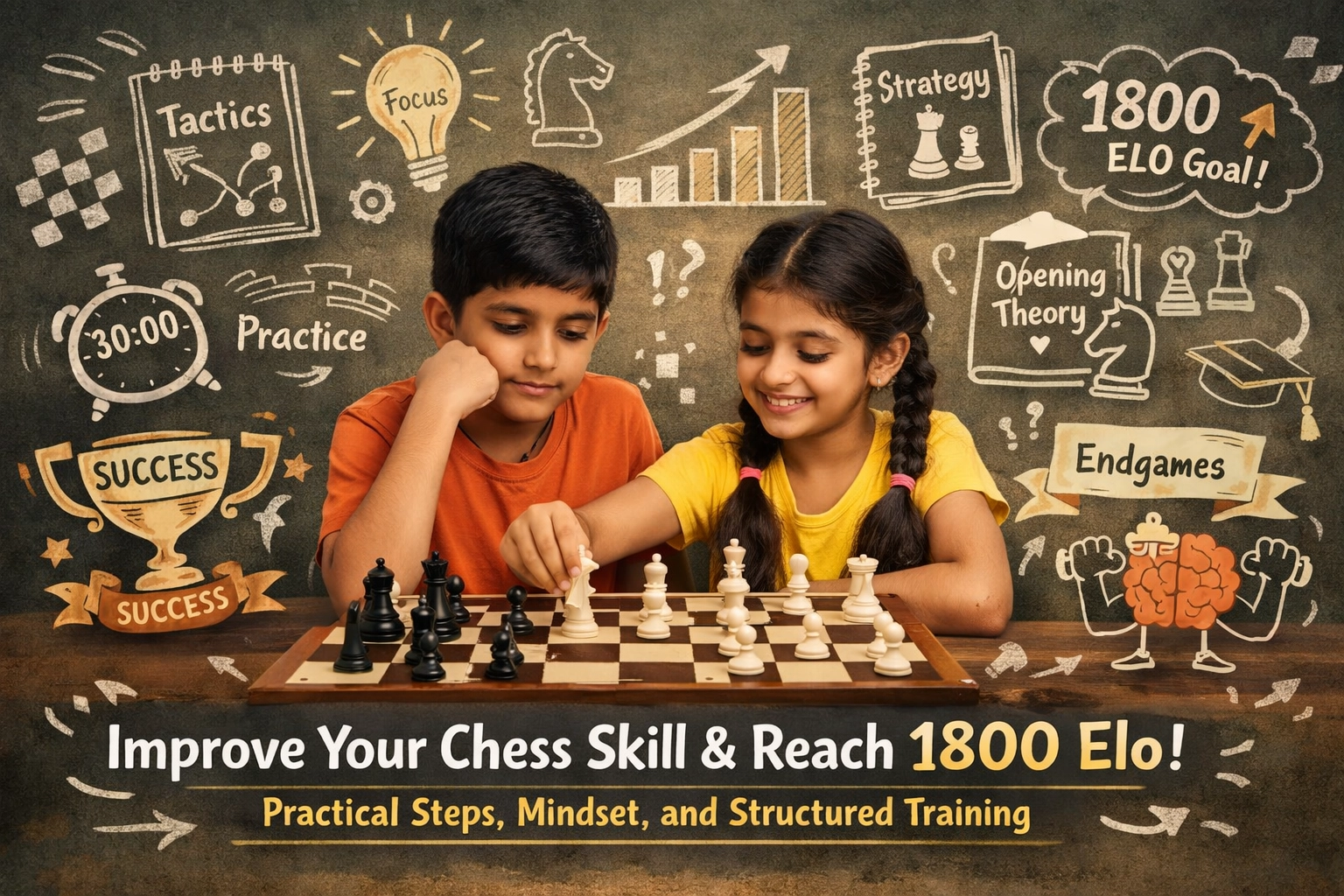
Today, we are going to discuss a fascinating journey that many passionate chess players dream of taking. Chess is much more than just a board game. It is a beautiful mixture of art, science, and a test of character. If you are someone who loves the game, you probably know the thrill of a good combination or the satisfaction of a well-played endgame. But along with the joy of playing comes the strong desire to increase chess rating and climb the competitive ladder.
For many intermediate and club players, the ultimate goal is to reach 1800 Elo. Hitting the 1800 rating mark means you have crossed the threshold of a casual player. At this level, you are respected in local tournaments, you rarely hang pieces, your tactical vision is sharp, and you have a deep understanding of positional play. However, making the leap from 1200 or 1500 to 1800 is not easy. It requires discipline, the right chess training techniques, and a lot of patience.
In this comprehensive guide, we will explore the precise chess Steps to improve your process. We will talk about how to build a structured chess practice, how to manage your mental state during tough games, and how to balance your playing time with your study time. Whether you are a student, a working professional, or simply a chess lover, these steps will help you organise your learning and guide you towards your target. Let us begin this exciting journey of continuous improvement.
- The importance of setting realistic chess goals
- Chess psychology and the right mindset for improvement
- Structured training routines for long-term progress
- Practical training techniques every player should follow
- Using games and analysis to accelerate learning
- Balancing play and study for effective growth
- Chess in education and broader skill development
- Conclusion: your path to 1800 Elo begins today
- Frequently asked questions on how to reach 1800 Elo
The importance of setting realistic chess goals
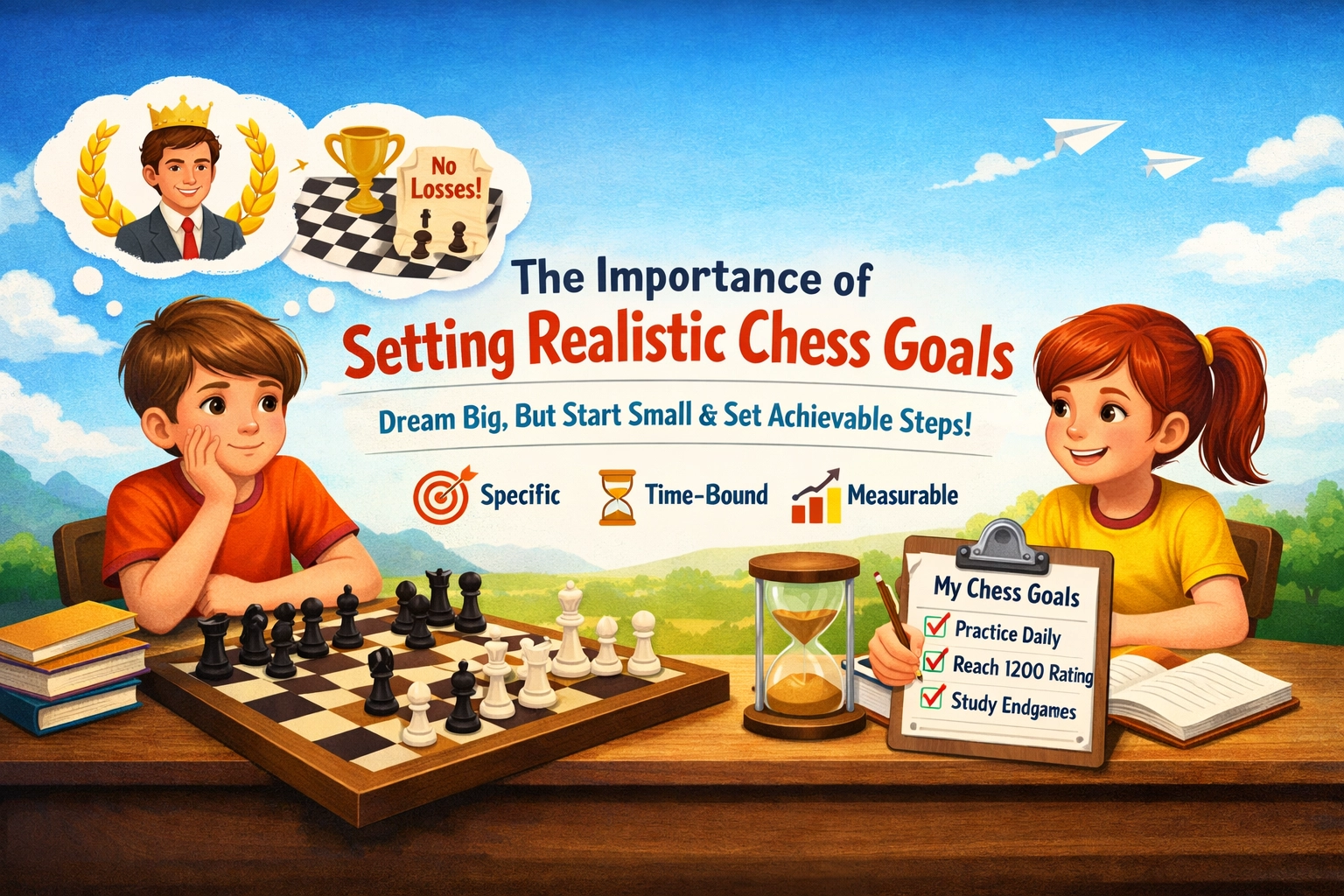
Whenever we decide to achieve something big in life, the first step is always to set a proper goal. In chess, it is very common for players to say, "I want to be a grandmaster," or "I want to never lose a game." While it is good to have big dreams, these types of vague ambitions can actually hurt your progress. This is why setting realistic, measurable, and time-bound goals is one of the most vital chess improvement steps.
Why specific goals like reaching 1800 Elo help structure training
When your goal is too broad, it is very hard to know what you should be doing on a daily basis. Should you study openings? Should you solve puzzles? Should you read a book on the endgame? A vague goal gives you no direction. On the other hand, a specific goal like deciding to reach 1800 Elo changes everything.
You see, knowing your exact target rating allows you to research and understand what skills are required for that specific level. To reach 1800 Elo, you do not need to memorise twenty moves of opening theory like a grandmaster. Instead, you need excellent basic tactics, a solid understanding of pawn structures, and a very reliable endgame technique. Once you know this, you can build a structured chess practice around these exact needs.
Having a specific number in mind also makes it easier to measure your progress. If your current rating is 1500, and your target is 1800, you have a clear gap of 300 points. You can break this down into smaller, bite-sized goals. For example, you might aim to gain 20 to 30 rating points every month. This makes the mountain look much easier to climb, and it gives you a sense of achievement every time you hit a small milestone.
How to balance ambition with sustainable progress
We Indians know the value of hard work, but we also know that trying to rush things often leads to mistakes. In chess, if you try to increase chess rating too quickly, you will probably end up playing too many blitz games, getting frustrated, and losing more points. This is why balancing your ambition with sustainable progress is so important.
Sustainable progress means improving your fundamental understanding of the game rather than just trying to win cheap rating points with opening tricks. A trick might win you a game against a 1400 player, but an 1800 player will easily defend it and punish you. Therefore, you must focus on building a strong foundation. Accept that there will be days when you study for two hours and still lose your evening game. That is completely normal.
To maintain this balance, try to celebrate learning rather than just winning. When you review a game and finally understand why a certain knight manoeuvre was a mistake, treat that as a victory. Remember that rating is a lagging indicator of your actual skill. Your knowledge improves first, and your rating catches up later. By staying patient and sticking to your structured chess practice, the results will come naturally.
Chess psychology and the right mindset for improvement
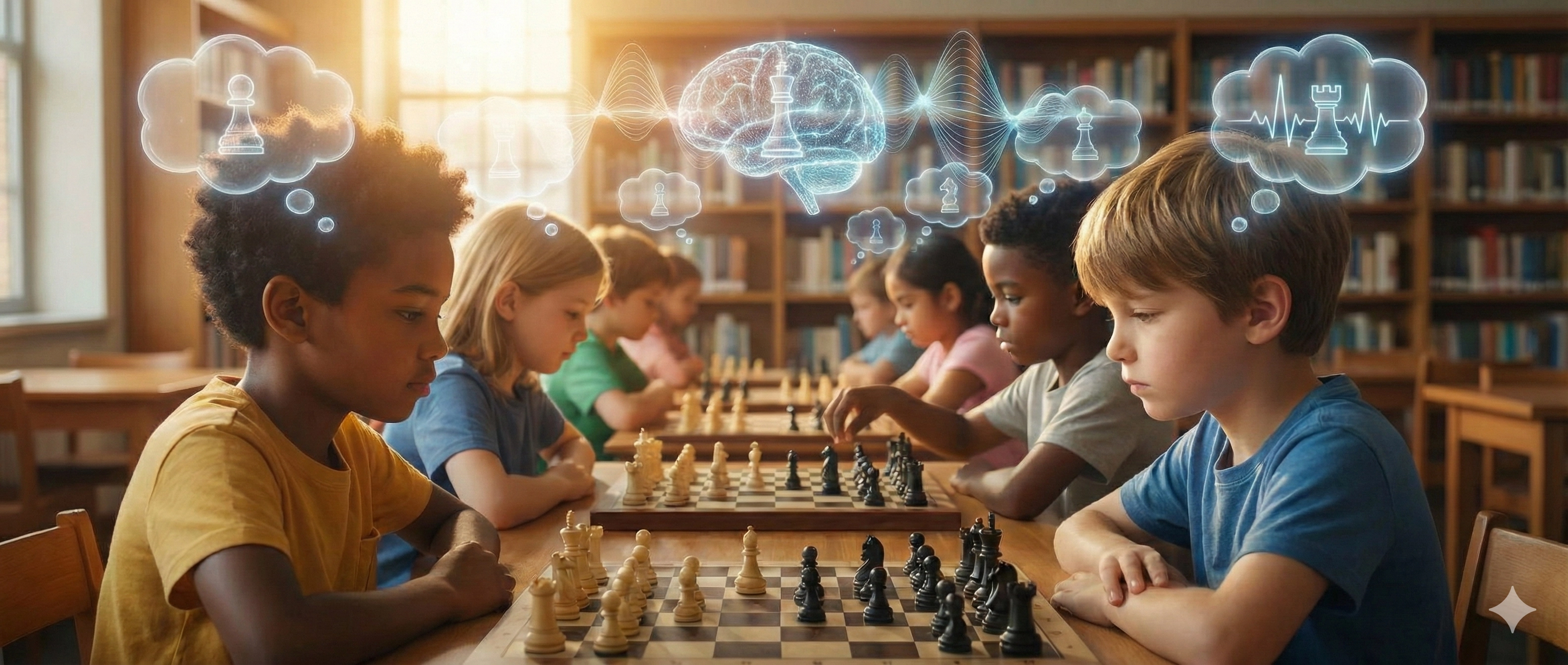
Chess is played on the board, but it is won and lost in the mind. You can memorise all the best chess training techniques, but if you do not have the right psychology, you will struggle to reach your full potential. Your mindset dictates how you handle pressure, how you react to a bad move, and how you behave after a painful loss.
Adopting a growth mindset and learning from mistakes
One of the most powerful concepts in education and self-improvement is the growth mindset. In simple terms, a growth mindset is the belief that your intelligence and abilities are not fixed; they can be developed through hard work and dedication. In the context of chess, this means understanding that nobody is born an 1800-rated player. Even the world champions started by blundering their queens.
When you have a growth mindset, you do not view a loss as a sign that you are not smart enough. Instead, you view every single loss as a free lesson. This is crucial for chess improvement. If you lose a game because you missed a basic tactical fork, a fixed mindset will make you angry and make you quit for the day. A growth mindset will make you say, "Ah, I need to work on my knight forks," and you will immediately go and solve ten puzzles on that theme.
To adopt this mindset, you have to leave your ego at the door. Do not attach your self-worth to your chess rating. You are a learner on a long journey, and mistakes are the stepping stones that will eventually help you reach 1800 Elo.
Handling pressure, rating plateaus, and setbacks
No matter how disciplined your structured chess practice is, you will face hard times. Every chess player in the world, without exception, hits a rating plateau. A plateau is a period where your rating simply stops going up, sometimes for months or even years. This happens because the skills that got you to 1500 are not the same skills that will get you to 1800.
When you hit a plateau, it is very common to feel demotivated. The pressure builds up, especially when you see your peers improving while you feel stuck. The best way to handle this setback is to shift your focus away from the rating and back to the process. Stop looking at your Elo graph. Instead, look at the quality of your moves. Are you calculating better? Are your plans more logical?
During these times, taking a short break from playing rated games can also be very helpful. Spend a week or two just studying, watching instructive videos, or reading a good chess book. When you return to the board, you will feel refreshed and less anxious about your rating. Managing this psychological pressure is a hidden, but essential, chess improvement step.
Staying focused and resilient during long training journeys
The journey to reach 1800 Elo is a marathon, not a sprint. It might take you a year, or it might take you several years. To survive such a long journey, you need tremendous resilience. There will be days when you simply do not feel like studying. There will be tournaments where you play terribly and drop 50 rating points in a single weekend.
Resilience means showing up anyway. It means doing a little bit of structured chess practice even on the days you are tired from work or school. You do not need to study for five hours every day. Even twenty minutes of focused tactical training is better than zero minutes. Building a habit is much more important than the intensity of a single study session. Keep reminding yourself of why you started, and lean on the Enthuziastic community when you need motivation or support.
Structured training routines for long-term progress
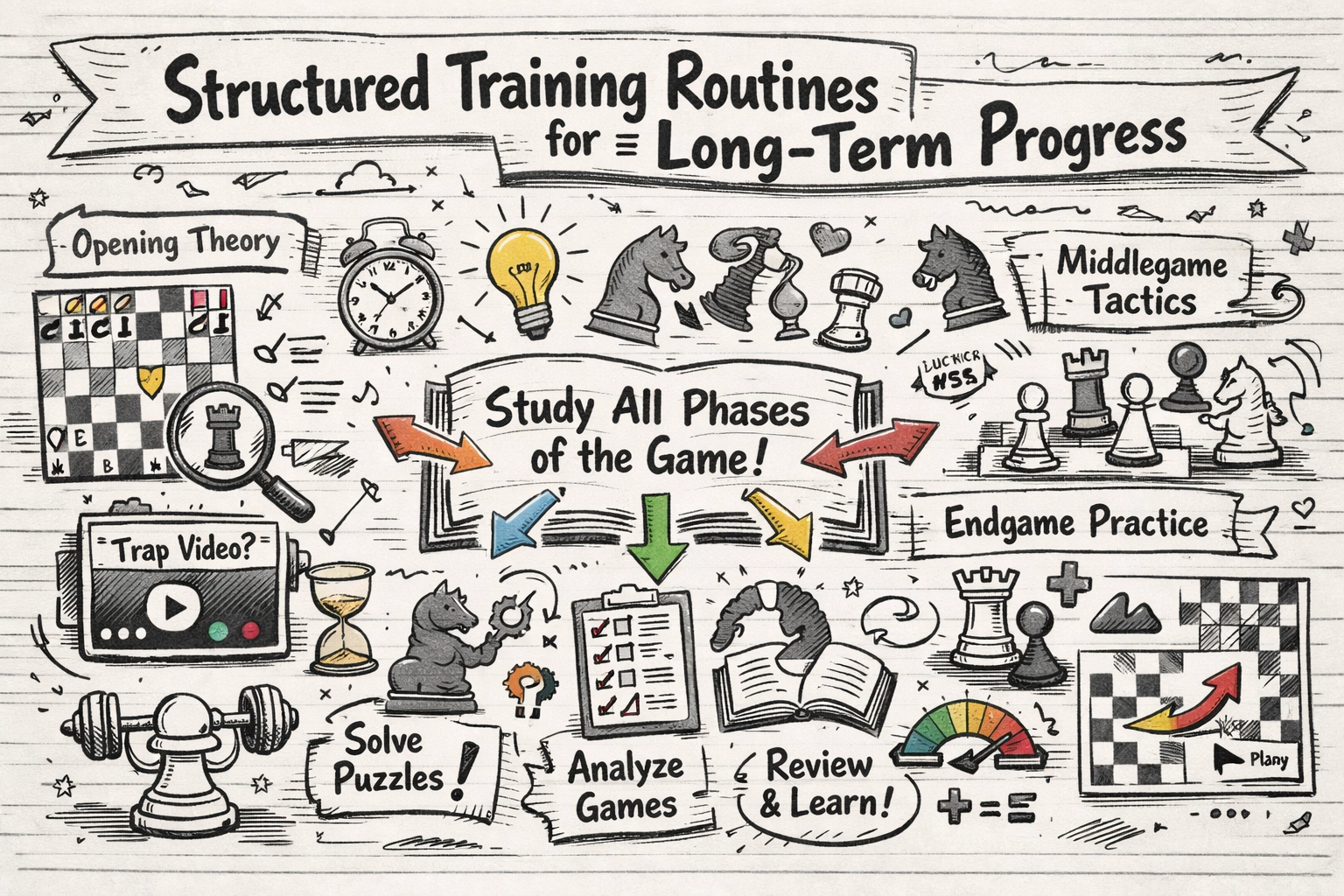
If you want to increase chess rating significantly, random study will not work. Watching a random opening trap video on YouTube and then playing a few bullet games is not training; it is entertainment. True improvement comes from a structured training routine that targets all phases of the game systematically.
The role of daily study plans, consistent practice, and deliberate learning
Discipline is the bridge between goals and accomplishments. Having a daily study plan removes the confusion of deciding what to do when you sit down at the chessboard. A good plan should be realistic and fit into your daily life. If you only have one hour a day to dedicate to chess, that is perfectly fine, as long as you use that hour wisely.
Consistent practice is key. It is much better to study for forty-five minutes every single day than to study for five hours on a Sunday and do nothing for the rest of the week. Chess requires pattern recognition, and your brain needs daily exposure to chess patterns to store them in your long-term memory.
Furthermore, your practice must be deliberate. Deliberate learning means focusing heavily on your weaknesses. We all like doing things we are already good at because it makes us feel smart. If you are great at tactics but terrible at endgames, it is very tempting to just solve more puzzles. But deliberate practice requires you to sit down, open an endgame manual, and do the hard work of learning rook and pawn endings. It may be uncomfortable at first, but it is one of the most effective chess training techniques.
How to mix tactics, strategy, openings, endgames, and game review
A very common question from students at Enthuziastic is, "How much time should I spend on each aspect of chess?" While the exact ratio changes depending on your current level, a balanced diet is necessary for anyone trying to reach 1800 Elo.
Firstly, tactics should make up a large portion of your daily study. Chess is 99 percent tactics, especially at the club level. You cannot execute a brilliant strategic plan if you blunder a piece to a simple pin. Dedicate about thirty to forty percent of your time to solving tactical puzzles.
Strategy and positional play should be next. This involves understanding pawn structures, weak squares, piece activity, and planning. You can improve this by studying annotated master games or reading books on chess strategy.
Endgames are often ignored by beginners, but they are the secret weapon to increase chess rating. Knowing how to convert a small advantage in the endgame, or how to draw a slightly worse position, will easily add 100 points to your rating. Dedicate at least twenty percent of your time to the endgame.
Openings should take up the smallest amount of your study time. At the amateur level, games are rarely decided in the opening. Pick a few solid openings for White and Black, learn the main ideas and typical middlegame plans, and do not waste hours memorising twenty-move variations.
Finally, game review. Analysing your own games is mandatory. We will discuss this in detail later, but always leave room in your weekly schedule to deeply review the games you have played.
Applying spaced repetition and mindful reflection for deeper learning
Learning something once does not mean you will remember it during a high-pressure tournament game. This is where spaced repetition comes in. Spaced repetition is a learning technique where you review information at gradually increasing intervals.
For example, if you learn a new opening trap or an essential endgame concept like the Lucena position, do not just look at it once and close the book. Set a reminder to look at it again the next day. Then review it again three days later, then a week later, and then a month later. By doing this, you force the concept deep into your brain's long-term memory. There are many digital flashcard apps and chess websites that use spaced repetition algorithms to help you with your structured chess practice.
Mindful reflection is equally important. After a training session, take two minutes to just sit back and reflect. Ask yourself, "What is the most important lesson I learned today?" This small habit of reflection solidifies your learning and makes you a more conscious and aware chess player.
Practical training techniques every player should follow
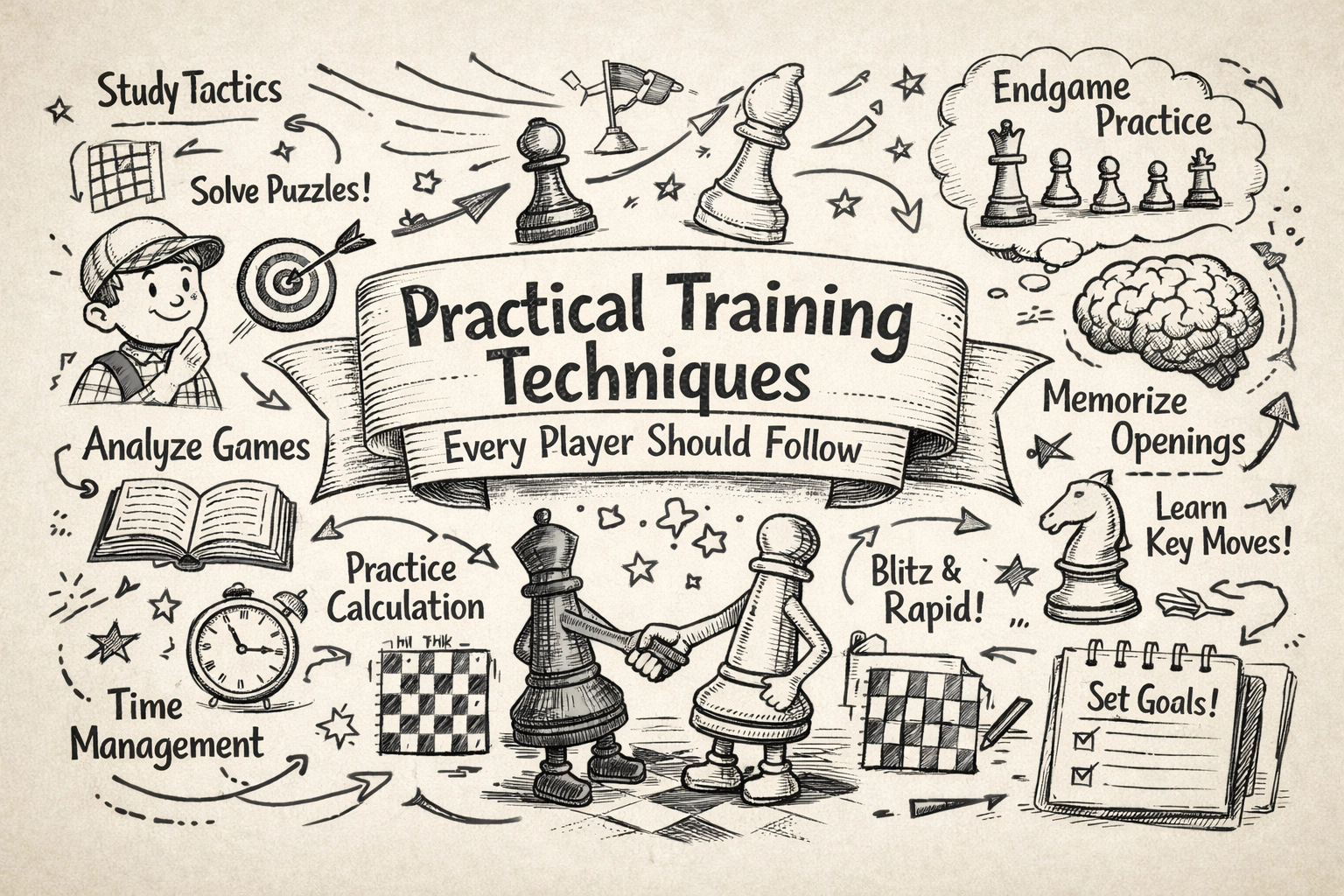
Now that we understand the importance of routine, let us dive into the actual chess training techniques. What exactly should you be doing during your study hours? The quality of your training is just as important as the quantity.
How to practise tactics without feeling overwhelmed
Tactics are the vocabulary of chess. If you want to speak the language fluently, you must know your vocabulary. However, many players approach tactics the wrong way. They open a puzzle rush feature, try to solve as fast as possible, guess the moves, and if they get it wrong, they immediately move to the next one. This does not help you reach 1800 Elo.
To properly train tactics, you must slow down. When you are presented with a puzzle, sit on your hands. Do not touch the mouse or the piece until you have calculated the entire line to the very end. You must see the final mating net or the material advantage clearly in your head before making the first move.
It is also helpful to categorise your tactical training. Spend a few days doing only 'pin' puzzles, then move to 'discovered attacks', then 'deflection'. By focusing on one motif at a time, you help your brain recognise these specific patterns much faster when they appear in a real game. Start with simpler puzzles to build pattern recognition, and gradually increase the difficulty to challenge your brain.
Training calculation skills and deep analysis
While basic tactics rely on pattern recognition, calculation is the raw muscle power of your chess brain. Calculation is required when the position is complex, and you have to look four, five, or six moves ahead to see if a sacrifice actually works. Improving this skill is one of the most challenging but rewarding chess improvement steps.
To train calculation, you need to engage in deep analysis. Set up a complex middle game position on a real, physical chessboard. Put away your phone, turn off the computer, and set a timer for fifteen or twenty minutes. Force yourself to calculate all the candidate moves (the moves that demand attention, like checks, captures, and threats) as deeply as you can. Write down your variations on a piece of paper.
Once the time is up, compare your written notes with an engine's evaluation. Did you miss a quiet defensive move by the opponent at the end of your calculation? Did you stop calculating too early because you assumed you were winning? This brutal feedback loop will expose the flaws in your thought process and quickly increase chess rating by sharpening your analytical skills.
How to avoid common training mistakes that slow improvement
It is very easy to fall into bad habits during structured chess practice. One of the most common mistakes is passive learning. Passive learning is when you lie on your bed, watch a grandmaster play chess on YouTube, and think you are studying. While this is entertaining, you are not actually stretching your brain. Chess improvement requires active learning, where you are constantly pausing the video, guessing the next move, and comparing your thoughts with the master's thoughts.
Another big mistake is playing too much and studying too little. We call this "bullet addiction". Many players will play fifty rapid or bullet games a day and wonder why their rating is not improving. Playing fast games without review only reinforces your bad habits. You keep making the same mistakes faster and faster.
Lastly, jumping from opening to opening is a massive mistake. You lose a game in the Sicilian Defense, so you get angry and switch to the Caro-Kann. You lose in the Caro-Kann, so you switch to the French Defense. By doing this, you never truly understand the soul of any opening. Pick a solid repertoire and stick to it through the bad times. Mastery takes patience.
Using games and analysis to accelerate learning
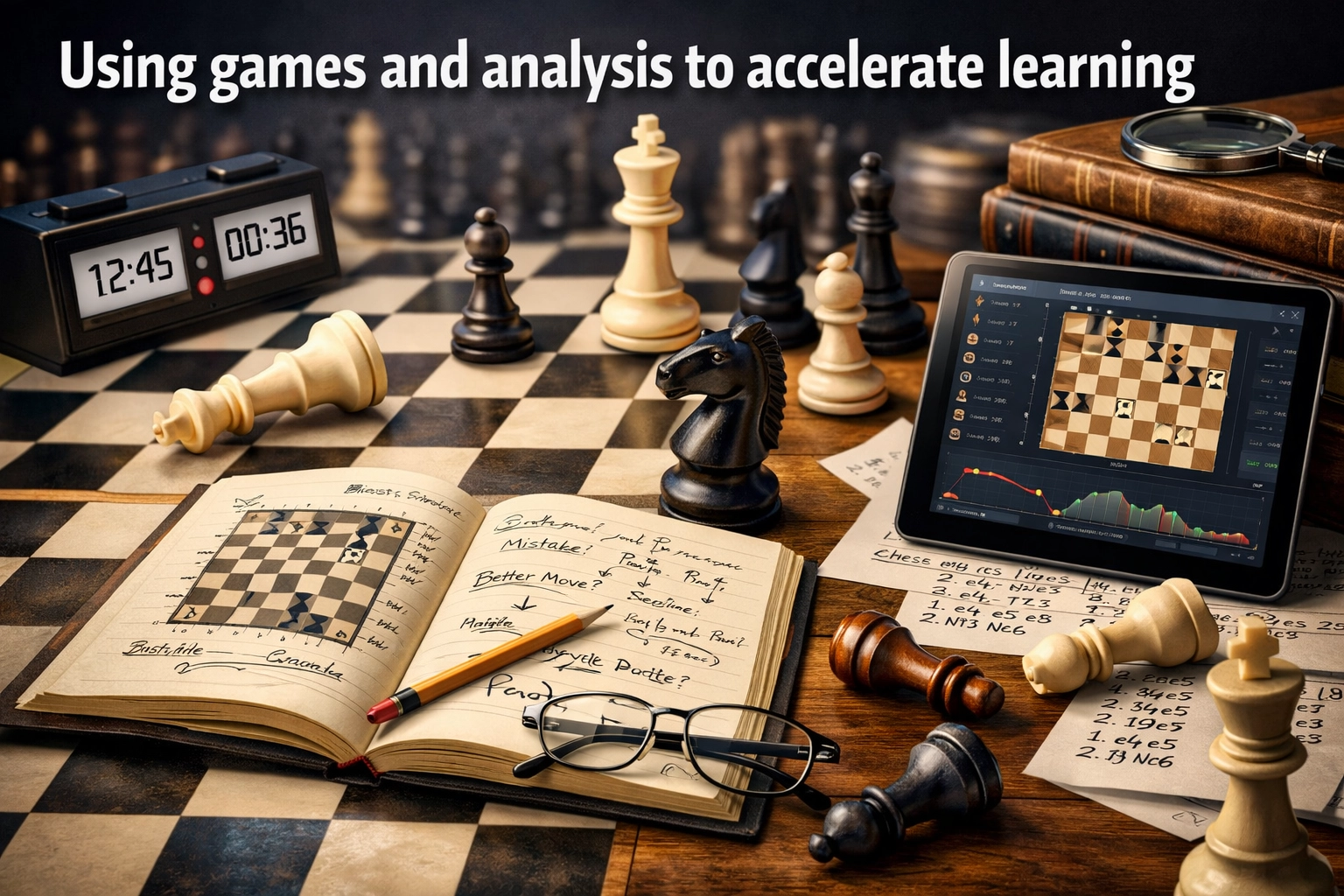
There is a famous saying in chess: "You can learn much more from a game you lose than from a game you win." Your own games are the greatest textbook you will ever read. They show exactly how your brain works, what you understand well, and what you are completely misunderstanding.
How reviewing your own games can reveal key patterns and recurring mistakes
If you are serious about your goal to reach 1800 Elo, you must analyse every single serious game you play. When you review your games, you are looking for patterns in your mistakes.
For instance, you might notice that in the last ten games you lost, six of them were lost because you pushed pawns in front of your castled king unnecessarily, creating weaknesses. Or you might notice that you constantly lose track of your opponent's knights in closed positions. Once you identify these recurring themes, your training plan writes itself. You now know exactly what you need to study to fix these leaks in your game.
When analysing, pay attention to the critical moments of the game. A critical moment is usually when the tension is high, pieces are in contact, or the pawn structure is about to change. Ask yourself what you were thinking at that moment. Were you feeling scared? Were you calculating properly? Fixing your thought process during these critical moments is a massive step forward.
When to use engines and when to trust your own analysis
In the modern era, chess engines are incredibly powerful. They can point out a mistake in a microsecond. However, relying on engines too much is a very dangerous habit. If you turn on the engine immediately after a game, it will spit out the best moves, you will nod your head and say, "Ah, I see," and you will learn absolutely nothing. The engine gives you the answer, but it does not teach you the human reasoning behind it.
The correct way to use engines is as a final check. First, analyse the game yourself without any computer assistance. Write down where you think you went wrong, what alternative plans you could have tried, and where you think your opponent made a mistake. Use your own brain to figure out the truth of the position.
Only after you have exhausted your own analytical abilities should you turn on the engine. Compare the engine's lines with your notes. If the engine suggests a move you did not even consider, try to understand the strategic idea behind that computer move. By doing this, you merge your human understanding with the engine's tactical perfection.
How annotated master games can guide your decision-making skills
One of the most classic and effective chess training techniques is studying the games of past masters. Grandmasters play chess with a deep understanding of harmony, piece coordination, and long-term planning. By going through their games, you absorb their positional feeling.
Do not just look at the bare moves; use heavily annotated games. Annotations are the notes written by strong players explaining the reasoning behind the moves. When studying a master game, cover the moves with a piece of paper. Try to guess the winning player's next move. If you guess wrong, read the annotation to understand why the master's move was superior to yours.
Players like Jose Raul Capablanca are excellent to study for clear, logical plans and beautiful endgames. Alexander Alekhine's games are fantastic for learning how to build an attack. Studying these historical games expands your chess vocabulary and gives you an arsenal of ideas to use in your own tournament practice.
Balancing play and study for effective growth
Knowledge without application is useless. You can read every chess book in the Enthuziastic library, but if you do not play games, you will never test your knowledge under real psychological pressure. Finding the right balance between studying the game and actually playing it is a delicate art.
Why playing regular games is essential
Playing regular, serious games is the testing ground for your structured chess practice. When you play a game with a long time control (like rapid or classical chess), you are forced to concentrate deeply, manage your time, and face the practical difficulties of making decisions when you are unsure.
Playing over the board (in a physical club or tournament) is highly recommended if possible. The experience of sitting across from a real human being, managing your nerves, and feeling the tension in the room is entirely different from clicking a mouse in your bedroom. It builds character and resilience.
Even if you play online, you must play with the right time control. Bullet and blitz chess are fun, but they rely mostly on reflexes and simple tricks. To deeply improve your understanding and increase chess rating, you should play games that give you at least fifteen to thirty minutes per side, if not longer. This gives you the time to actually apply the calculation techniques and positional concepts you have been studying.
How to use feedback from games to refine study plans
As mentioned earlier, your games give you data. If you treat your chess journey like a scientific experiment, every game provides feedback that you must use to tweak your methods.
Let us say you spent a whole month studying the French Defense. You feel very confident. You go and play five games online in that opening, and you lose four of them in the middlegame. This is critical feedback. It tells you that while you might know the opening moves, you do not understand the typical middlegame plans or pawn breaks.
Instead of getting depressed, use this feedback to refine your study plan. Go back to your books or videos, but this time, skip the opening moves and look specifically at typical middle games arising from the French Defense. This continuous cycle study, play, gathering feedback, and adjusting study is the foolproof method to eventually reach 1800 Elo.
Avoiding burnout while staying engaged and motivated
Because chess is so mentally demanding, burnout is a very real threat. Burnout happens when you push yourself too hard, care too much about your rating, and forget why you started playing the game in the first place. You will know you are burning out when looking at a chessboard makes you feel tired rather than excited.
To avoid burnout, you must keep things fresh and engaging. Do not do the exact same type of training every single day for months. If you are tired of calculation, spend a few days just enjoying beautiful master games without analysing them too deeply. Play some unrated games where you test out crazy, romantic gambits just for fun.
Additionally, be part of a community. At Enthuziastic, we know that interacting with other passionate learners makes the journey much more enjoyable. Share your wins, discuss your painful losses with friends, and laugh at the silly blunders you make. Remember that chess is a lifelong companion, and preserving your love for the game is more important than achieving any temporary rating goal.
Chess in education and broader skill development
We often talk about chess purely in terms of Elo, ratings, and tournaments. However, the benefits of serious chess study go far beyond the sixty-four squares. The rigorous mental training required to reach a high level naturally overflows into your personal and professional life.
How structured chess training builds focus, discipline, and critical thinking
In today’s modern world, our attention spans are constantly under attack by smartphones, short videos, and instant messaging. Chess is one of the rare activities that demands deep, unbroken concentration for hours at a time. By engaging in structured chess practice, you are essentially lifting weights for your brain's focus muscles.
Children and adults alike who study chess systematically learn the value of discipline. You learn that success does not come overnight. You learn that sitting quietly, analysing a problem from multiple angles, and verifying your logic before acting is the best way to solve a complex issue. These are the foundations of critical thinking. A chess player learns not to act on impulse, but to evaluate the consequences of their actions thoroughly.
Applying lessons from chess to improve life skills
The lessons learned during your journey to increase chess rating are highly applicable to real-life situations. In chess, you learn how to formulate a long-term plan, but you also learn that you must adapt that plan when the opponent does something unexpected. This teaches flexibility and crisis management, skills that are highly valuable in any career or business environment.
Moreover, chess teaches you how to take responsibility for your actions. In many team sports, it is easy to blame a loss on a teammate or the weather. In chess, there is no one else to blame. If you lose, it is because you made a mistake. Accepting this reality builds a profound sense of personal accountability. You learn to look inward for improvement rather than making excuses. These life skills focus, planning, adaptability, and accountability are the true, hidden prizes of mastering the game of chess.
Conclusion: your path to 1800 Elo begins today
Reaching 1800 Elo is a massive achievement that will earn you the title of a very strong club player. As we have explored throughout this guide, the secret does not lie in a magic opening or a secret trick. The true secret lies in consistent, structured chess practice, a resilient mindset, and a deep love for the learning process.
By setting realistic goals, mastering your psychology, creating a balanced daily routine, and learning how to analyse your own games honestly, you set yourself up for long-term success. The path will be filled with brilliant victories and heart-breaking blunders, but every step forward will make you a stronger player and a more focused individual.
We at Enthuziastic hope this guide has given you the clarity and motivation you need to structure your training. Set up your board, open your puzzle book, and take that first step today. Your journey to 1800 Elo is waiting. Keep learning, keep playing, and most importantly, keep enjoying the beautiful game of chess.
Frequently asked questions on how to reach 1800 Elo
1. How long does it realistically take to reach 1800 Elo?
The timeline varies heavily from person to person depending on age, starting level, and the amount of daily study. For a dedicated adult who implements structured chess practice and studies 1-2 hours a day, going from 1200 to 1800 can take anywhere from one to three years. Consistency is much more important than raw speed.
2. Do I need a chess coach to increase my chess rating?
While having a coach is not strictly necessary to reach 1800, it can significantly speed up the process. A good coach can identify your specific weaknesses, provide targeted chess training techniques, and save you from wasting time on the wrong study materials. However, with discipline and self-analysis, many players reach 1800 entirely through self-study.
3. Which openings should I study to reach this level?
At the intermediate level, it is best to stick to classical, principled openings. For White, 1.e4 or 1.d4 are great for learning the center. For Black against 1.e4, the Caro-Kann, French, or simple 1...e5 are excellent. Against 1.d4, the Queen's Gambit Declined or the Slav Defense are very solid. Focus on understanding the middlegame plans rather than memorising sharp lines.
4. How many hours a day should I dedicate to chess practice?
Quality is better than quantity. If you are busy, a highly focused 45-minute to 1-hour session daily is enough to see steady improvement. If you have more time, 2 hours is fantastic. Spend roughly 40% on tactics, 30% on middle game/strategy, 20% on endgames, and 10% on openings.
5. Why is my rating going down even though I am studying?
This is a very common phenomenon known as the "two steps forward, one step back" phase. When you learn new concepts, your brain tries to apply them in games, which can lead to overthinking and time trouble. It takes time for new knowledge to become natural intuition. Keep trusting the process, and your rating will eventually catch up to your new understanding.
6. Are online blitz games bad for chess improvement?
Blitz games are not inherently bad, but they should not be your primary way of learning. They are good for testing opening knowledge quickly and practising time management. However, playing only blitz leads to superficial thinking and relying on cheap tricks. Limit blitz games and focus on longer time controls for real improvement.
7. How important is physical fitness for chess?
Physical fitness is surprisingly important. Chess requires immense concentration, and sitting at a board for several hours can be physically exhausting. Doing light exercises, staying hydrated, and getting enough sleep are critical chess improvement steps that ensure your brain has the energy it needs to calculate complex variations accurately.
8. What is the best way to analyse my own games?
Start without a computer. Go through the game, identify critical moments, write down where you felt confused, and note alternative plans. Try to figure out the reason behind your blunders (was it a tactical miss or a strategic error?). Only after doing this human analysis should you turn on the chess engine to check your findings and spot anything you completely missed.

Comments