

By Enthuziastic Team
Hello, chess lovers and future grandmasters!
Have you ever walked into a tournament hall? The air is different there. You can hear the silence. Hundreds of minds are working at the same time. The clocks are ticking tick, tick, tick. It is exciting, isn't it? But let us be honest, it can also be a little scary.
Whether you are a parent preparing your child for their first district championship, or a club player hoping to finally increase your rating, a chess tournament is a big challenge. It is not just about moving pieces. It is a test of your character, your patience, and your preparation.
At Enthuziastic, we believe that chess is more than just a game; it is a way to learn about life. When you prepare for a tournament, you are actually learning how to prepare for any big challenge in life be it an exam, a job interview, or a big project.
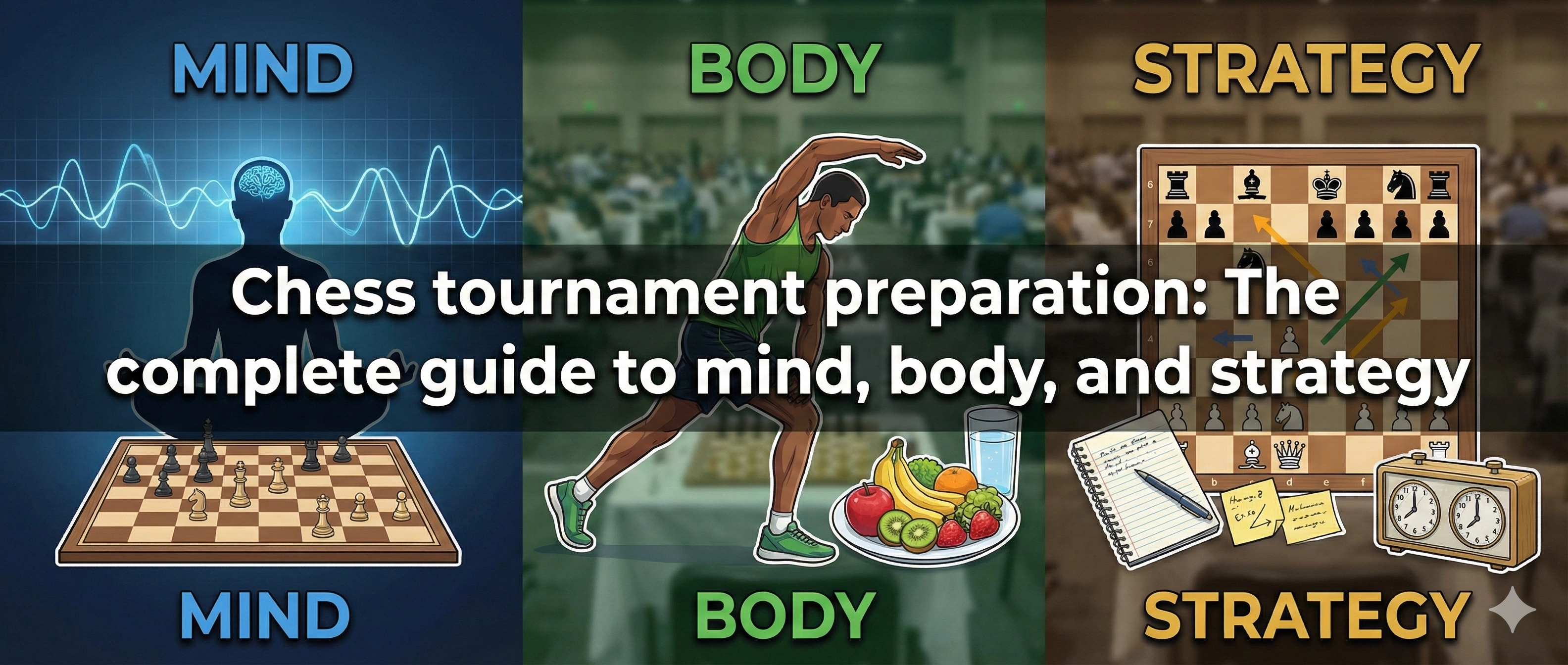
In this deep guide, we are going to explore everything you need to know to be tournament-ready. We will look at how to train your brain, how to eat and sleep, and how to keep your emotions in check. We will also discuss why this process is so important for education and building strong life skills.
So, sit back comfortably, maybe grab a notebook, and let us dive into the world of competitive chess preparation.
- Part 1: The Inner Game – Mastering Your Psychology
- Part 2: Practical Tournament Preparation – The Training Camp
- Part 3: The Engine Room – Physical And Lifestyle Preparation
- Part 4: Chess And Education – Integrating The Tournament Experience
- Part 5: Inside The Arena – During The chess Tournament
- Conclusion: The Journey Is The Reward
- Frequently Asked Questions (FAQs)
Part 1: The Inner Game – Mastering Your Psychology
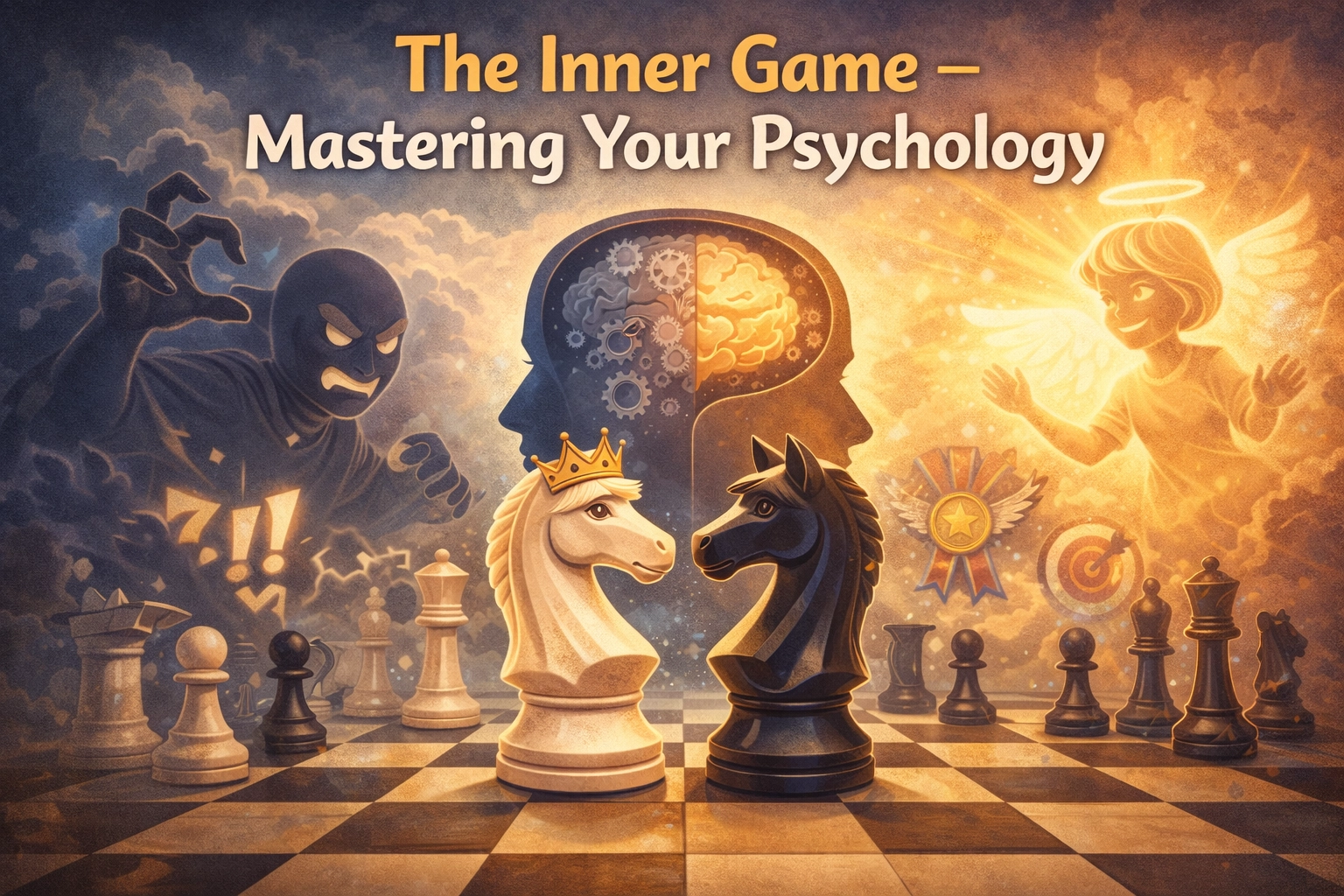
They say that chess is 10% knowledge and 90% psychology. While the numbers might vary, the truth remains: if your mind is not in the right place, even the best preparation cannot save you.
1. Understanding The Tournament Mindset
A tournament game is very different from a friendly game at home or an online blitz game. At home, you are relaxed. You have your tea, maybe some music is playing. In a tournament, there is pressure.
The "Tournament Mindset" is a state of calm alertness. You are not panicked, but you are not lazy either. You are focused.
The Problem of Expectations: Many players go into a tournament thinking, "I must win this prize" or "I must increase my rating by 50 points." This is the wrong approach. When you focus on the result, you stop focusing on the move.
The Solution: Focus on the process. Tell yourself, "My goal for this tournament is to play good moves and not make silly blunders." When you focus on quality, the results will come automatically.
2. Building Emotional Resilience
In a tournament, things will go wrong. You will prepare a brilliant opening, and your opponent will play something completely weird on move 3. You will have a winning position, and then you will make a mistake and lose.
This is where emotional resilience comes in. It is the ability to "bounce back."
The "Reset Button": Imagine you just lost a game. You are angry. You feel like crying. This is normal. But you have another round in 2 hours. You need a mental "Reset Button." Give yourself 15 minutes to be sad. Complain to your coach or parent. But after 15 minutes, wash your face with cold water. That game is gone. It is history. The next game is a new life.
Handling Anxiety: Do your hands shake before the game? Does your stomach feel funny? This is just adrenaline. It means your body is getting ready for a fight. Do not be afraid of it. Take three deep breaths inhale for 4 seconds, hold for 4 seconds, exhale for 4 seconds. This simple trick tells your brain, "Everything is okay."
3. Fighting Decision Fatigue
A chess tournament is mentally exhausting. By Round 4 or 5, your brain feels like cotton wool. You stop calculating deeply. You just want the game to end. This is called "Decision Fatigue."
Preserve Your Energy: Do not walk around the hall looking at everyone else's games. Stay at your board. If it is not your move, relax your eyes. Don't calculate when the clock is not ticking unless it is critical. Save your battery for the complex moments.
Part 2: Practical Tournament Preparation – The Training Camp
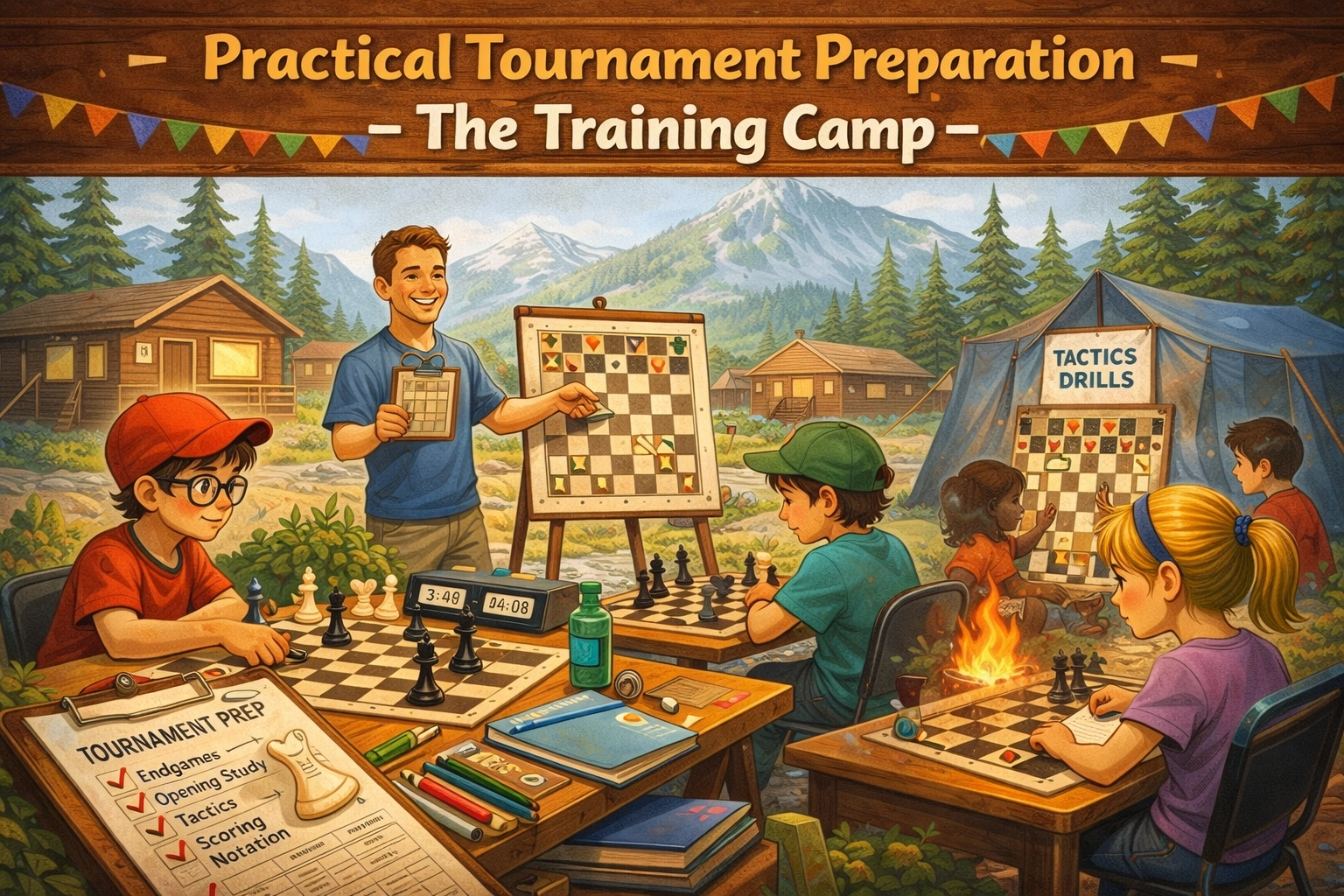
Now, let us talk about the actual chess training. How do you prepare in the weeks leading up to the event?
1. Three Weeks Before: The Heavy Lifting
Tactics, Tactics, Tactics: Solving puzzles is like going to the gym. You need to sharpen your calculation. Do 30 minutes of tactical puzzles every day. But don't just solve easy ones. Try to solve "calculation studies" where you have to think for 10-15 minutes on one position.
Opening Repair: Check your opening repertoire. Are there lines where you always feel uncomfortable? Fix them now. Do not try to learn a completely new opening system 3 weeks before the tournament. Stick to what you know, but polish it.
2. One Week Before: The Tapering Phase
Just like marathon runners stop running long distances a week before the race, chess players should reduce the intensity.
Stop Learning New Things: Do not watch a video on a crazy new gambit two days before the tournament. You will get confused. Trust the preparation you have already done.
Play Training Games: Play a few serious practice games with a long time control (like 60 minutes). This helps your brain get used to thinking slowly again. Online blitz is fun, but it ruins your patience for classical chess.
3. The Balance Of Study
A good training schedule should look something like this:
40% Tactics and Calculation: Because most games are decided by tactical errors.
20% Endgames: Learn basic rook endgames. In tournaments, many games go to the endgame. If you know the Philidor position or the Lucena position, you can save many points.
20% Openings: Just review your main ideas.
20% Game Analysis: Look at your old games. Where did you make mistakes last time? Do not repeat them.
4. Avoiding Common Mistakes
The "Cramming" Mistake: Some students try to study 8 hours a day right before the tournament. They burn out. They arrive at the tournament tired. It is better to study 1 hour with full focus than 4 hours while looking at your phone.
The "Engine" Dependency: Do not just look at computer lines. Try to understand why the move is good. In the tournament, Stockfish will not be there to help you.
Part 3: The Engine Room – Physical And Lifestyle Preparation
Many people think chess is just sitting in a chair. But have you seen the World Champions? They are fit. They play sports. Why? Because a strong brain needs a strong body.
1. The Importance Of Sleep
This is the most underrated secret weapon. Sleep is when your brain files away all the information you learned.
The Routine: Two weeks before the tournament, fix your sleep schedule. If your rounds start at 9:00 AM, you need to be awake by 7:00 AM. If you are used to waking up at 11:00 AM, you will be sleepy during the game.
During the Tournament: Do not stay up late analyzing your lost game or playing video games. Go to bed. Your brain needs 8 hours of rest to recharge its calculation power.
2. Nutrition For The Brain
What you eat affects how you think.
Avoid the Sugar Crash: Do not eat heavy, oily food or sugary sweets right before a round. It gives you a burst of energy, but then you crash and feel sleepy. A heavy Biryani for lunch might taste great, but it will make you slow in the afternoon round.
Smart Snacking: Carry nuts (almonds, walnuts), bananas, or dark chocolate. These provide steady energy.
Hydration: Your brain is mostly water. If you are dehydrated, your thinking speed drops. Keep a water bottle at your table. Take a sip every 15-20 minutes. It also helps to calm your nerves.
3. Physical Activity
You do not need to be a bodybuilder, but you need stamina.
Stamina Building: A chess game can last 4 or 5 hours. Sitting with high concentration for that long is physically demanding. Light cardio like walking, swimming, or cycling helps build the endurance you need.
Between Rounds: After a game, do not sit on a chair and look at your phone. Stand up. Walk outside. Get some fresh air. Stretch your neck and back. Your body has been stiff for hours; it needs movement to get the blood flowing back to the brain.
Part 4: Chess And Education – Integrating The Tournament Experience
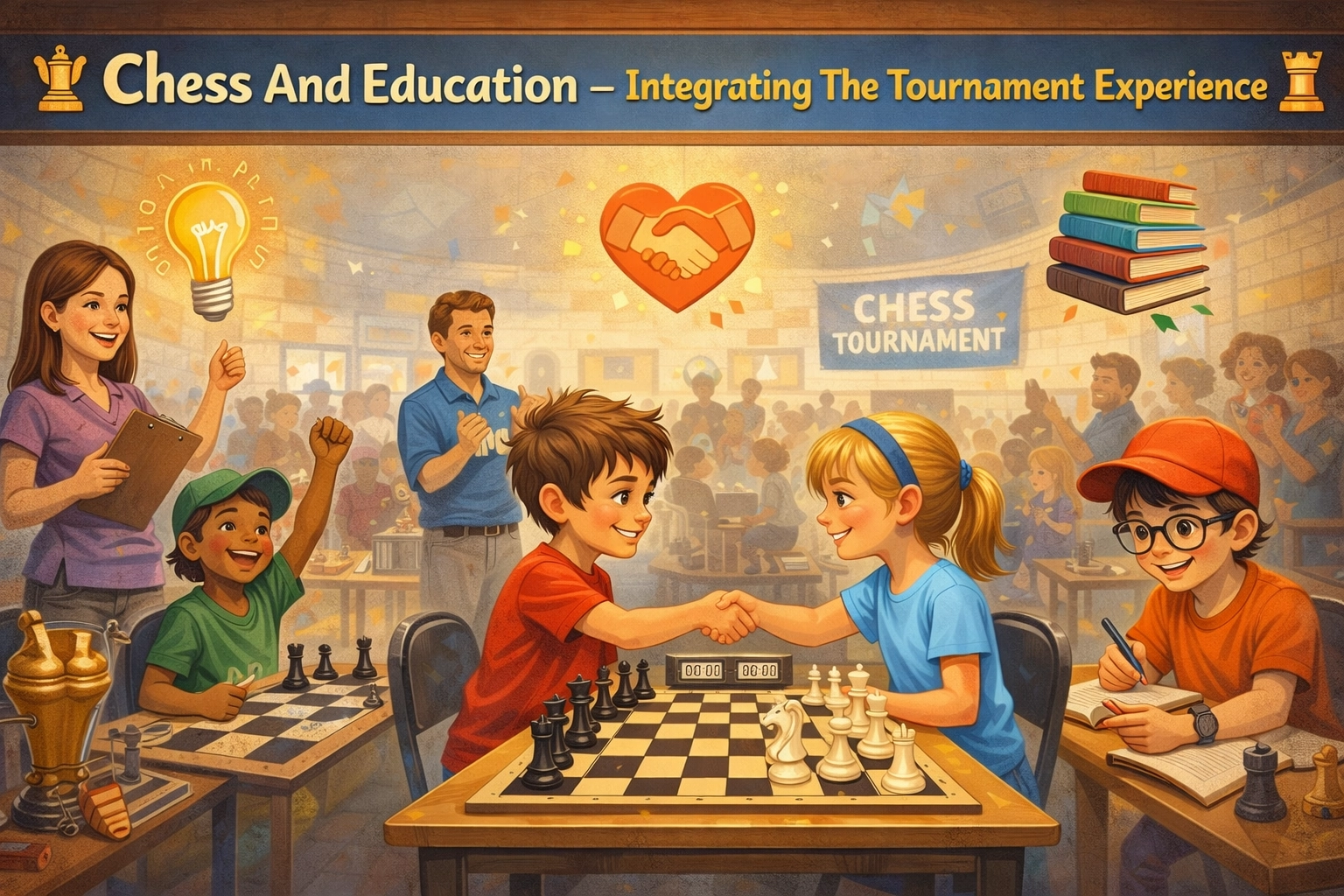
At Enthuziastic, we are passionate about education. We believe that chess tournaments are one of the best "classrooms" in the world. The skills you learn here translate directly to school and career success.
1. Discipline And Planning
Preparing for a tournament teaches a student how to plan a project. You have a deadline (the tournament date). You have a syllabus (openings, endgames). You have to create a schedule and stick to it.
Life Skill: This is exactly how you prepare for board exams or manage a work project. Students who play competitive chess often become excellent planners in their academic life.
2. Handling Failure And Success
In school, we are often protected from failure. In a chess tournament, failure is public and immediate. You lose, you shake hands, and you sign the paper.
Life Skill: Learning to lose with grace is a superpower. It teaches resilience. It teaches you that one failure is not the end of the world. It also teaches you to be humble when you win. You realize that your opponent worked hard too.
3. Analytical Thinking And Logic
Chess is pure logic. "If I do this, he does that."
School Connection: This is the foundation of Mathematics and Coding. When a child analyzes a chess position, they are using the same part of the brain used for solving algebra equations or debugging a computer program.
Problem Solving: In a game, you are given a problem (your opponent's threat) and you have limited time and resources to solve it. This builds a "solution-oriented" mindset. Instead of panicking, the chess player asks, "Okay, what is the best move here?"
4. A Curriculum For Life
Schools should view chess not just as a sport, but as a subject. A structured chess curriculum that includes tournament preparation can transform a student's character.
Reflective Learning: After every tournament, we encourage students to write a "Tournament Report." What went well? What went wrong? How did I feel? This practice of self-reflection is crucial for personal growth.
Part 5: Inside The Arena – During The chess Tournament
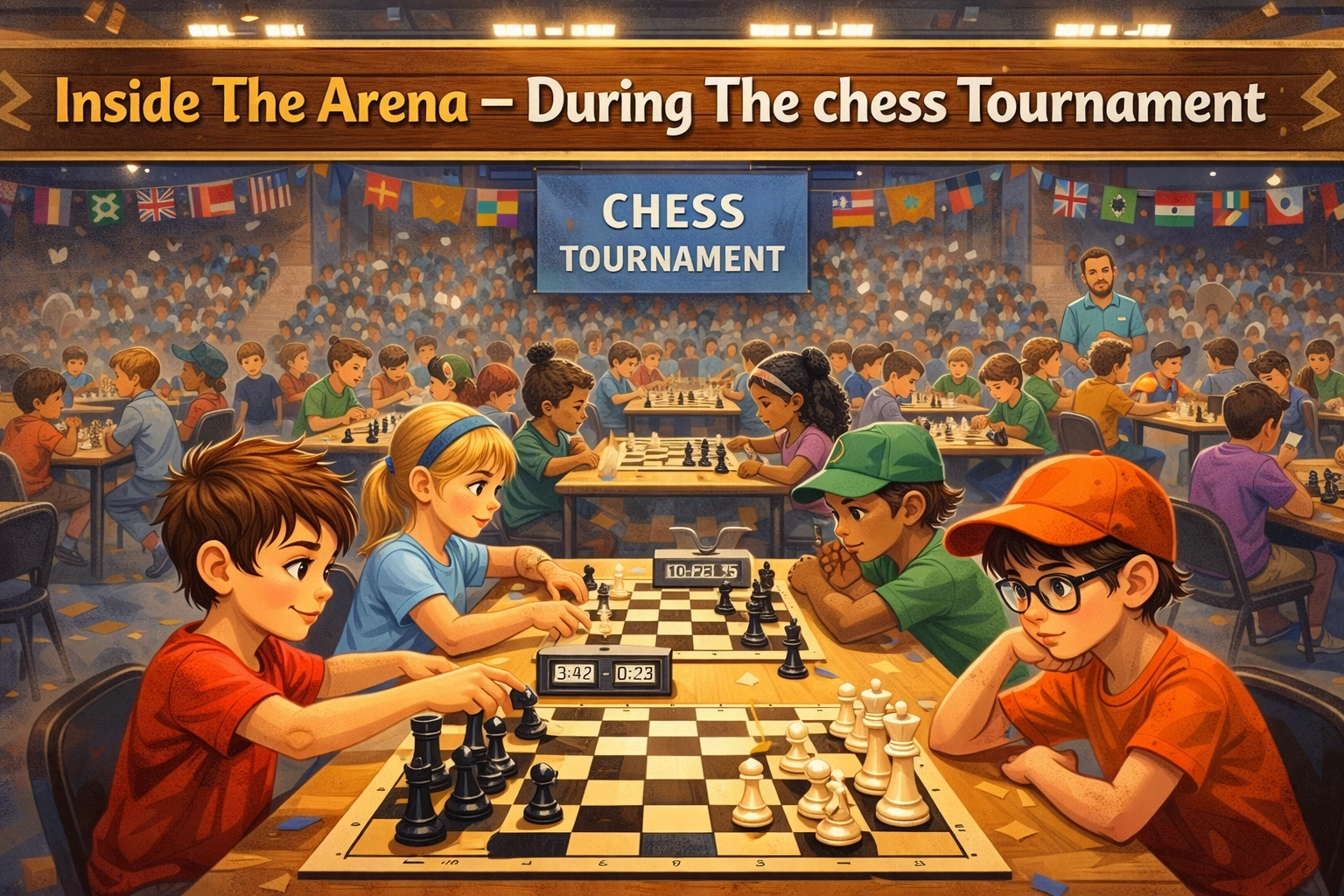
The day has arrived. You are at the venue. Here is how to handle the event day by day.
1. The Pre-Game Routine
Arrive Early: Reach the hall 30 minutes before the round. Rushing creates panic. You want to be seated, calm, and adjusting your pieces before the clock starts.
Warm Up: Solve 2 or 3 very easy tactic puzzles. Just to wake up the brain. Do not try to solve a grandmaster problem now. You just want to feel sharp.
2. Managing The Clock
Time management is critical.
Don't Rush: In the opening, even if you know the moves, take 10 seconds. Double-check.
Don't Freeze: If you don't know what to do, make a practical decision. Spending 40 minutes on one move usually leads to time trouble later. A "good enough" move played quickly is often better than a "perfect" move found too late.
3. The "Post-Mortem" Analysis
After the game, go over it with your opponent if they are willing. Ask them what they were thinking.
Note: Do not use a computer engine immediately. Use your brain first. Try to find the mistakes yourself. Only use the computer later at home to check your accuracy.
4. Socializing
Tournaments are great places to make friends. You meet people from different cities and backgrounds. Talk to them. Analyze games together. The chess community is a family. But remember, when the round starts, they are your opponent. Be friendly before and after, but be a warrior during the game.
Conclusion: The Journey Is The Reward
Preparing for a chess tournament is a journey of self-discovery. You will learn about your strengths and your weaknesses. You will learn how to discipline your mind and body. You will experience the thrill of victory and the pain of defeat.
At Enthuziastic, we tell our students that the trophy is just a piece of metal. The real prize is the person you become during the process. The focus, the resilience, the planning, and the sportsmanship these are the trophies you keep forever.
So, go ahead. Register for that tournament. Prepare well. Eat healthy. Sleep well. And when you sit at the board, take a deep breath, shake your opponent's hand, and enjoy the beautiful game of chess.
Good luck, and may your moves be brilliant!
Frequently Asked Questions (FAQs)
Q1: How many hours a day should I practice before a tournament? A: It depends on your level. For beginners, 1 hour a day is sufficient. For intermediate players, 2 to 3 hours is good. The quality of study matters more than the quantity. Do not exhaust yourself.
Q2: I get very nervous and my heart beats fast before a game. Is this bad? A: Not at all! This is a natural physical reaction called adrenaline. It shows you care about the game. Accept it, take deep breaths, and usually, the nervousness will disappear once you make the first few moves.
Q3: Should I study new openings right before the tournament? A: No, this is a common mistake. You will likely mix up the move orders. It is much better to revise the openings you already know and feel confident in them. Stick to your familiar systems.
Q4: What should I eat during a chess tournament? A: Avoid heavy, oily, or very sugary foods that make you sleepy. Eat light, balanced meals with protein and healthy carbs. Bananas, nuts, and yogurt are excellent snacks to keep your energy stable. Drink plenty of water.
Q5: How do I handle losing a game in the middle of a tournament? A: Allow yourself to be upset for a short time (10-15 minutes), then force a "reset." Go for a walk, wash your face, and stop thinking about that game. Focus entirely on the next round. Remember, even World Champions lose games.
Q6: Is it better to play aggressive or defensive in a tournament? A: It is best to play "sound" chess. Do not attack just for the sake of attacking, and do not defend passively if there is no threat. Play according to what the position demands. However, being confident and active is generally better than being fearful.
Q7: My child is playing their first tournament. What is the best advice for parents? A: Be supportive, not demanding. Do not ask "Did you win?" immediately. Ask "Did you have fun?" or "Did you play a good game?" Ensure they eat and sleep well. Your calmness will help them stay calm.
Q8: Why do I play well at home but play badly in tournaments? A: This is usually due to psychological pressure and environmental distractions. At home, you are relaxed. In tournaments, there is stress. The only way to fix this is to play more tournaments. With experience, the gap between your home play and tournament play will reduce.


Comments