
Namaste, chess friends! Welcome back to another deep dive with the Enthuziastic team.
Picture this: You are playing a fantastic game. You have controlled the centre, your pieces are active, and your opponent is sweating. You know there is a win somewhere on the board. You can feel it. But the clock is ticking tick, tick, tick. Your heart starts racing like you are running to catch a Mumbai local train during rush hour. You calculate one line, then another, but you just can't find the knockout blow.
Eventually, you make a safe move. Your opponent breathes a sigh of relief, defends, and the game ends in a draw.
"Arre yaar! I missed it!" you say to yourself later when the computer shows you a ‘Mate in 3’ that was sitting right there.
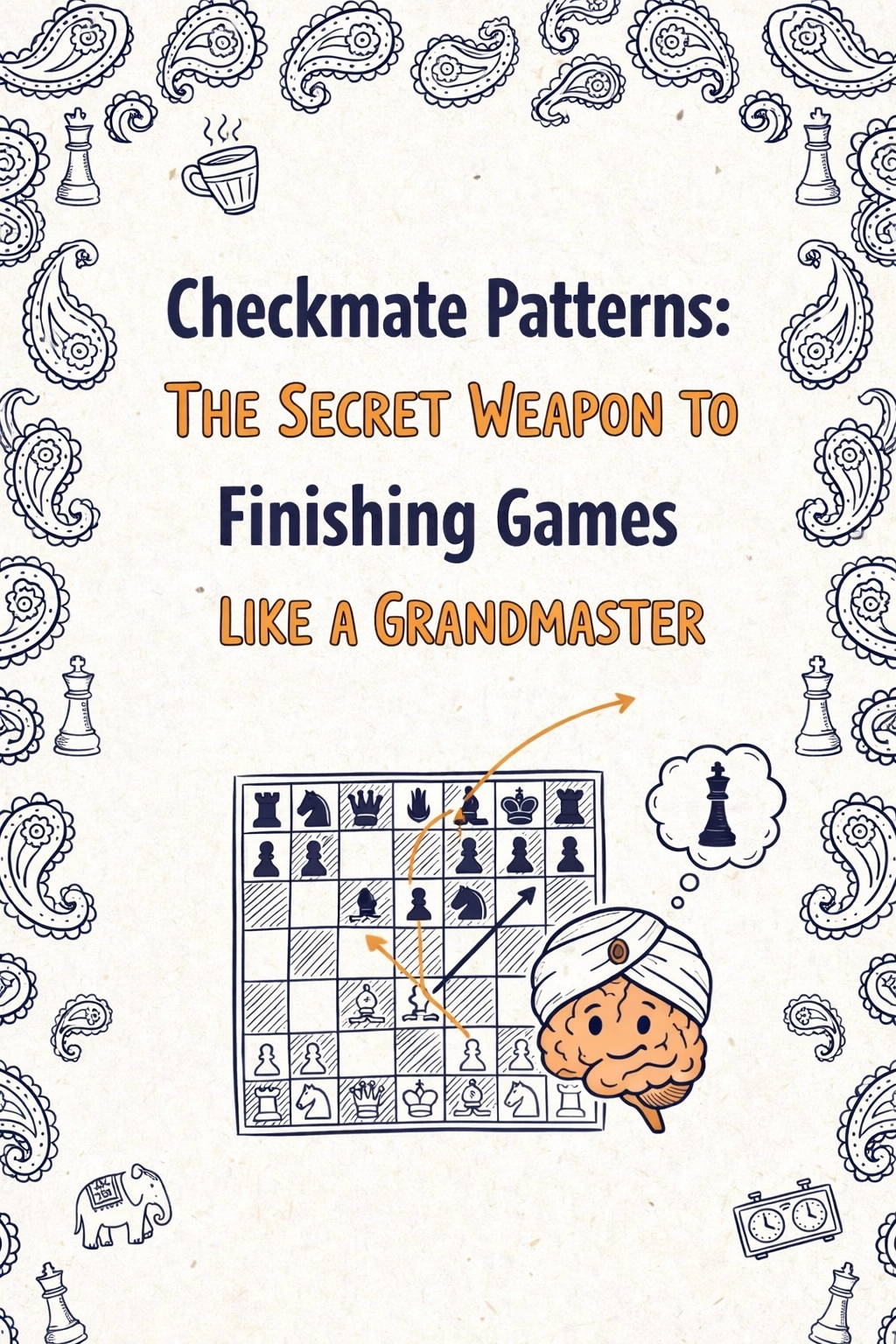
Does this sound familiar? We have all been there. The difference between a good player and a great player is often not just about strategy, but about finishing. It is about recognising the "Checkmate Patterns."
Today, we are going to unlock this superpower. We aren't just going to memorize moves; we are going to understand the soul of these patterns so you never miss a win again. Whether you are a student, a parent, or just someone who loves the 64 squares, this guide is your roadmap to becoming a "Mating Matador."
Why Learning Checkmate Patterns is Crucial
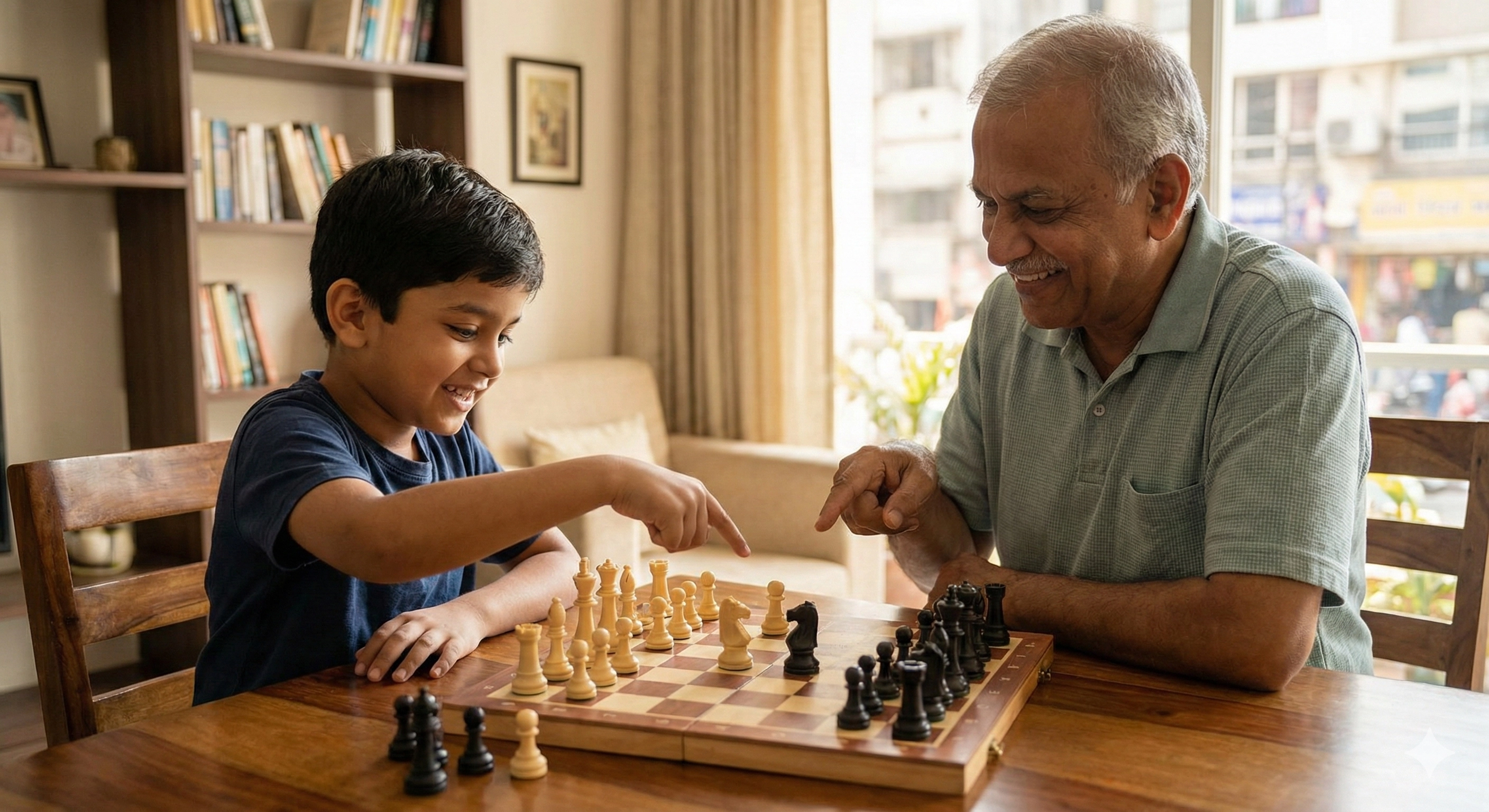
Well, think about how you read. When you look at the word "Elephant," you don't read "E-l-e-p-h-a-n-t." You see the shape of the word and your brain instantly knows what it is. You recognise the pattern.
Chess works the same way. Grandmasters don't calculate thousands of variations every second. That is a myth. instead, they have a massive library of patterns stored in their brains. When they look at a position, their brain screams, "Aha! This looks like a Back-Rank Mate!" or "This is a Smothered Mate setup!"
This does two magical things for your game:
1. It Saves Time and Energy
In a blitz game or when you are low on time, you don't have the luxury to calculate everything from scratch. Knowing patterns is like taking the expressway instead of the traffic-jammed city roads. You get to the destination (Checkmate) much faster.
2. It Sharpen Your Tactical Vision
Most tactical shots like forks, pins, and skewers are actually just tools to achieve a checkmate pattern. If you don't know the checkmate pattern, you won't spot the tactic that leads to it. It’s like trying to cook a biryani without knowing what the final dish is supposed to look like; you won't know which spices to add.
The Classics: Essential Checkmate Patterns You Must Know
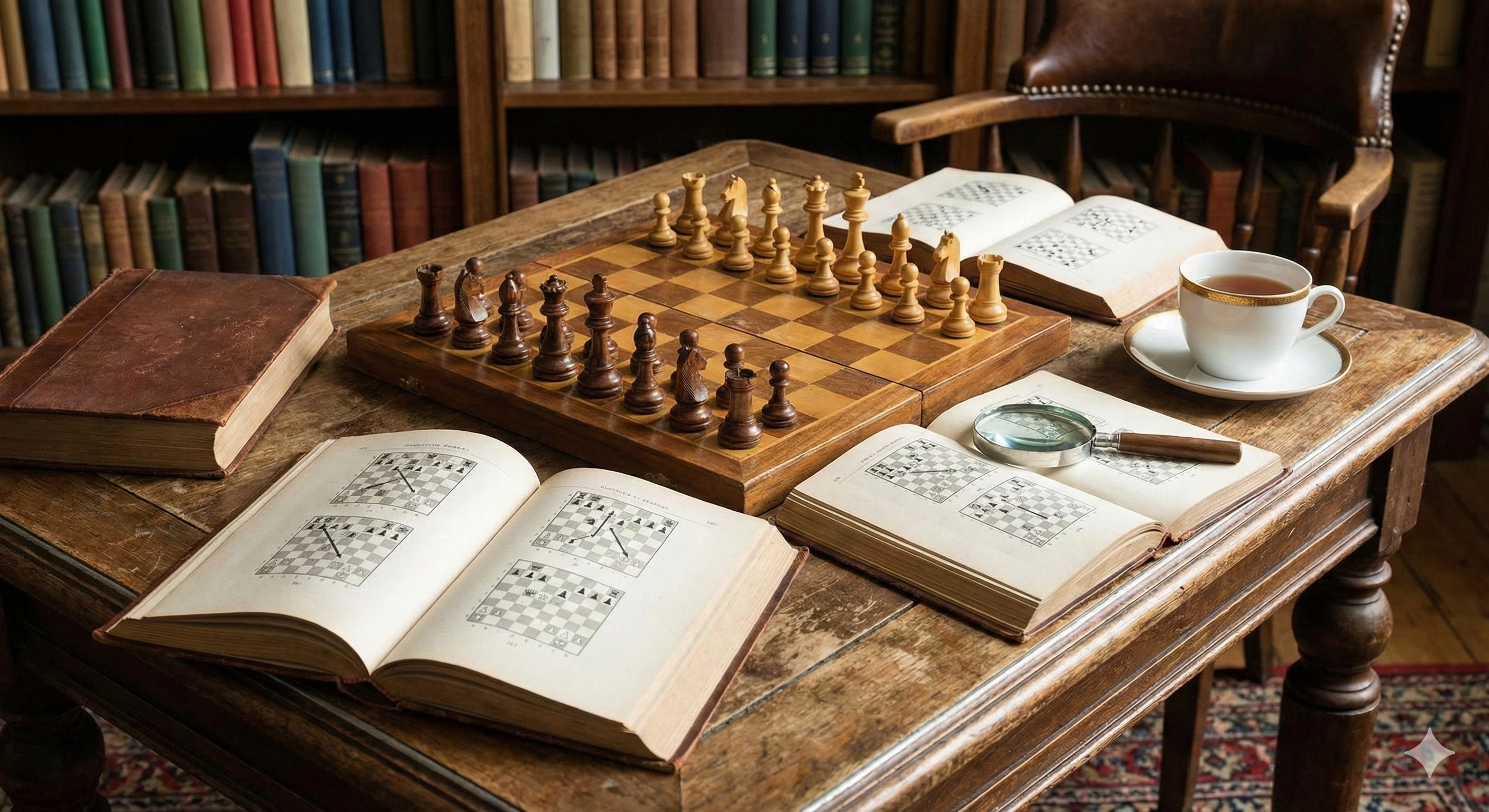
1. The Back-Rank Mate (The Corridor of Doom)
This is the most common checkmate in chess, occurring frequently in games between beginners and even intermediates.
The Concept:
Imagine the enemy King is castled. He is feeling safe behind his wall of three pawns (usually on f7, g7, h7). But this wall can turn into a prison. If an enemy Rook or Queen lands on the back rank (the 8th rank for White, 1st for Black), and the King has no "Luft" (a German word for "air" or breathing room) to escape, it is game over.
The Setup:
The Victim: The King is trapped on the back edge of the board by his own pawns.
The Killer: A Rook or Queen invades the back rank.
The Helper: Sometimes, the King is trapped not by pawns, but by your pieces controlling the escape squares.
Real-Life Analogy:
Think of a cricket batsman trapped in the crease, unable to step back because his stumps are right behind him. He has nowhere to go!
How to Spot It:
Always look at your opponent’s King safety. Has he moved any of the pawns in front of his King? If not, that back rank is a danger zone. If you have an open file for your Rook, keep an eye on that bottom row!
Pro Tip:
Often, the back rank is guarded by an opponent's Rook. You might need to use a "Decoy" tactic. Sacrifice a piece to lure their defender away, and then Boom! deliver the mate.
2. The Smothered Mate (The "Suffocation")
This is widely considered the most beautiful checkmate in chess. It feels like a magic trick.
The Concept:
As the name suggests, the King is "smothered" or suffocated by his own pieces. He is completely surrounded by his own army pawns, Rooks, Bishops so he has zero squares to move to. Then, a Knight jumps in and delivers the final blow. Because Knights can jump over pieces, the wall of defenders doesn't help the King; it actually kills him!
The Setup:
The Victim: A King trapped in the corner, surrounded by his own pieces.
The Killer: A Lone Knight.
The Classic Sequence: usually involves a Queen sacrifice. You check with the Queen, forcing the opponent to capture with a Rook or Knight (blocking the King's exit), and then your Knight delivers the mate.
Why It Is Special:
It teaches you that material (number of pieces) doesn't matter as much as piece activity. Your opponent could have a Queen, two Rooks, and a Bishop, but if his King is stuck, he loses to a single Knight.
3. The Scholar’s Mate (The Quick Trap)
Every chess player has either won with this or lost to it in their childhood. It is the "4-move checkmate."
The Concept:
This attack targets the f7 square (or f2 for White). Why f7? Because at the start of the game, the f7 pawn is defended only by the King. It is the weakest point in the camp.
The Setup:
White brings the Bishop to c4 (attacking f7).
White brings the Queen to h5 or f3 (attacking f7).
If Black is careless, White plays Qxf7# Checkmate.
The Lesson:
While Scholar's Mate rarely works against experienced players, the idea is crucial: Attack the weak points. Even in complex games, look for the f7/f2 square. Is it undefended? Can you pile up pieces on it?
Warning:
Don't try this every game! If your opponent knows how to defend (e.g., playing ...g6 or ...Qe7), your Queen will be kicked around, and you will fall behind in development. Treat it as a lesson in vulnerability, not a universal opening strategy.
4. The Arabian Mate (The Horse and Cart)
This is one of the oldest checkmate patterns known in history, dating back to when chess was played in ancient Persia (Chaturanga).
The Concept:
This mate uses the unique teamwork of a Rook and a Knight. The Knight protects the Rook and covers the King's escape square, while the Rook delivers the lethal hug.
The Setup:
The Victim: The King is usually in the corner (h8 or a8).
The Knight: sits on f6 (or c6). From here, it defends the h7 square and the g8 square.
The Rook: lands on h7 (or a7 if on the other side) to deliver the mate.
Why It Is Powerful:
The Knight on f6 is an absolute monster. It cannot be easily removed, and it controls the dark squares perfectly while the Rook controls the lines. When you see your Knight landing on f6 near the enemy King, your "Arabian Mate radar" should start beeping!
The Power of Pattern Recognition
It is about Chunking.
When a beginner looks at a chessboard, they see 32 individual pieces. "This pawn is here, that Knight is there." It is overwhelming.
When a master looks at the board, they see "chunks" or patterns. They don't see "Rook on h7 and Knight on f6"; they see "Arabian Setup."
This allows the master to:
Calculate Deeper: Since they don't have to calculate the first 3 moves (because they know the pattern), they can spend their energy calculating the setup to get there.
Feel Confident: There is no guessing. You know it is a mate. You play the moves with authority (and maybe a little bit of style!).
The "Aha!" Moment
Have you ever solved a puzzle and felt a rush of dopamine? That is your brain rewarding you for recognizing a pattern. The more patterns you feed your brain, the more "Aha!" moments you will have during real games.
Connecting Patterns to Tactics: The "Setup"
Rarely will your opponent kindly arrange their pieces into a perfect "Smothered Mate" position for you. You have to force them into it. This is where tactical themes come in.
Think of the checkmate pattern as the Goal and tactical themes as the Tools to achieve it.
1. The Decoy (The Lure)
The Goal: Back-Rank Mate.
The Problem: The opponent's King is on g8, but he can escape to h7.
The Tool (Decoy): You sacrifice your Queen on h7! The King is forced to capture (Kxh7). Now he is on the h-file, and maybe you have a Rook ready to deliver mate. You "decoyed" the King into the kill zone.
2. The Pin
The Goal: A mate on the back rank.
The Problem: A pawn is blocking your path.
The Tool (Pin): You pin the pawn to the King so it cannot capture your attacking piece.
3. The Deflection
The Goal: Smothered Mate.
The Problem: The opponent's Queen is guarding the square where you want to put your Knight.
The Tool (Deflection): You attack the Queen or create a bigger threat elsewhere, forcing the Queen to move away. Once she leaves her post, your Knight jumps in.
Understanding this connection is vital. Don't just study "Pins" in isolation. Study "Pins that lead to Checkmate."
A Student’s Chess Guide: How to Practise and Internalise These Patterns
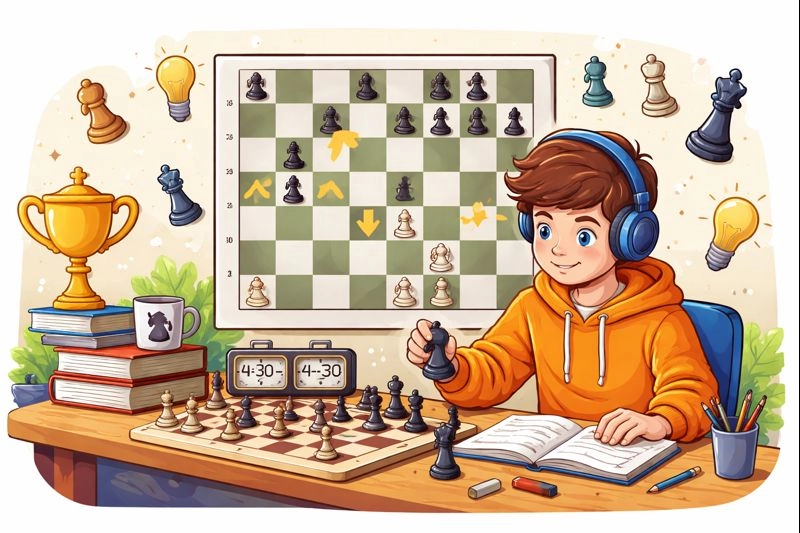
Step 1: The "Woodpecker" Method (Repetition)
This is a famous training technique. Take a set of 100 simple checkmate puzzles (Back-rank, Arabian, etc.).
Cycle 1: Solve them all. Take your time.
Cycle 2: Solve them again the next day. Try to do it faster.
Cycle 3: Solve them again a week later.
Goal: You want to reach a point where you see the solution instantly, without thinking. You want to solve them as fast as a woodpecker pecks wood!
Step 2: Reverse Engineering
When you study a master game and see a checkmate, don't just nod and move on. Stop.
Ask yourself: "What pattern is this?"
If it is a Back-Rank mate, look 5 moves before the mate happens. How did the winner clear the file? How did they stop the King from escaping?
Study the build-up, not just the climax.
Step 3: Visualisation Drills
This is a great exercise for your commute or before bed. Close your eyes.
Visualise an empty board.
Place a White King on g1, White Rook on e1. Place Black King on e8.
Visualise the moves: Rook to e8. Checkmate.
Now, make it harder. Add a Black pawn on f7. Add a White Knight.
Building these mental images strengthens your "mind's eye," helping you see patterns in games before they appear on the board.
Step 4: Play "Mate in 1" and "Mate in 2"
For beginners, solving "Mate in 1" puzzles is crucial. It sounds too easy, but you need to train your brain to never miss a one-move kill. Once you are 100% accurate with those, move to "Mate in 2."
There are many apps and websites (like Chess.com, Lichess, or strict puzzle books) that offer these specific categories.
Integrating Pattern Training into Your Daily Routine
You don't need to study for 4 hours a day to get good. Consistency is key. Here is a sample routine for a busy student or working professional:
Morning (10 mins): Solve 10 "Mate in 1" puzzles while having breakfast. Wake up your tactical brain.
Commute/Break (15 mins): Watch a video or read a short article about a specific pattern (like "Anastasia's Mate").
Evening (20 mins): Play a rapid game (10+5 or 15+10 time control). Focus Goal: Before every move, check "Is my King safe?" and "Can I threaten a mate?"
Weekend Review: Look at your games. Did you miss any mates? If yes, find out which pattern it was and practice that specific pattern for the next week.
Conclusion
Chess is a vast ocean, but checkmate patterns are the lighthouses that guide you home. By mastering the Back-Rank, the Smothered, the Arabian, and the Scholar's mate, you are building a foundation that will support you for the rest of your chess life.
Remember, every Grandmaster was once a beginner who missed a mate in one. The journey to mastery is paved with missed opportunities, but with every pattern you learn, those misses will become fewer and fewer.
So, next time you sit at the board, don't just look at the pieces. Look for the patterns. Look for the geometry. Look for the art. And when you see that familiar setup, deliver the checkmate with a smile.
Keep playing, keep learning, and keep being Enthuziastic!
Frequently Asked Questions (FAQs)
Q1: What is the most common checkmate pattern I should learn first?
A: Definitely the Back-Rank Mate. It happens in almost every tournament at the beginner and intermediate levels. Understanding how to exploit a trapped King on the back row (and how to defend against it by making "Luft") will save you many games.
Q2: How many checkmate patterns are there?
A: While there are thousands of unique positions, there are about 30-40 "named" patterns (like Anastasia’s Mate, Boden’s Mate, Dovetail Mate, etc.). However, you only need to master the top 10 to see a massive improvement in your game.
Q3: Can I force a checkmate pattern, or do I have to wait for my opponent to make a mistake?
A: Good question! At higher levels, you often have to force the mistake. You do this by applying pressure. However, tactics often flow from a superior position. If you control the centre and have active pieces, checkmate patterns will naturally appear. You can't force a Smothered Mate if your Knight is stuck at home!
Q4: Is Scholar's Mate a good strategy for tournaments?
A: No, not really. It is a "trick" that works on beginners. Experienced players know how to defend it easily (usually by playing ...g6 or ...Qe7), and you might end up with your Queen misplaced. It is better to learn solid opening principles than to rely on cheap tricks.
Q5: What is the difference between a "Checkmate" and a "Stalemate"?
A: Checkmate is when the King is in check (under attack) and has no legal moves to escape. You win!
Stalemate is when the King is not in check, but has no legal moves (and no other pieces can move). This is a Draw. Be very careful when you are winning not to accidentally stalemate your opponent!
Q6: How does solving puzzles help with checkmate patterns?
A: Puzzles are selected positions where a tactic or mate exists. By solving them, you are training your brain to ask, "What is the winning move here?" repeated solving builds a database in your subconscious, so in a real game, your intuition will alert you when a similar position arises.
Q7: I keep missing mates in my games. What should I do?
A: Don't worry, it happens! The best fix is to analyze your games. Use a computer engine to see where you missed the mate. Once you see it, try to understand why you missed it. Was it a pattern you didn't know? Did you stop calculating too early? Identifying the "blind spot" is the first step to fixing it.
Q8: What is "Luft"?
A: "Luft" is a German word meaning "Air." In chess, it refers to moving one of the pawns in front of your castled King (usually h3 or g3) to give the King an escape square. This is the primary defense against the Back-Rank Mate.

Comments