


Chess has always been more than just a board game in India. It is a thinking sport that teaches discipline, decision-making, and patience. Whether it is a school student learning the basics or a tournament player facing intense pressure, the game constantly challenges the mind. At Enthuziastic, where live learning brings people together, chess becomes a powerful tool to build confidence, logical thinking, and emotional balance.
In this blog, we explore two important aspects of chess: chess psychology and chess integration into education. You will learn how mindset, focus, and emotional strength influence tournament performance, and how schools can use chess to teach math, logic, and problem-solving. We also discuss how a structured curriculum can help students grow from beginner to advanced levels in a smooth and planned way.
Understanding chess psychology
Chess psychology focuses on how a player thinks, reacts, and handles emotions during a game. While knowledge of opening theory and tactics is important, the mental side of chess often decides whether a player wins or loses.
The role of mindset in chess
A positive and stable mindset can completely change the way a player approaches the board. When players trust their preparation, stay calm under pressure, and believe in their abilities, they make clearer and more accurate decisions. A strong mindset also prevents players from getting overwhelmed by the opponent’s rating, reputation, or intimidating playing style. In chess psychology, this mental balance is crucial because fear and overconfidence are two of the fastest ways to lose a winning position.
Your mindset directly shapes your focus, confidence, and willingness to take calculated risks. Players with a healthy psychological approach understand that mistakes are part of the game and do not emotionally collapse after a blunder. Instead, they shift into problem-solving mode, which is a key psychological skill in competitive chess. Emotional control helps players manage time pressure, resist panic, and maintain objectivity even in complex or unfamiliar positions.
Students who learn chess early often develop a growth mindset, a core concept in chess psychology. They learn to view losses as feedback rather than failure and understand that improvement comes from analysis, patience, and consistent practice. This mindset builds resilience, concentration, and strategic thinking, skills that extend far beyond the chessboard and into academics and everyday decision-making.
Building focus during tournaments
Chess, because apparently it enjoys tormenting humans, demands deep concentration. One careless move and the entire position collapses like it was waiting for permission. Tournament halls may be silent, but the psychological pressure is loud. Players are constantly battling distractions such as background noise, their opponent’s body language, time pressure, and their own intrusive thoughts. In chess psychology, maintaining mental clarity under stress is just as important as knowing openings or endgames.
From a psychological perspective, focus is about controlling attention and emotional responses. Strong players train their minds to stay present instead of reacting impulsively to threats, surprises, or intimidating gestures from their opponent. Psychological resilience helps them avoid tilt, manage anxiety, and make rational decisions even when the position becomes uncomfortable.
To maintain focus, many players rely on simple but effective psychological techniques:
Take a deep breath before every critical move to reset the mind and reduce stress.
Avoid looking at other boards to prevent comparison anxiety and loss of concentration.
Stick to your plan even if the opponent uses psychological tactics such as aggressive staring, fast moves, or deliberate pauses.
Keep thoughts structured and objective instead of doubting every move or replaying past mistakes.
With consistent practice, players develop mental discipline, a core element of chess psychology. They learn to remain calm, aware, and confident throughout the game, allowing them to make better decisions, manage pressure effectively, and perform at their true level when it matters most.
Developing emotional resilience
Emotional resilience, in chess psychology, means staying mentally strong even when the game turns uncomfortable or chaotic. Every chess player experiences blunders, time pressure, and painful losses. What separates improving players from frustrated ones is not talent, but emotional resilience, a central concept in chess psychology. Emotionally resilient players recover faster from setbacks and stay motivated instead of mentally resigning after one bad move.
In chess psychology, resilience allows players to regulate emotions and keep thinking objectively, even when the position looks bad. Rather than reacting with panic or self-criticism, they shift their mindset toward problem-solving and defense. This psychological strength prevents emotional collapse and helps players continue competing at their highest level.
Resilience helps players, from a chess psychology perspective, to:
Bounce back after a mistake without losing focus or confidence.
Continue fighting in a difficult position instead of giving up mentally.
Stay confident even after losing a game, viewing the loss as a learning experience.
Maintain sportsmanship and respect for the opponent and the game, regardless of the result.
Young learners who develop emotional resilience through chess psychology often transfer this mental skill into real life. They become better at handling exam pressure, competition, failure, and everyday challenges. Chess psychology teaches them that setbacks are temporary, effort matters more than outcomes, and emotional control is a strength, not a weakness.
Handling pressure and decision fatigue
Pressure is natural in tournaments, whether it comes from the clock, the opponent, or the position on the board. Understanding how to manage pressure can help both beginners and experienced players perform better.
Why pressure affects chess performance
Under pressure, even top players sometimes miss simple tactics or forget well-known preparation. This is not a lack of skill or knowledge. It is a classic effect explained by chess psychology, where intense stress overloads the brain and slows down decision-making. When a player is calculating variations, evaluating positions, managing time, and anticipating the opponent’s ideas all at once, the mind reaches a saturation point. At that stage, clarity drops and errors increase, even in positions that would normally feel easy.
Chess psychology shows that the human brain has limited cognitive resources. During a game, especially a long one, these resources are constantly being used. Players must remember opening theory, calculate tactics, assess positional factors, and make strategic plans, all while controlling emotions. Under pressure, the brain prioritizes survival over precision. This is why players may choose impulsive moves, overlook obvious threats, or forget ideas they practiced many times before. Mental overload reduces working memory, which directly affects calculation and accuracy.

Mental fatigue is a major topic in chess psychology, particularly in tournament settings. Long games, back-to-back rounds, and insufficient rest can drain a player’s mental energy. As fatigue sets in, concentration weakens and decision-making becomes slower. Players may spend too much time on simple positions or rush critical moments due to exhaustion. This creates a dangerous cycle where poor decisions increase stress, which further worsens performance.
Time pressure amplifies these psychological effects. According to chess psychology, time trouble forces the brain into reactive mode rather than analytical thinking. Players stop calculating deeply and rely on intuition, which may fail under stress. Even strong players can miss basic tactics or misjudge positions because the brain is no longer processing information efficiently. The pressure of the clock triggers anxiety, narrowing focus and reducing objectivity.
Emotional factors also play a key role. Chess psychology explains that fear of losing, desire to win, or frustration from earlier mistakes can cloud judgment. A player who blundered earlier may overthink simple positions, while a player who feels confident may become careless. Emotional imbalance consumes mental energy that should be used for calculation and evaluation. This emotional drain contributes significantly to mental exhaustion.
Techniques to handle pressure
Here are some practical methods that players can use:
Time management awareness
Players who manage their time well reduce unnecessary stress. Setting small time goals for each phase of the game helps avoid panic during the final moments.
Relaxation exercises
Short breathing exercises before and during the game help calm the mind. Many Indian players find that practicing yoga or meditation improves clarity.
Structured thinking
Following a clear decision-making process reduces confusion. For example:
Check threats
Identify candidate moves
Evaluate consequences
Choose the safest and strongest move
This step-by-step thinking prevents rushed decisions.
Post-game reflection
Players who review their games regularly gain more than just technical insight. From a chess psychology perspective, they begin to understand their emotional patterns and mental reactions during different phases of the game. Game analysis is not only about finding better moves, but also about recognizing moments of stress, hesitation, overconfidence, or fear. This psychological awareness helps players identify what triggers pressure and how those triggers affect decision-making.
Chess psychology emphasizes that emotions influence thinking more than players often realize. By revisiting games, players can pinpoint situations where they rushed moves due to time pressure, played passively because of fear, or overcomplicated positions due to anxiety. Recognizing these patterns allows players to prepare mentally for similar situations in the future. Instead of reacting emotionally, they learn to respond with structure and clarity.
Regular game review also strengthens emotional control. In chess psychology, reflection helps players detach emotions from results. A loss becomes a learning tool rather than a personal failure. When players analyze their mistakes calmly, they reduce fear of losing and build confidence in their ability to improve. This mindset shift is crucial for long-term growth and consistency.
Understanding emotional triggers also helps players develop practical strategies. Chess psychology encourages players to create routines for stressful moments, such as slowing down after a blunder or simplifying the position when feeling overwhelmed. Over time, players learn to recognize early signs of mental fatigue or emotional imbalance and adjust their approach accordingly.
For young learners especially, reviewing games builds emotional maturity. Chess psychology teaches them to accept responsibility for decisions, handle disappointment constructively, and stay motivated despite setbacks. These skills extend beyond chess into academics and daily life, helping players manage pressure, reflect thoughtfully, and continuously improve through self-awareness.
Fighting decision fatiguebrain
Decision fatigue happens when the brain becomes tired after making multiple choices. In chess, this usually occurs after 20–30 moves in a long game.
To reduce decision fatigue:
Maintain good sleep during tournaments.
Stay hydrated.
Avoid analyzing other games between rounds.
Stick to familiar openings during long events.
Trust your intuition when calculation becomes difficult.
The best chess players balance intuition and calculation to stay mentally fresh.
Chess as a powerful educational tool
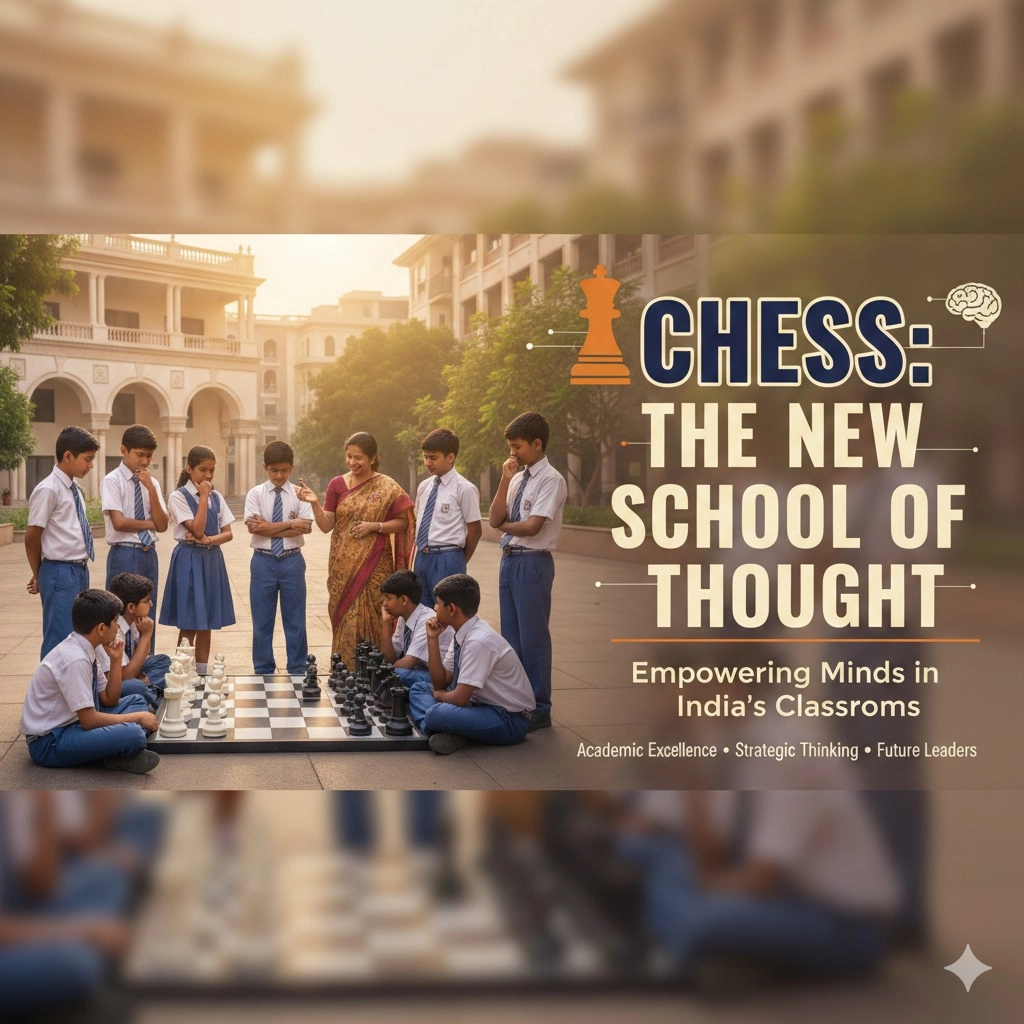
In India, more schools are now adopting chess as a part of their learning system. This is because chess supports academic performance and builds strong thinking skills.
Teaching math through chess
Chess naturally introduces children to mathematical concepts. For example:
The board teaches coordinates and grid-based thinking.
Piece movement patterns encourage geometric understanding.
Planning requires counting moves and evaluating sequences.
Endgames develop knowledge of patterns and distances.
Teachers who use chess in math classes often notice improved number sense and problem-solving abilities in students.
Enhancing logical reasoning
Logic is at the heart of every chess position. Students learn to:
Recognize patterns
Understand cause and effect
Make predictions
Test possibilities
Solve complex problems step by step
These skills are extremely useful in science, coding, robotics, and analytical subjects.
Improving problem-solving skills
Every chess move is a small problem. Students must think ahead, identify risks, and find solutions under time pressure. Over time, this builds:
Critical thinking
Strategic planning
Creativity
Adaptability
Children who practice chess regularly show better performance in academic competitions, reasoning tests, and real-life decision-making.
Designing a structured chess curriculum for schools
A structured approach is essential for helping students learn chess in a clear and systematic way. Without proper structure, learners often feel confused, overwhelmed, or unsure about how to improve. At Enthuziastic, we design our chess programs to follow a logical progression, ensuring that students build strong foundations before moving on to advanced concepts. This step-by-step method helps students understand not just what to play, but why certain moves and strategies work.
Each program at Enthuziastic is carefully tailored to match the learning pace of individual students. Beginners focus on fundamentals such as piece movement, basic tactics, and simple checkmates, while intermediate and advanced learners gradually explore openings, positional understanding, calculation skills, and endgame techniques. This personalized structure prevents gaps in learning and boosts confidence at every stage.
A structured learning system also encourages consistency and long-term improvement. Students know what they are working toward, which keeps them motivated and engaged. Regular practice, guided lessons, and game analysis are integrated to reinforce learning and track progress.
By providing a smooth and well-planned learning journey, Enthuziastic helps students grow from beginners into confident and capable chess players. More importantly, students develop discipline, strategic thinking, and problem-solving skills that extend far beyond the chessboard.
Key components of a strong curriculum
Level-based learning
Students are grouped according to their skill levels. Each level includes specific goals, from understanding the board to mastering complex strategies.
Interactive digital lessons
Smart boards, online lessons, and video analysis make learning more engaging. Students understand concepts faster when taught with visuals and demonstrations.
Regular practice sessions
Practice is essential in chess. Daily mini-games, puzzles, and short tournaments help students apply what they learn.
Instructor support
Experienced coaches track progress, provide feedback, and help students overcome weaknesses. Personalized attention ensures steady improvement.
Tournament exposure
School-level events give students confidence and help them understand practical strategies. Participation in tournaments also builds sportsmanship and emotional maturity.
Benefits of a well-designed chess curriculum
A structured curriculum helps schools:
Improve student concentration.
Boost academic performance.
Encourage discipline and patience.
Build teamwork and leadership skills.
Create a positive and competitive learning culture.
Schools that integrate chess into their daily timetable see long-term improvements in student behaviour and decision-making abilities.
Final thoughts
Chess is one of the most effective tools for shaping young minds, quietly doing the work that flashy activities pretend to do. It strengthens chess psychology by teaching focus, patience, and emotional control from an early age. Children learn how to manage pressure, handle mistakes, and stay composed, which builds emotional resilience and mental maturity over time.
Beyond psychology, chess significantly improves mathematical thinking and logical reasoning. Students learn to recognize patterns, plan ahead, and analyze consequences before making decisions. These skills naturally transfer to academics, especially mathematics, problem-solving, and structured thinking. Chess also improves concentration and attention span, skills that are increasingly rare and incredibly valuable.
With the right curriculum and expert guidance, chess becomes more than just a game. It becomes a structured learning tool that helps students grow into confident, focused, and intelligent individuals. The lessons learned on the chessboard stay with students for life, shaping how they think, respond, and succeed in the real world.
At Enthuziastic, our mission is to create a strong community of learners who grow through real-time interaction and meaningful engagement. Chess is one of the best paths to achieve this goal. ( Enthuziastic - Global People to People Live Learning Network )
Frequently asked questions
1. Is chess difficult for beginners?
No, chess is easy to start and gradually becomes more interesting as students learn step by step. A structured curriculum makes the process smooth.
2. How does chess improve focus?
Chess requires constant attention to the board, opponent’s moves, and future plans. This naturally builds strong concentration over time.
3. Can chess help children perform better in school?
Yes. Chess improves memory, problem-solving, logic, and patience, which directly support academic subjects like math and science.
4. Do students need special coaching to learn chess?
Basic skills can be learned at school, but professional coaching helps students progress faster and perform well in tournaments.
5. How can schools include chess in their timetable?
Schools can introduce weekly chess periods, dedicated clubs, or structured programs designed by experts.
6. Is chess useful for emotional development?
Yes. Chess teaches resilience, patience, and the ability to handle pressure, which helps children manage emotions better.
7. What is the ideal age to start learning chess?
Children can start as early as 5–6 years, but people of all ages can enjoy and benefit from the game.
8. How does Enthuziastic support chess learning?
Enthuziastic provides live interactive sessions, trained instructors, structured levels, and engaging tools to help students learn effectively.

Comments