
At Enthuziastic, we believe that learning has no boundaries, and every mind holds the potential to achieve greatness. When we look at the game of chess, a beautiful battle of minds that originated right here in India as Chaturanga, we see a sport that requires immense focus, strategy, memory, and psychological strength. Chess is the ultimate equalizer. On the sixty-four squares, physical strength does not matter. Your age, your background, and your gender should theoretically make absolutely no difference to how well you can calculate a beautiful checkmating combination.
However, despite chess being a purely mental game, it remains heavily male-dominated. If you look closely at international tournaments, local club championships, and even school-level competitions, you will quickly notice a stark difference in the number of boys and girls participating. Globally, statistics show that women make up only about eleven percent of internationally rated players. This massive difference is what we call the chess participation gap.
For decades, people have debated why this gap exists. Some outdated theories wrongly suggested that men were simply naturally better at the game. Fortunately, modern science, sociology, and the global chess community have proven these myths wrong. The reality is that the lack of women in chess is a result of historical exclusion, societal stereotypes, and a lack of supportive environments for young girls trying to build a career in the sport.
Today, a massive global movement is underway. Organizations, schools, parents, and live learning networks like Enthuziastic are working tirelessly to promote gender equality in chess. From creating safe learning spaces to implementing comprehensive chess development programs, the world is waking up to the untapped potential of female chess players.
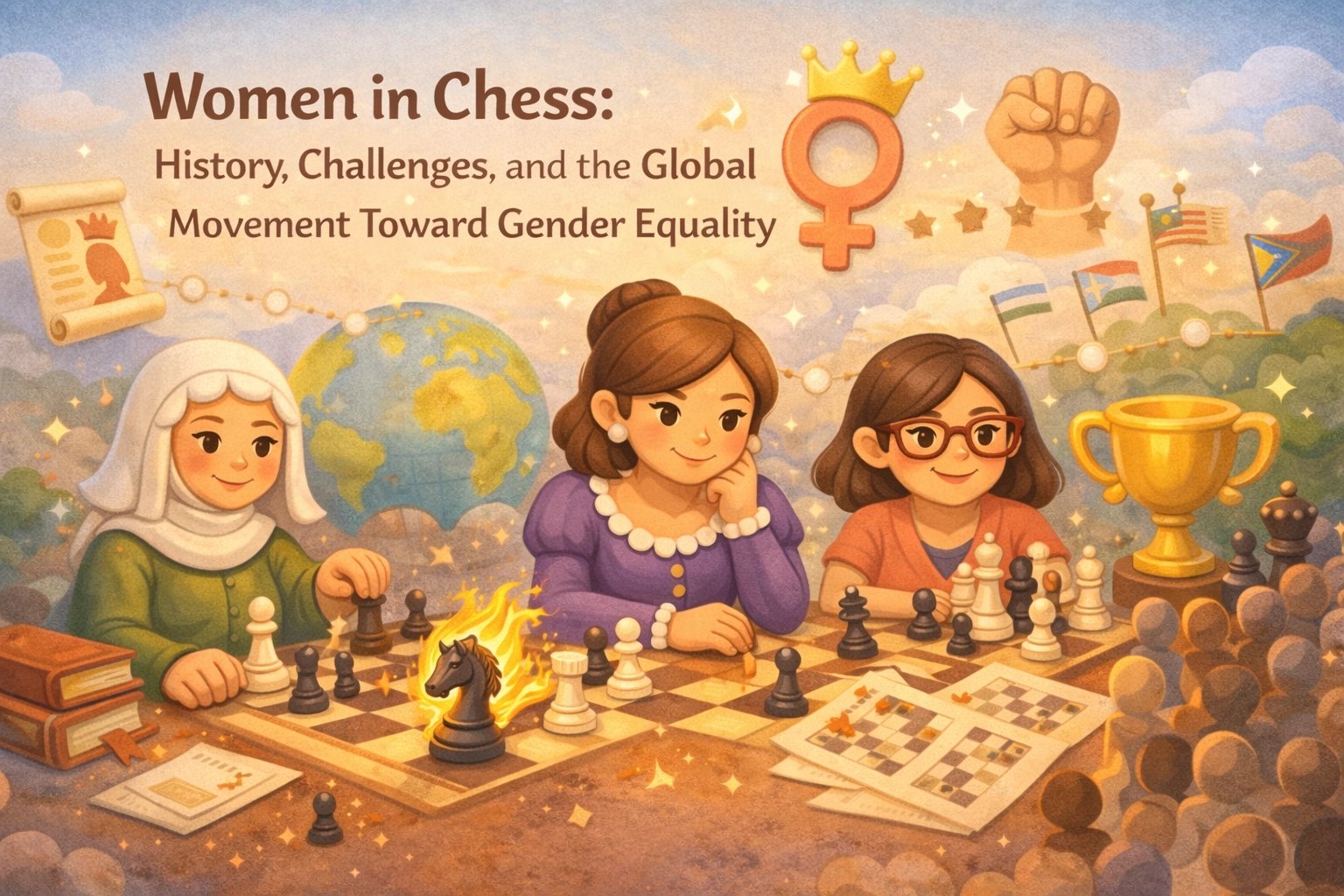
In this comprehensive blog, we will take a deep dive into the history of women in chess. We will explore the unique challenges they face daily, understand the deep-rooted cultural factors driving the participation gap, and look at the wonderful global initiatives helping to level the playing field. Whether you are a parent looking to introduce your daughter to chess, an aspiring player, or a chess enthusiast, this journey will open your eyes to the beautiful revolution happening in the chess world right now.
- A brief history of women in chess
- Understanding the gender gap in chess
- Challenges faced by women in chess
- The role of education and accessibility
- Global initiatives to promote gender equality in chess
- Countries leading progress in women’s chess
- Inspiring female chess players and role models
- The future of women in chess
- Frequently asked questions about women in chess
A brief history of women in chess
To truly understand the current state of gender equality in chess, we must first look back at the history of the game. History tells us a lot about how societies functioned and who was allowed to participate in intellectual pursuits.
Early female pioneers and their influence on the chess world
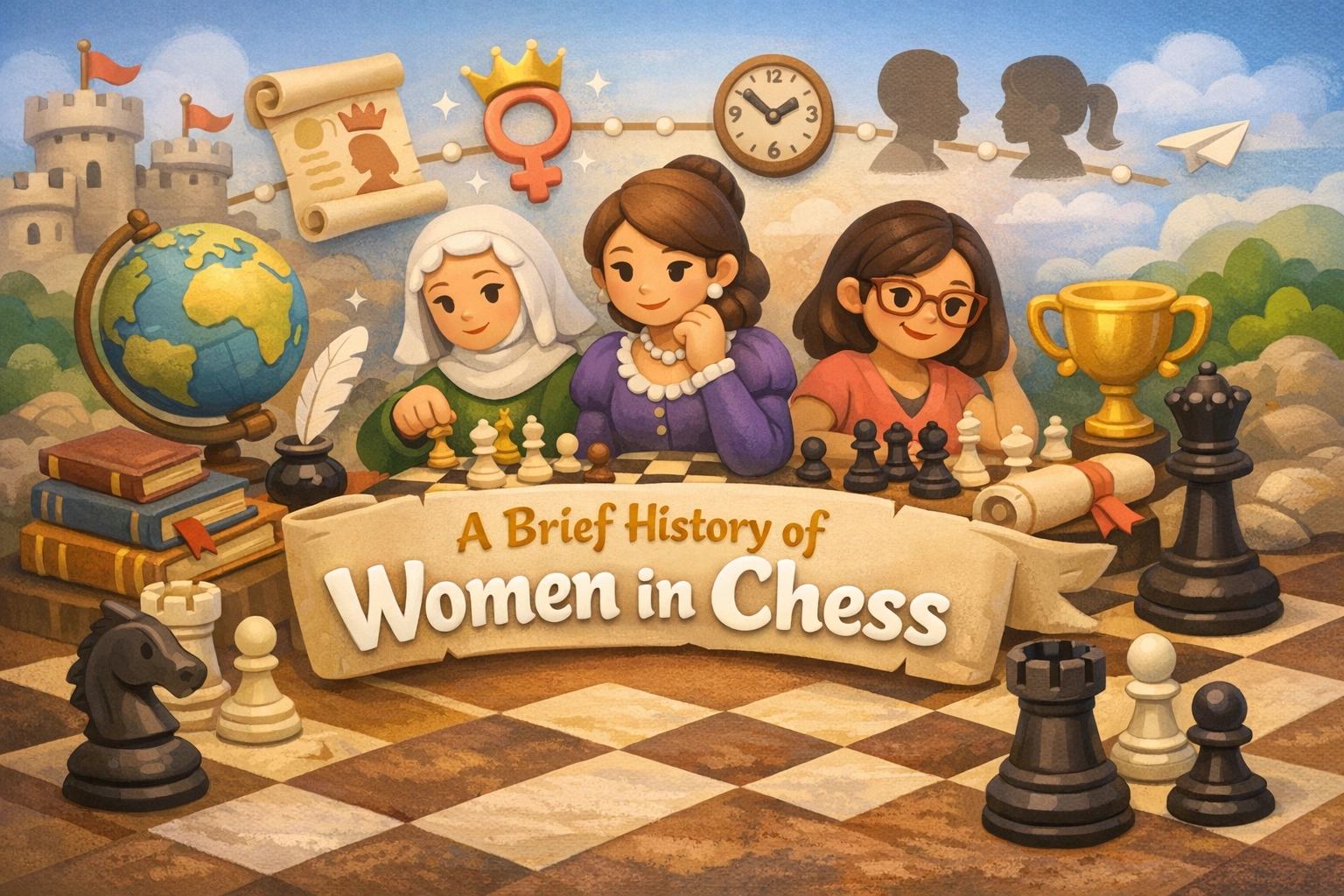
In ancient and medieval times, chess was highly regarded as a game for royalty and the intellectual elite. Historical records and beautiful miniature paintings from India, Persia, and Europe show that royal women, queens, and noble ladies frequently played chess. In fact, some historians argue that the most powerful piece on the board the Queen gained its immense power during the late fifteenth century, heavily inspired by powerful female monarchs of the era like Queen Isabella of Castile.
However, as society moved into the eighteenth and nineteenth centuries, the culture around chess began to shift drastically. The game moved out of royal courts and into public coffeehouses and gentlemen’s clubs in major European cities. Because societal norms of the time dictated that respectable women should not frequent these public spaces, women were effectively shut out of competitive chess. The game became institutionalised as a "man's sport."
Despite these massive barriers, incredibly brave women stepped forward to challenge the status quo. In the late nineteenth and early twentieth centuries, we saw the rise of early pioneers who refused to be kept away from the board. One of the most famous figures was Vera Menchik. In the 1920s and 1930s, she became the first Women's World Chess Champion. She did not just play against women; she actively competed in top-level men's tournaments. Many male masters laughed at her initially, even forming the "Vera Menchik Club" for any man who lost to her. Soon enough, legendary players like Max Euwe and Samuel Reshevsky found themselves as members of this club after being defeated by her brilliant positional play. Vera Menchik proved early on that female chess players could compete at the highest absolute levels.
How women's tournaments and titles developed over time
As more women began taking an interest in the game, chess federations realised the need to create structured platforms for them. The International Chess Federation (FIDE) officially started the Women's World Championship to give women a stage to showcase their talent globally.
In the mid-twentieth century, FIDE introduced specific titles for women, such as Woman Grandmaster (WGM) and Woman International Master (WIM). The creation of these titles has always been a topic of deep discussion. On one hand, these titles required lower rating thresholds than the absolute Grandmaster (GM) and International Master (IM) titles. The intention behind this was to encourage women, provide them with achievable milestones, and offer them professional opportunities in a landscape where they were severely outnumbered.
On the other hand, some critics over the years have argued that having separate titles might unconsciously send a message that women are inherently weaker players. However, over time, the chess world has largely agreed that these titles serve as important stepping stones. Today, the ultimate goal for top female players is to achieve the absolute Grandmaster (GM) title, and dozens of brilliant women have successfully done exactly that. The evolution of tournaments and titles highlights a long journey from total exclusion to the current push for absolute equality and integration.
Understanding the gender gap in chess
To solve a problem, we must first measure and understand it properly. The gender gap in chess is not an invisible issue; it is heavily documented in numbers, tournament halls, and rating lists all over the world.
Statistics showing participation differences between men and women
When we look at the raw data, the chess participation gap is very clear. Out of all the players registered with FIDE who hold an international rating, women make up only around eleven percent. This means that for every nine male players you see at a tournament, there is likely only one female player.
This statistical difference becomes even more pronounced when we look at the absolute top level. In the top 100 players in the world, it is extremely rare to find more than one or two women, if any at all. For many years, people mistakenly used this statistic to argue that women could not play chess at the elite level. However, brilliant mathematicians and statisticians have debunked this completely.
The concept is simple statistics: it is called the "participation rate effect." If you have a pool of 10,000 male players and a pool of only 1,000 female players, basic probability dictates that the absolute top players, the outliers with the highest possible ratings, will almost certainly come from the larger pool. The lack of women in the top 100 is not a reflection of female ability; it is a direct mathematical result of the fact that not enough girls are playing chess at the grassroots level. If we can increase the base number of girls playing, the number of women at the top will naturally rise.
Cultural, social, and structural factors that contribute to the imbalance
So, why are there fewer girls starting, and why do so many drop out? The answers lie deeply embedded in our culture and society. In many traditional setups, parents consciously or unconsciously direct their children toward gender-specific hobbies. A young boy might be gifted a chess set and encouraged to be competitive, analytical, and aggressive. A young girl, however, might be pushed towards arts, dance, or music. While these are all wonderful pursuits, girls are frequently not introduced to analytical mind games at the same rate as boys.
Even when girls do start playing chess, they face what we call a "leaky pipeline." A large number of girls learn the rules of chess at ages six to eight. But as they hit their teenage years, around ages twelve to fourteen, the drop-out rate for girls is alarmingly high. This happens due to social isolation. Teenage girls walking into a local chess club often find themselves as the only girl in a room full of boys. They lack a peer group, they lack female friends to travel to tournaments with, and they feel a deep sense of not belonging.
Furthermore, structural factors play a huge role. Until recently, the media mostly highlighted male chess champions. When a young girl turns on the television or opens YouTube to watch chess, she mostly sees male commentators, male players, and male coaches. Without representation, it is incredibly difficult for a young girl to visualise herself building a long-term future in the sport. These cultural and structural barriers are the real culprits behind the chess participation gap.
Challenges faced by women in chess
The journey of female chess players is filled with unique hurdles that their male counterparts rarely have to think about. Surviving and thriving in a heavily male-dominated arena requires immense mental fortitude.
Lack of representation at elite levels and psychological barriers
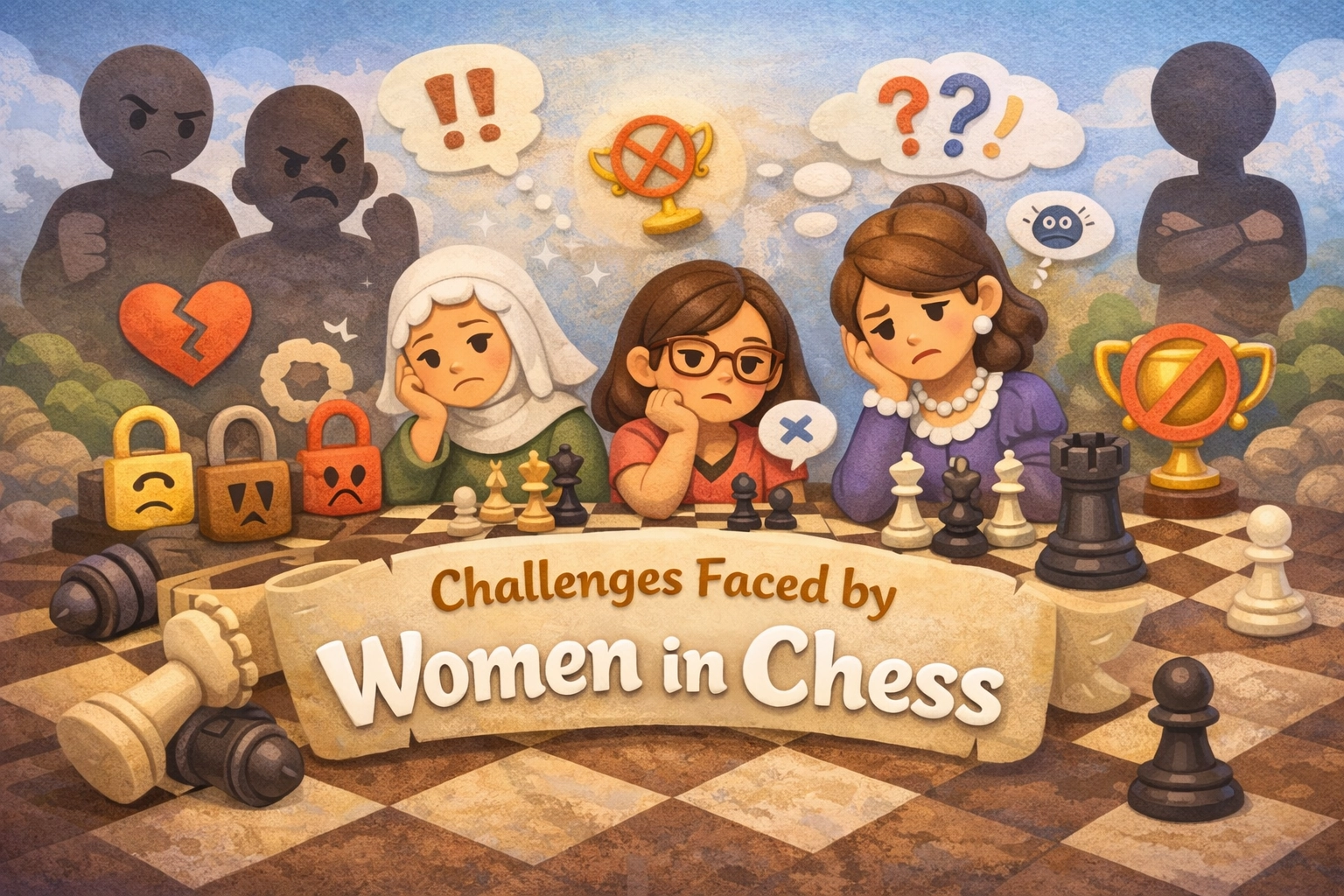
One of the heaviest burdens female players carry is psychological. In the world of psychology, there is a well-documented phenomenon known as "stereotype threat." Stereotype threat occurs when people feel they are at risk of conforming to negative stereotypes about their social group. Because the harmful myth that "women are bad at chess" has circulated for so long, female players often sit down at the board feeling immense pressure. They feel that if they lose a game, they are not just losing for themselves, but they are somehow proving the negative stereotype correct for all women. This extra psychological weight can lead to anxiety, affecting concentration and performance.
Additionally, male players often consciously or unconsciously treat female opponents differently. Many female players have shared stories of male opponents playing unusually aggressively against them, simply out of the fear and embarrassment of "losing to a girl." This creates a hostile and tense environment at the board.
The lack of elite representation also means a lack of accessible mentorship. Young male players have hundreds of Grandmasters they can approach for guidance. Young girls often struggle to find top-level female coaches who understand their specific psychological and social challenges. Navigating these invisible psychological barriers is one of the toughest parts of being a woman in competitive chess.
Limited funding, sponsorship, and professional opportunities
If we talk about chess as a career, we must talk about the economics of the sport. Professional chess requires a lot of money. Players need to hire world-class coaches, buy powerful computers for opening preparation, and travel internationally to compete in high-level tournaments.
Historically, women in chess have faced severe financial disparities. Prize funds for women’s tournaments have traditionally been a fraction of the prize funds offered in open or men-only tournaments. While the open tournaments are technically available for women to play in, the highly competitive nature and the sheer volume of top male players make it difficult for women to secure top prizes consistently.
Moreover, securing corporate sponsorships is significantly harder for female chess players. Because the sport has been marketed largely around male geniuses, brands have often hesitated to sponsor female players unless they are absolute prodigies. This lack of financial backing means that many talented young women are forced to abandon their chess dreams in their late teens or early twenties to pursue traditional, stable careers. They simply cannot afford to stay in the game. Closing this financial divide is absolutely crucial for achieving true gender equality in chess.
The role of education and accessibility
If the problems are rooted in early childhood experiences and societal structures, then the solutions must begin at the educational level. Education and accessibility are the greatest tools we have to change the landscape of chess forever.
How chess education programs can encourage more girls to learn the game
To bridge the chess participation gap, we need to focus heavily on grassroots development. Chess education programs in schools are proving to be a game-changer. When chess is integrated into the school curriculum, it removes the gender bias completely. Every student, regardless of gender, sits down to learn how the knight moves and how the rook controls an open file.
Specialised chess development programs targeting girls are also incredibly effective. Organising "girls-only" training camps and beginner tournaments provides a safe, non-intimidating environment. In these spaces, young girls can learn the game without the pressure of competing against older, more aggressive boys. They can make friends, form study groups, and build a supportive community.
At Enthuziastic, we strongly advocate for an environment where learning is collaborative rather than purely combative. By teaching chess as an art form, a mathematical puzzle, and a tool for cognitive development, educators can appeal to a broader range of young minds. When girls see chess as a fun, creative, and social activity, their retention rates in the sport increase dramatically.
The impact of schools, online platforms, and digital learning tools
The internet has democratised chess learning in ways we could never have imagined twenty years ago. Digital learning tools and online platforms have played a massive role in making the game accessible to young girls.
In the past, learning chess meant physically travelling to a local chess club, which, as we discussed, was often an intimidating, male-dominated space. Today, a young girl from any part of India, or anywhere in the world, can log into a live learning platform like Enthuziastic from the safety and comfort of her own home. She can take lessons from top-tier coaches, watch instructional videos, and play against thousands of opponents online without ever feeling out of place.
Furthermore, the rise of online chess streaming on platforms like Twitch and YouTube has introduced a new generation of female chess influencers and commentators. Young girls now watch vibrant, confident women streaming chess, laughing, analysing games, and building massive global communities. This digital revolution is breaking down the old, stuffy image of chess and replacing it with a modern, inclusive, and accessible culture.
Global initiatives to promote gender equality in chess
Recognising the urgent need for change, the global chess community, led by international bodies, has launched powerful initiatives aimed at correcting the historical imbalances in the sport.
Programs and policies introduced by FIDE
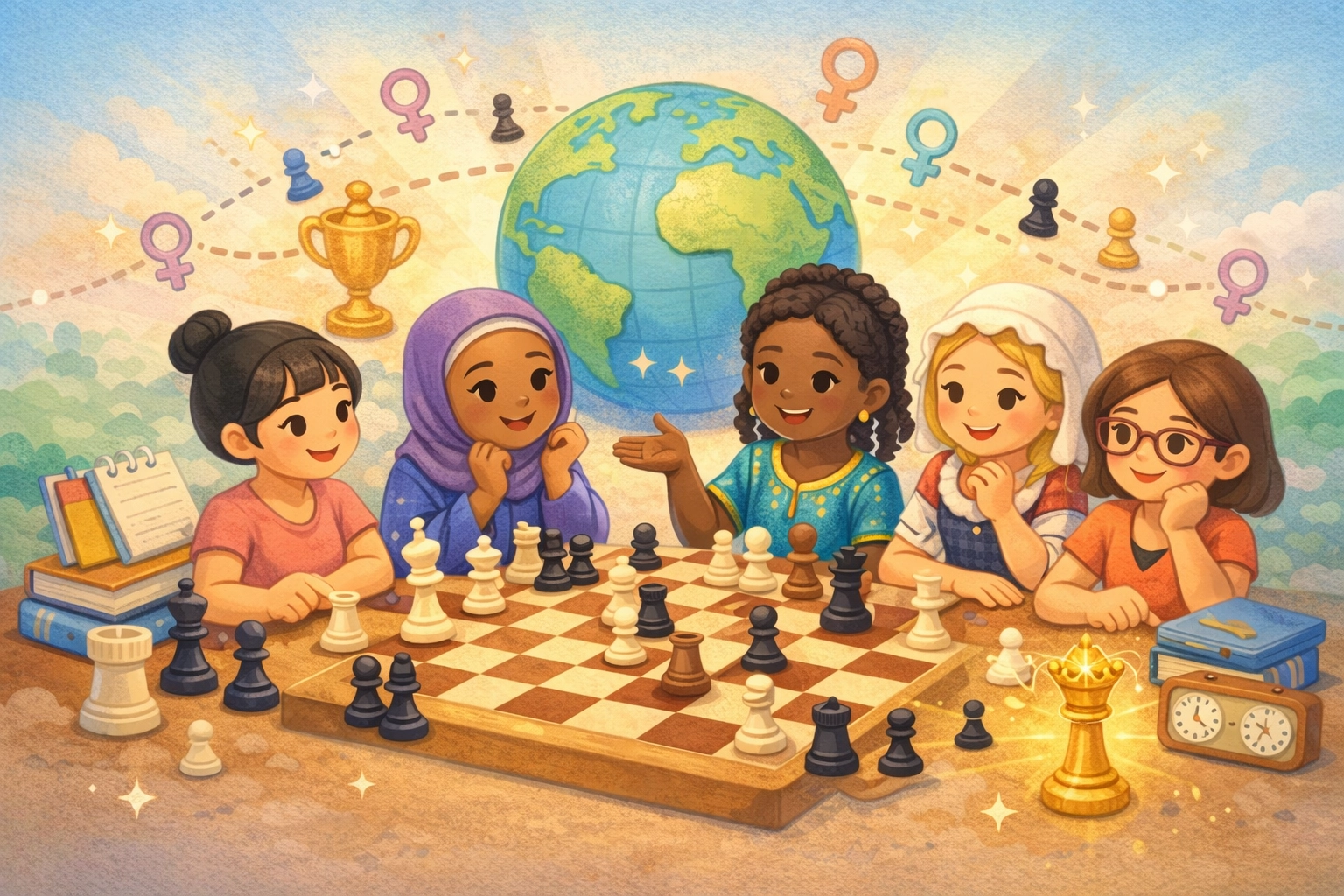
The International Chess Federation (FIDE) has taken significant steps in recent years to promote women in chess. FIDE officially declared 2022 as the "Year of the Woman in Chess," launching a series of global campaigns to celebrate female players, coaches, arbiters, and administrators.
FIDE has also implemented structural policies to force inclusion. For example, they have mandated female representation in arbitrating teams and organizing committees for major global events like the Chess Olympiad. By ensuring that women are visible not just as players, but as leaders, decision-makers, and authority figures in the sport, FIDE is slowly changing the underlying culture of chess tournaments.
Additionally, FIDE allocates special funds for the development of women's chess, offering grants to national federations that propose strong, actionable plans to increase female participation. These chess development programs include subsidised coaching for talented girls, financial support for female players travelling to international events, and training seminars specifically designed for female coaches.
The Gender Equality in Chess Index and how it measures progress
One of the most groundbreaking initiatives recently introduced is the Gender Equality in Chess Index. In the business world, we often say, "What gets measured, gets managed." The chess world has adopted this philosophy perfectly.
The Gender Equality in Chess Index is a statistical tool designed to evaluate and rank how well different countries are doing in terms of gender parity in chess. The index does not just look at how many women have high ratings. It is a comprehensive metric that measures three critical areas: participation, performance, and development.
It looks at the ratio of registered female players to male players in a country. It evaluates the performance by checking the average ratings of top female players compared to top male players. Most importantly, it looks at development: how many female arbiters does the country have? How many female coaches? How many women are on the board of the national chess federation?
By publishing this index, FIDE has created a sense of healthy competition among nations. National federations now have a clear, data-driven mirror showing them exactly where they lack and where they need to invest. It is a brilliant administrative tool that turns the abstract concept of gender equality in chess into a measurable, achievable target.
Countries leading progress in women’s chess
While the global average for female participation sits around eleven percent, there are specific countries that have completely shattered this statistic. By studying these nations, the rest of the world can learn incredibly valuable lessons.
Examples of countries with high female participation rates
When we talk about women in chess, the country of Georgia instantly comes to mind. Georgia has a deeply ingrained cultural respect for female chess players. In fact, it is said that giving a chess set as a wedding gift to a bride was a traditional practice in Georgia. Because chess is seen as a highly respected, mainstream career for women there, Georgia produced multiple Women’s World Champions, including legendary figures like Nona Gaprindashvili and Maia Chiburdanidze. In Georgia, women in chess are treated as national heroes, which naturally inspires thousands of young girls to take up the game.
China is another absolute powerhouse in women's chess. The Chinese government and its sports federation identify chess talent at a very young age and provide immense state-sponsored support, elite coaching, and financial security to their female players. As a result, China has dominated the Women's World Championship for the last three decades.
Right here in India, we are witnessing a golden era for female chess players. India has a rapidly growing number of young girls taking up the sport. Supported by robust state-level academies, private sponsorships, and a culture that highly values educational and intellectual pursuits, Indian girls are currently winning medals on the global stage.
Lessons other federations can learn from these success stories
The common thread among these successful countries is clear: systemic support and cultural validation. The lessons for other federations are simple. First, chess must be promoted as an intellectually prestigious and viable career for women. Second, state and corporate funding must step in to remove the financial barriers of professional training and travel. Third, federations must heavily promote their top female players in mainstream media to create visible, celebrated role models for the next generation.
Inspiring female chess players and role models
No movement can succeed without heroes. The global movement for gender equality in chess has been fuelled by the extraordinary brilliance of female players who defied the odds and shattered the glass ceiling.
Famous women who have inspired the next generation of players
We must start by mentioning Judit Polgar, arguably the greatest female chess player in history. Judit, alongside her sisters Susan and Sofia, was part of a famous educational experiment by her father, who believed that geniuses are made, not born. Judit refused to play in women-only tournaments, insisting on competing exclusively in the open section against the absolute best men in the world. She reached the top ten of the absolute world rankings and defeated multiple world champions, including Garry Kasparov and Magnus Carlsen. Judit Polgar proved once and for all that women possess the exact same intellectual capacity for chess as men.
Another phenomenal icon is Hou Yifan from China. She became the youngest Women's World Champion and, like Judit, frequently stepped into the open sections to challenge elite male grandmasters, inspiring millions of girls in Asia.
In India, we have extraordinary role models. Koneru Humpy broke massive barriers by becoming a Grandmaster at a very young age and remaining one of the top players in the world for over two decades. Harika Dronavalli is another legend whose consistency and grace under pressure have inspired lakhs of Indian students. Recently, young stars like Vaishali R. have captured the nation's imagination, proving that the future of Indian women in chess is incredibly bright.
The importance of representation and mentorship
Having these role models is not just about national pride; it is a psychological necessity for the development of the sport. When a young girl sees Judit Polgar analyzing a brilliant sacrifice, or watches Koneru Humpy receiving a gold medal, a seed of possibility is planted in her mind.
Mentorship is equally vital. Today, many of these elite women are actively giving back to the community. They are holding masterclasses, writing books, and running academies. This direct transfer of knowledge and experience from one generation of women to the next is what will ultimately close the chess participation gap. At Enthuziastic, we continuously highlight these stories because we know that representation is the ultimate catalyst for learning and self-belief.
The future of women in chess
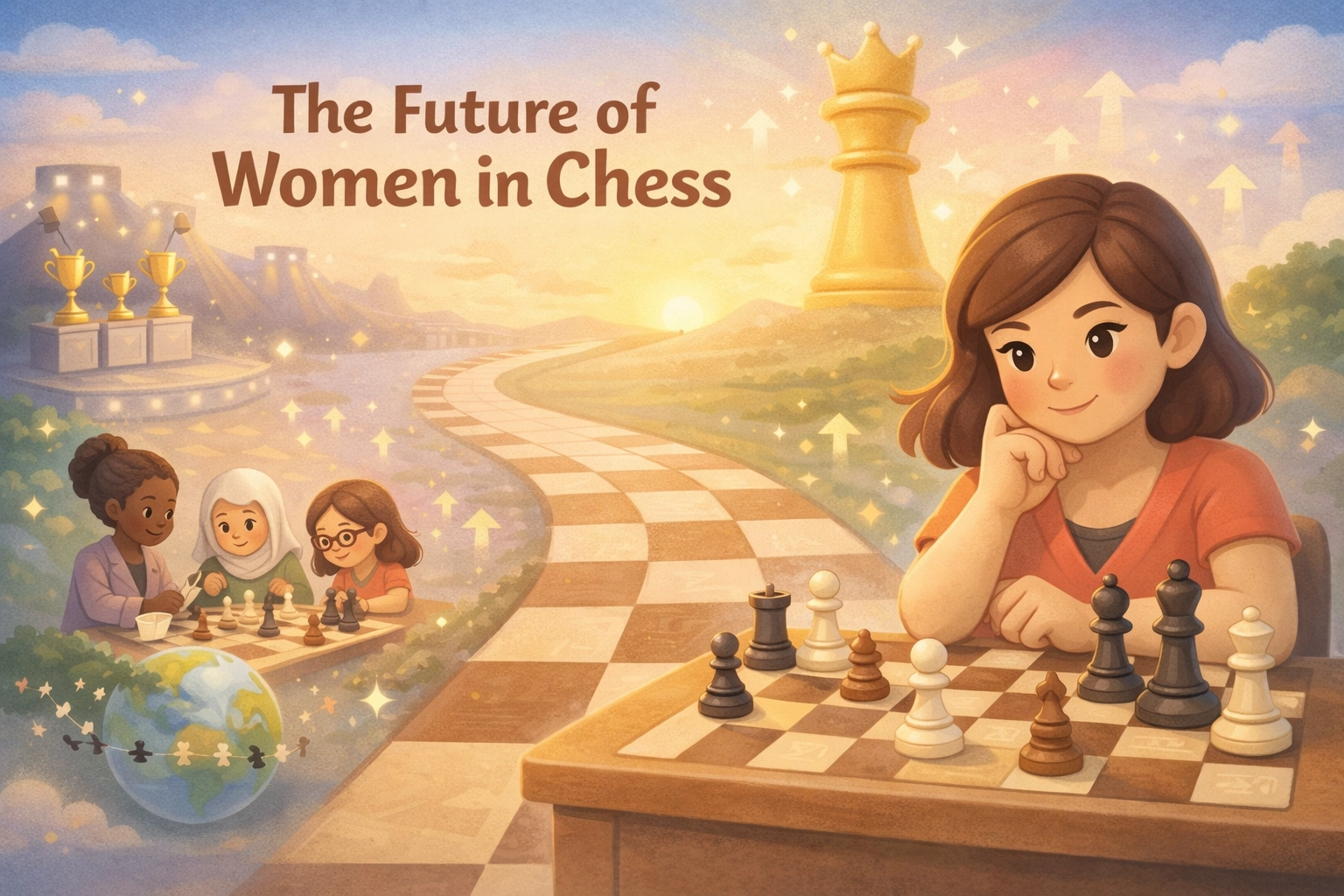
As we look toward the horizon, the future of women in chess appears brighter, fairer, and more exciting than ever before in the history of the game.
Trends suggesting growing participation and opportunities
We are currently witnessing a massive cultural shift. The explosion of chess as an e-sport has brought a fresh, diverse, and youthful energy to the game. Young female streamers are gathering massive audiences, showing that chess is fun, dynamic, and welcoming. Consequently, we are seeing a sharp spike in the number of girls registering on online chess platforms and participating in beginner tournaments.
Sponsorships are also finally beginning to flow. Major corporate brands are recognising the value of associating with brilliant female minds. Prize funds for women's tournaments are slowly being increased, and there is a loud, collective demand from the entire chess community for equal pay and equal opportunities.
How communities, federations, and technology can support equality
The path to absolute gender equality in chess will require sustained effort. Communities must continue to build safe, welcoming local chess clubs. Parents must consciously introduce their daughters to the chessboard just as eagerly as they do their sons. National federations must religiously use tools like the Gender Equality in Chess Index to track their progress and hold themselves accountable.
Technology will be our greatest ally. Platforms like Enthuziastic will continue to leverage global connectivity to bring world-class chess education to every girl, regardless of her geographical location. By combining digital learning, strong policies, and unwavering community support, we will soon see a day when the tournament halls are evenly split, and the title of World Chess Champion is contested fiercely by both men and women on an equal footing.
Frequently asked questions about women in chess
1. Why is there a separate women's category in chess if it is a mental game? Historically, women were entirely excluded from competitive chess clubs and tournaments. The separate women's category was introduced by FIDE to provide a safe, encouraging platform for women to compete, win titles, and earn a living in a sport where they were severely outnumbered. It acts as an affirmative action tool to build participation. Women are always allowed and encouraged to play in the 'Open' section alongside men.
2. What is the chess participation gap? The chess participation gap refers to the massive difference in the number of male and female players who actively play, compete, and hold international ratings. Currently, women make up only about 11% of rated chess players globally.
3. Are there any women who hold the absolute Grandmaster (GM) title? Yes, absolutely! While there is a Woman Grandmaster (WGM) title, many exceptional female chess players have achieved the absolute Grandmaster (GM) title, which has the exact same stringent rating and norm requirements for both men and women. Judit Polgar, Hou Yifan, Koneru Humpy, and Vaishali R. are just a few examples of women who hold the absolute GM title.
4. How does the Gender Equality in Chess Index work? The Gender Equality in Chess Index is a statistical measuring tool created to assess how well different national chess federations are doing in terms of gender parity. It evaluates countries based on female participation rates, the performance of female players, and the development of women in administrative and coaching roles within the federation.
5. How can parents encourage their daughters to play chess? Parents can encourage their daughters by introducing the game early in a fun, non-pressurised way. Showing them matches and interviews of inspiring female chess players helps build role models. Enrolling them in girls-friendly chess development programs or safe online live learning networks like Enthuziastic can also help them find a supportive peer group.
6. What are the biggest challenges faced by female chess players today? Female players face several challenges, including a lack of female peers at local clubs, lower historical prize funds compared to open events, difficulty in securing corporate sponsorships, and psychological barriers like 'stereotype threat' in heavily male-dominated environments.
7. How is online learning changing the landscape for women in chess? Online platforms democratise access to chess education. They allow young girls to learn from world-class coaches and play thousands of games from the safety and comfort of their homes, completely bypassing the intimidation factor of walking into a male-dominated local chess club. Digital streaming has also created visible, relatable female chess influencers.
8. Can women compete equally against men in chess? Yes, without a doubt. Chess is entirely a game of strategy, calculation, and psychological endurance. There are zero biological barriers preventing women from playing at the absolute highest level. The current statistical gap at the top is a result of the massive participation gap at the grassroots level, not a difference in intellectual capability.

Comments