


The "winning mindset" is defined as a complex psychological framework governing how players approach the game, handle pressure, learn from mistakes, and perceive themselves. In this blog, we explore the concept of a winning mindset in Chess, defining it as a crucial psychological edge that complements technical skill, enabling consistent performance, confidence under pressure, and resilience after mistakes. It emphasizes that this mental toolkit is applicable beyond chess and aims to provide a comprehensive roadmap to developing this inner grandmaster.
- I. Introduction: More Than Just Moving Pieces
- II. The Mental Playbook: What is a Winning Mindset, Really?
- III. From Ancient Battles to Modern Minds: A Mindset History Tour
- IV. The Great Debate: Mindset vs. Moves – What Matters Most?
- V. The Chessboard of Tomorrow: AI, VR, and Mind Hacks
- VI. Modern Day Arena: Minds, Machines, and Modern Masters
- VII. Sharpening Your Inner Game: Modern Strategies for a Winning Mindset
- VIII. The Checkmate Trap: When a "Winning Mindset" Goes Wrong
- IX. Conclusion: Your Move!
- FAQ
I. Introduction: More Than Just Moving Pieces
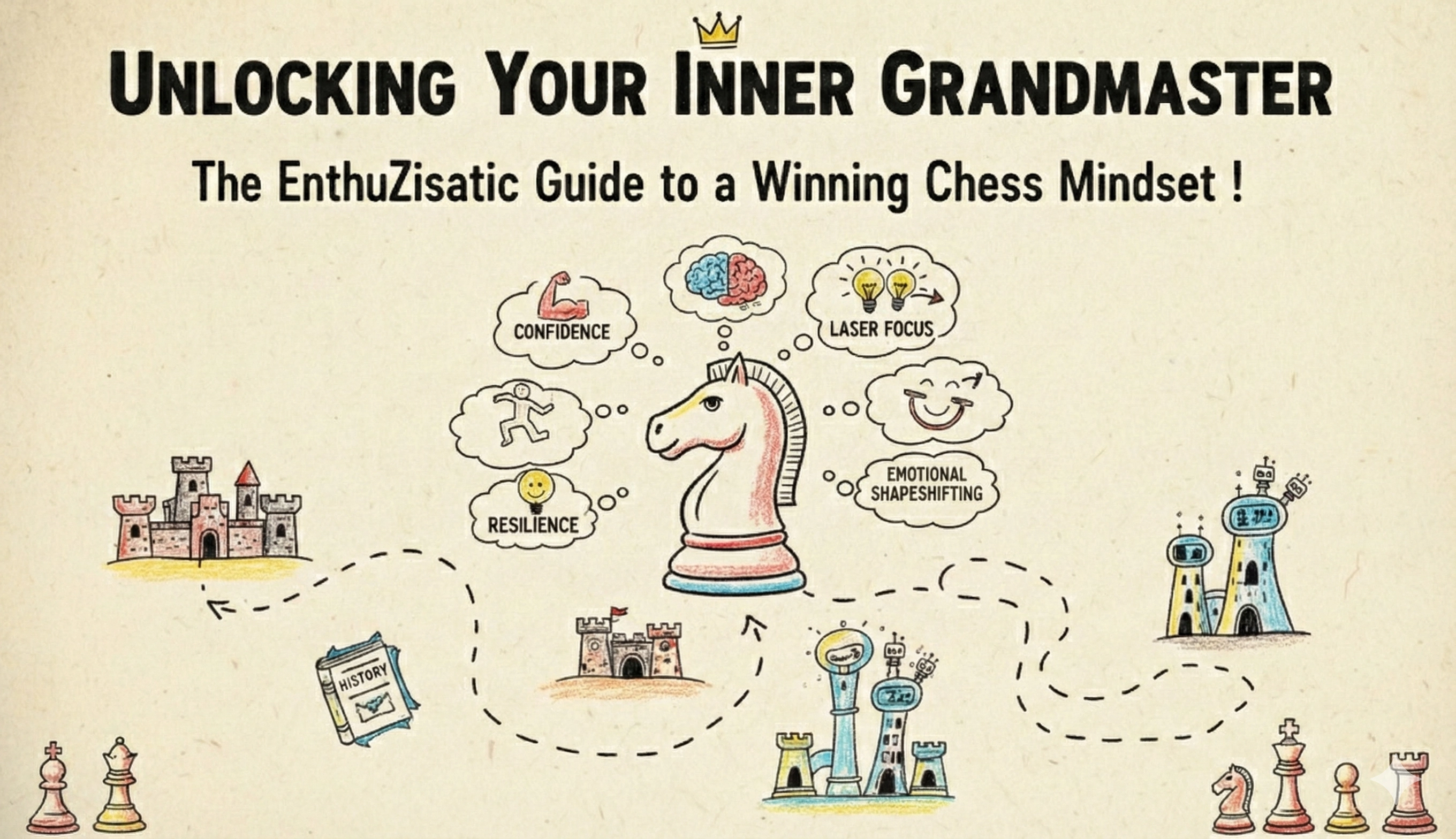
The difference between good and legendary chess players is often an intangible "winning mindset," not just memorized openings. This mindset involves executing moves with confidence, maintaining composure under pressure, adapting to unforeseen circumstances, and learning from every game. It's a mental toolkit for consistent performance and bouncing back from blunders, with applications extending to life itself. The guide will cover the nature of this mindset, its historical evolution, its current importance, and future trends influenced by AI. EnthuZiastic emphasizes unlocking full potential in chess and life, viewing chess as a microcosm of broader challenges where honed mental skills translate to enhanced performance.
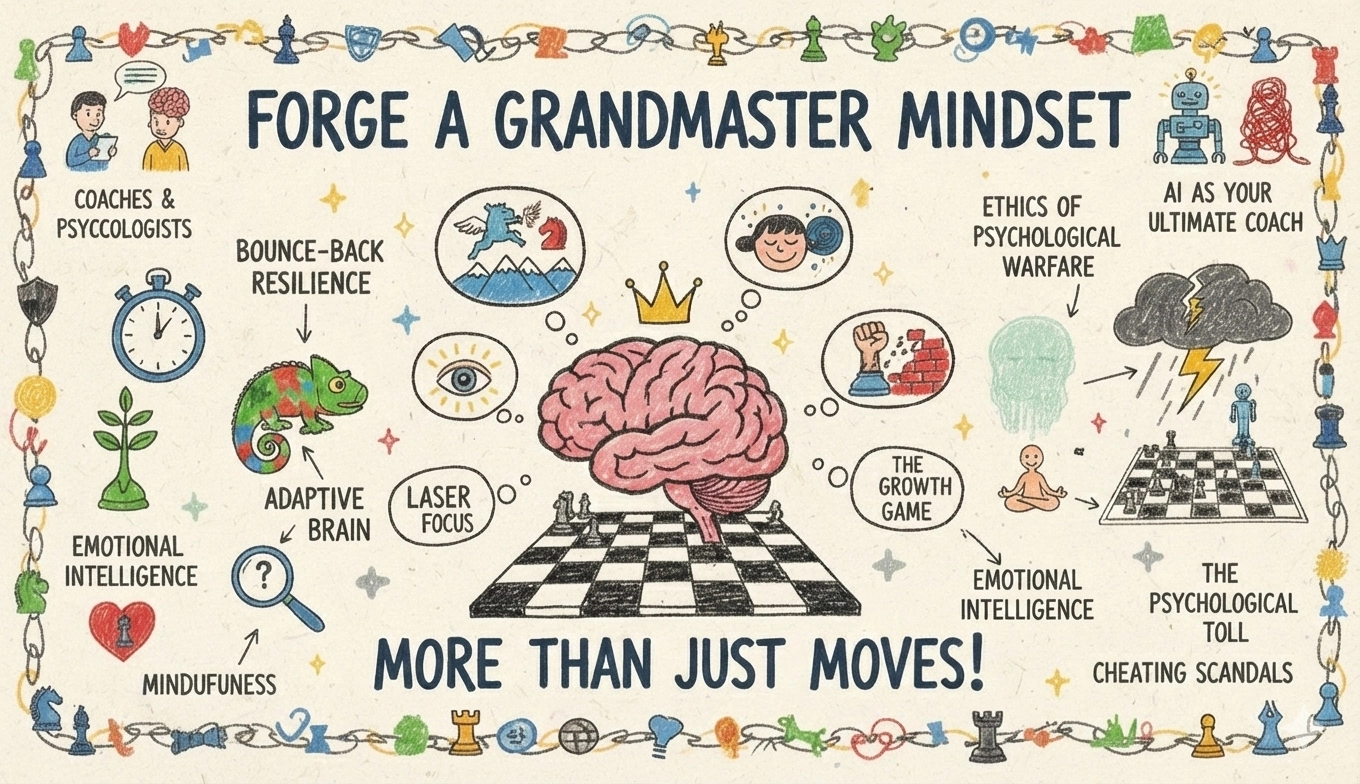
II. The Mental Playbook: What is a Winning Mindset, Really?
A winning mindset in chess is a consciously cultivated set of cognitive and emotional skills that elevate performance under pressure and transform setbacks into growth opportunities. It is a psychological toolkit for consistent performance, resilience, and continuous improvement, acting as the foundation for technical skills.Key components include:
Self-Confidence
A deep belief in one's own abilities and preparation, trusting intuition and calculations even in difficult positions.
Laser Focus
The ability to shut out distractions and concentrate intensely on the game, minimizing external interruptions and internal chatter.
Bounce-Back Resilience
The capacity to recover quickly from mistakes, analyze what went wrong, and use that knowledge for improvement, viewing failures as learning opportunities.
Emotional IQ
Maintaining composure under pressure, avoiding impulsive decisions, and recognizing how one's emotional state affects play.
Strategic Shapeshifting
Adapting plans to changing circumstances and reassessing the position, demonstrating flexibility of thought.
Growth Mindset
The belief that abilities can be developed through dedication and hard work, embracing challenges and persevering through difficulties.
Victory Visualization
Mentally rehearsing successful outcomes and strategic sequences to boost confidence and improve focus.
Patience & Purpose
Cultivating patience, maintaining a long-term perspective, and understanding the overall purpose of training and playing.
III. From Ancient Battles to Modern Minds: A Mindset History Tour
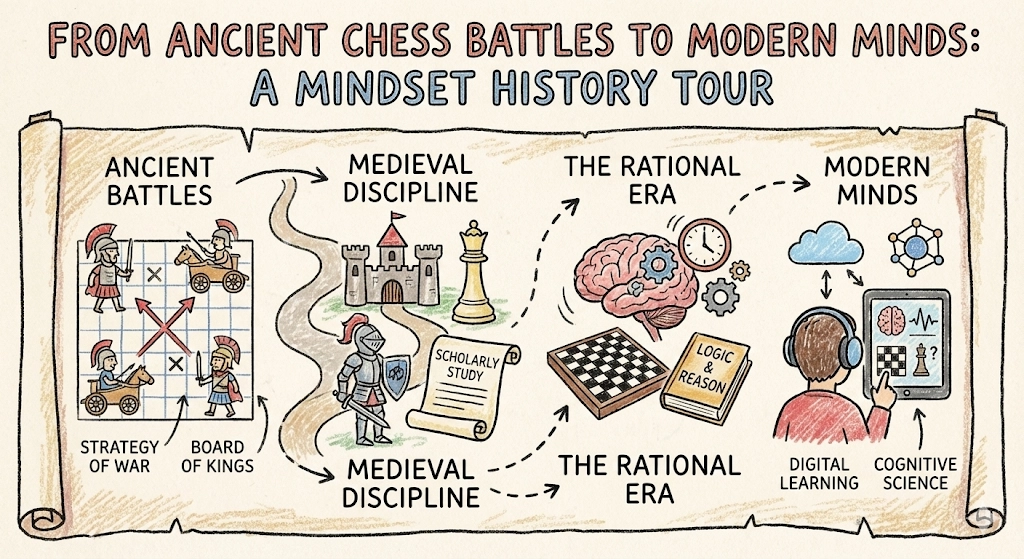
The historical evolution of chess highlights the enduring importance of mental fortitude:
The Dawn of Mental Warfare
Originating as a war game ("chaturanga") in ancient India, chess has always emphasized strategic thinking, tactical acumen, and the will to win.
The Pioneers of Psychological Play
Wilhelm Steinitz: The first World Champion, known for his scientific approach and objective strategy, demonstrating remarkable mental discipline and self-belief.
Emanuel Lasker: Held the title for 27 years, renowned for his psychological approach, playing the opponent to exploit weaknesses and disrupt their mental equilibrium.
The Soviet School's Secret Weapon
This program systematically trained players in mental toughness, focus, and emotional control through a holistic approach combining physical conditioning, psychological preparation, and rigorous analysis.
IV. The Great Debate: Mindset vs. Moves – What Matters Most?
The prevailing view is that a winning mindset is a significant factor in chess, with some experts estimating it accounts for 50% of the game at higher levels.
Current Buzz
The winning mindset is considered crucial for transforming good players into great ones.
Coaches & Psychologists Weigh In
Coaches: Assist with goal setting, visualization, game analysis (especially losses), and building solid habits.
Psychologists: Apply scientific understanding to address mental toughness, anxiety, self-doubt, and teach focus techniques. Dr. Fernand Gobet and Karel van Delft are noted pioneers in chess psychology.
The "Controversy" (Nuance)
Brains vs. Books: While both technical knowledge and mindset are necessary, mindset is often the differentiator under pressure.
Fixed vs. Growth: The "growth mindset" emphasizes that mental abilities can be learned and improved through dedication and practice, even from mistakes.
The "Dark Side": The intense pressure of competitive chess can negatively impact mental health, as exemplified by Bobby Fischer, highlighting the importance of balance.Building focus during tournaments
V. The Chessboard of Tomorrow: AI, VR, and Mind Hacks
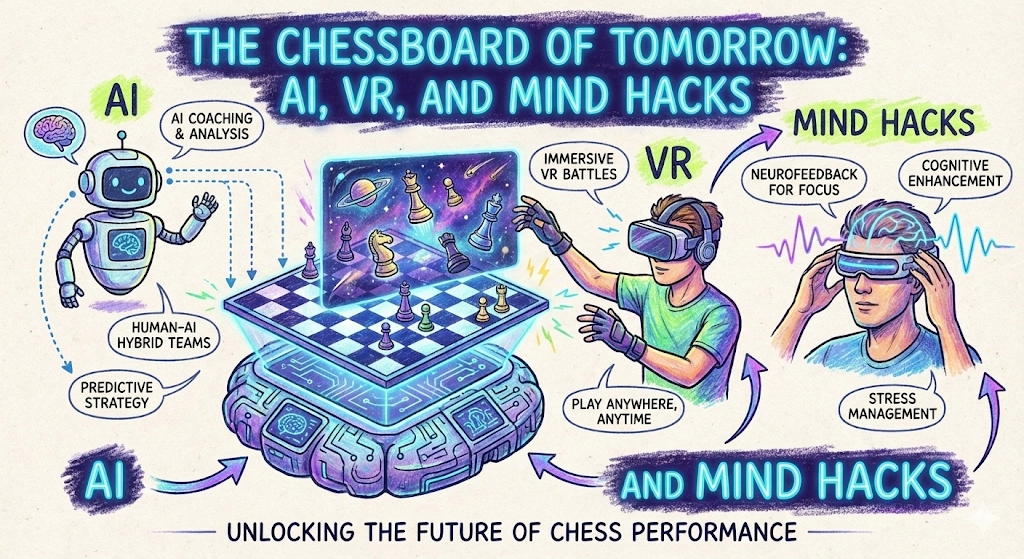
Tech Takes Over
Smart Boards & AI Buddies: Devices that track moves, suggest strategies, and AI opponents (like Maia Chess) that mimic human play styles offer realistic practice.
Virtual Grand Arenas: VR/AR technologies can create immersive playing environments.
New Ways to Play & Learn: Expect new chess variants, team formats, and increased chess in schools with AI-driven personalized lessons.
Brain Science on the Board
Cognitive Boosts: Research confirms chess enhances memory, problem-solving, and creativity.
Behavioral Deep Dives: Scientists are identifying cognitive biases in player behavior, such as copying winners or mimicking celebrity GMs.
Next-Level Training Hacks
Personalized Post-Mortems: AI analyzes specific blunders to create custom puzzles.
The Woodpecker Method: Repeatedly solving tactical puzzles for mastery.
The Feynman Technique: Explaining concepts aloud to ensure true understanding.
Holistic Health: Recognizing that good sleep and a healthy body are crucial for a sharp mind.
VI. Modern Day Arena: Minds, Machines, and Modern Masters
The advent of powerful chess engines has significantly altered competitive chess and the required winning mindset.
AI's Impact on Human Mindset:
Deepened Opening Prep: Increased pressure to stay current with theoretical developments due to engine analysis.
Strategic Evolution: Humans learn dynamic, adaptable play from AI.
Mental Toughness as a Differentiator: With computers handling tactics, human psychology (stress, tilt, fear) becomes the critical battleground.
The Modern Winning Mindset:
A multifaceted construct including:
Self-Confidence & Decisiveness: Trusting one's lines and knowing when to act.
Unwavering Focus & Emotional Control: Essential for long games and critical decisions.
Resilience after Engine-Verified Blunders: Ability to move on from mistakes identified by AI.
Adaptability & Creativity: Finding novel solutions beyond standard lines.
Patience & Time Management: Effectively managing the clock as an opponent.
Post-Game Analysis (with AI): Critical self-evaluation for continuous growth.
Lessons from Legends:
Garry Kasparov: Emphasized learning from losses and viewing each game as a growth opportunity.
Magnus Carlsen: Exemplifies psychological fortitude, calm composure, and the ability to grind out wins from difficult positions.
Rise of Sports Psychology in Chess: Integration of mindfulness, visualization, positive self-talk, and breathing exercises for mental preparation and anxiety management.
VII. Sharpening Your Inner Game: Modern Strategies for a Winning Mindset
Today's Toolkit for the Modern Player:
Achieving Flow
Using mindfulness and meditation for improved concentration, emotional regulation, and optimal performance.
Building Bulletproof Confidence
Developing deep trust in abilities without arrogance, recognizing and addressing "imposter syndrome" as growth opportunities.
Emotional Ninja Training
Mastering control of negative emotions (frustration, fear, overconfidence) to avoid "tilt" and maintain objective judgment.
Deep Strategic Thinking
Practicing long-term planning, anticipating opponent moves, evaluating threats/opportunities, and mastering time management.
Embracing the Growth Mindset
Viewing every game as a learning opportunity, committing to objective post-game analysis, and refining understanding.
Practical Drills for EnthuZiastic Players:
Mental Toughness Training: Simulating high-pressure tournament scenarios during practice to build resilience and coping mechanisms for stress.
Visualization: Mentally rehearsing games, focusing on composure, effective planning, and adaptation.
Positive Self-Talk: Cultivating an encouraging internal coach instead of a harsh critic.
Pre-Game Rituals: Establishing consistent routines to signal "game on" and focus.
Holistic Approach: Prioritizing physical well-being (sleep, diet, exercise) to fuel mental strength and cognitive performance.
VIII. The Checkmate Trap: When a "Winning Mindset" Goes Wrong
An excessive focus on winning, without balancing learning and growth, can backfire.
Overconfidence & Complacency
Leads to underestimating opponents, rushing moves, neglecting study, and inadequate preparation.
Pressure Cooker Syndrome
Creates anxiety and fear of losing, resulting in cautious play, stifled creativity, and reluctance to take risks.
Unrealistic Expectations & Emotional Fallout
Triggers discouragement, self-hatred, rumination on mistakes, and mental fatigue, turning chess into a source of stress.
Identity Crisis
Tying self-worth to results can make losses feel like personal attacks, limiting identity outside chess.
Learning Blockage
Intense negative emotions prevent objective post-game analysis, hindering learning from mistakes.
A true winning mindset involves learning from setbacks, adapting, and emerging stronger, with balance being key to long-term success and enjoyment.
The Enduring Human Edge
The human winning mindset will remain a crucial differentiator in human-to-human competition:
Emotional Control: The ability to master emotions is a uniquely human advantage.
Creativity & Intuition: The spark for innovative and unexpected play will remain invaluable.
Mental Toughness: Training will increasingly simulate AI-level pressure to build mental stamina.
Technology will enhance chess, but the inner strength of the winning mindset will be the ultimate advantage.
IX. Conclusion: Your Move!
The winning mindset is a learnable and powerful set of mental skills, habits, and attitudes that can be cultivated through conscious effort and practice. The best chess players throughout history have consistently demonstrated this, characterized by discipline and composure. The guide encourages readers to start cultivating their own winning mindset by embracing mistakes, visualizing success, and staying curious.
Chess serves as a metaphor for life, teaching that mental battles are often the most significant. Cultivating a winning mindset involves embracing challenges, learning from mistakes, and striving for continuous improvement, demanding both intellectual prowess and unwavering mental fortitude.
Call to Action (EnthuZiastic Spirit)
Practice mental mastery principles: center yourself, analyze objectively, set goals, and enjoy the journey of becoming mentally stronger.
Final Thought
The mind is the most powerful piece on the board; unleash its potential with EnthuZiastic chess courses.
FAQ
Q1: Is a winning mindset learned or innate?
A: Primarily a learned skill, though some may have natural predispositions. It can be cultivated through effort, practice, and coaching.
Q2: How important is mental preparation vs. technical skill?
A: At higher levels, mental preparation can account for up to 50% of success. It's often the deciding factor in high-pressure situations.
Q3: Practical techniques for improving focus?
A: Mindfulness meditation, deep breathing exercises, visualization, and eliminating distractions are recommended.
Q4: How to overcome the fear of mistakes?
A: Adopt a growth mindset, view mistakes as learning opportunities, analyze games, and experiment with strategies.
Q5: Role of a chess coach in developing a winning mindset?
A: Coaches provide guidance on goal setting, visualization, game analysis, mental approach, training habits, and motivation.


Comments