

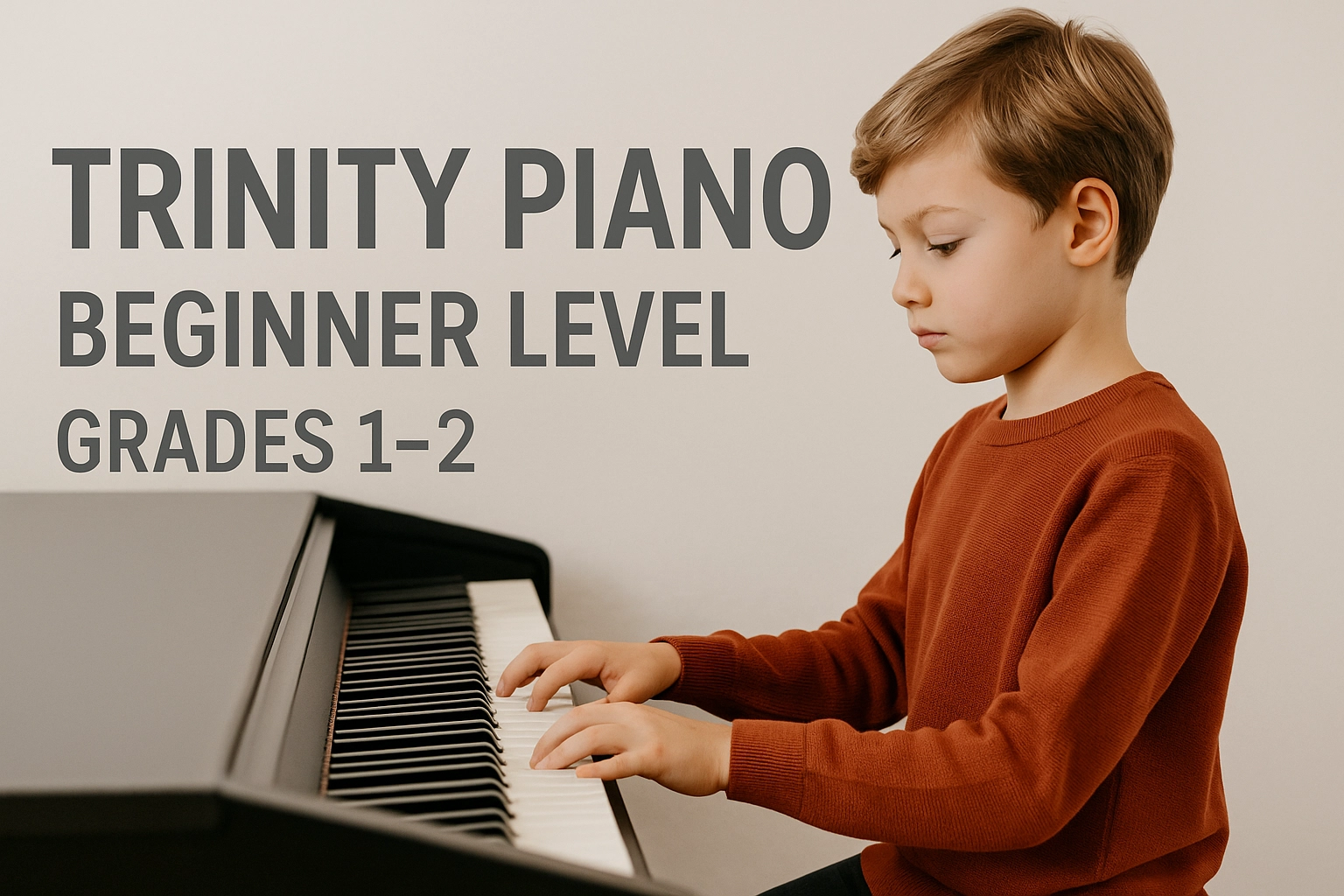
Learning the piano is one of the most transformative artistic paths a student can embark upon. It trains the mind to think with clarity, the hands to move with intention, and the heart to express emotion with dignity and restraint. At the beginner level, Trinity Piano Grades 1 and 2 form the essential foundation upon which every advanced skill, every confident performance, and every artistic breakthrough is eventually built. These early steps are not small steps, they are decisive ones. They shape posture, tone production, rhythmic understanding, reading ability, technical habits, and, most importantly, a disciplined mindset toward learning. Trinity Piano Grade 1 & 2, offers a calm, thoughtful, and internationally respected progression that gives every beginner the chance to mature correctly. The result is confidence, genuine confidence that comes from understanding, not from being pushed through levels. Moreover, Grades 1 and 2 build emotional intelligence. Students learn resilience when they correct mistakes, confidence when they master new skills, and pride when they perform thoughtfully prepared pieces.
- Building the Foundation: Technique, Confidence & Identity
- The Student Experience at Beginner Level
- What Trinity Beginners Learn (Grades 1 & 2)
- Grade 1 Focus: (TRINITY PIANO PROG)
- Grade 2 Focus:
- Why Beginner Levels Matter Most
- Why Trinity Suits Beginners Perfectly
- Looking Forward, Preparing for Intermediate Level
- FAQs – Trinity Piano Beginner Level (Grades 1 & 2
- 1. What age can a student start Trinity Piano Grade 1?

Building the Foundation: Technique, Confidence & Identity
The earliest piano lessons often revolve around:
Posture: Sitting correctly, aligning hands naturally, and maintaining relaxed shoulders
Finger Strength: Developing control through basic exercises and simple scales
Reading Music: Learning to interpret notation with independence
Rhythm Control: Understanding beats, rests, and counting confidently
Tone Production: Learning how pressure, touch, and movement affect sound
These skills form the bedrock of every future pianist. Without them, intermediate and advanced stages become shaky and unfocused. With them, everything else becomes achievable.
This is exactly why the Trinity Grades 1 and 2 syllabus is crafted so intelligently. Each requirement, whether a scale, sight-reading exercise, or short piece is chosen to help students build real musical literacy, not just temporary performance ability.
The Student Experience at Beginner Level
Students at this stage often feel a mix of excitement and uncertainty. The keyboard feels unfamiliar. Reading music appears confusing. The left and right hands seem to have minds of their own.
But with structured Trinity-based learning, these challenges transform into victories:
The first time a student plays with both hands together, they realize progress is real.
The first time they read a melody independently, their confidence grows.
The first time they perform a short piece in front of a parent or teacher, they understand the joy of musical expression.
These experiences are small in scale but profound in impact. They teach responsibility, discipline, and patience that are qualities that strengthen every area of life.
What Trinity Beginners Learn (Grades 1 & 2)
Grade 1 Focus: (TRINITY PIANO PROG)
Basic scales in simple keys
Simple melodies and short recital pieces
Understanding notation, rests, and rhythm
Developing smooth hand coordination
Playing with correct posture and finger strength
Grade 2 Focus:
Using both hands more confidently
Early techniques for expressive playing
More complex rhythms, slurs, and articulation
Stronger tone production and control
Preparing for short, expressive repertoire pieces
Students begin to understand that music is not merely about hitting the correct keys but it is about meaning, expression, and communication.
Why Beginner Levels Matter Most
A pianist can only rise as high as the foundation beneath them. Beginner training determines:
Tone Quality - soft, controlled, intentional playing
Reading Confidence - the ability to learn music independently
Technical Stability - building habits that last through advanced grades
Musical Awareness - listening, reacting, and expressing
Learning Attitude - consistency, patience, and discipline
When taught correctly, beginner students don’t simply learn piano, they learn how to learn.
Why Trinity Suits Beginners Perfectly
The Trinity Piano framework is built on progression, not pressure. At every stage, the syllabus grows gently and intentionally, ensuring that students are never overwhelmed or rushed ahead before they are ready. This mindful progression is one of the reasons Trinity has remained a trusted global standard for decades, it respects the learner’s pace while steadily building the skills needed for true musicianship.
Every piece chosen for the beginner grades is purposefully curated. These aren’t random melodies or exercises; they are selected to spark curiosity, joy, and confidence. The music feels accessible yet engaging, allowing students to experience success early while gradually expanding their musical vocabulary. A beginner might start with simple patterns and short phrases, but each piece subtly introduces new ideas in rhythm, dynamics, or articulation. It is teaching through artistry not mere drills.
.jpg)
The technical requirements reflect the same philosophy. Rather than shortcuts or quick wins, Trinity focuses on long-term ability: clean hand shape, steady rhythm, healthy posture, controlled touch, and a sensitive ear. These foundational techniques become the pianist’s lifelong tools. Students who start with Trinity aren’t just learning to “play songs.” They are learning to understand music, to shape sound, and to build habits that will support them whether they stop at Grade 2 or progress all the way to diplomas.
Trinity examiners also play a vital role in creating a supportive musical environment. Their evaluations focus on musicality, tone, phrasing, expression, and the student’s ability to communicate the spirit of the piece. It is never about rigid perfection or intimidating judgment. Instead, examiners look for understanding, effort, and artistic potential. For young or nervous learners, this approach makes the exam room a place of growth rather than pressure.
And, of course, Trinity certifications carry weight worldwide. They are respected by educators, institutions, and conservatories across continents. For students, this recognition becomes a powerful asset, a testament to their commitment, discipline, and musical intelligence.
Each step in this journey prepares learners not just for higher grades, but for a lifetime of engagement with the piano. The foundation built at these early levels strengthens more than technique; it nurtures confidence, patience, creativity, and a love for music that grows with them for years to come.
Looking Forward, Preparing for Intermediate Level
Once students complete Grades 1 and 2, they stand at the threshold of a remarkable transformation. The intermediate stages of Trinity Piano learning usher in a new world, one where musical identity begins to form and true artistic potential starts to surface. At these levels, learners explore expressive phrasing, experiment with tone colors, navigate shifting positions with confidence, and make intentional interpretive decisions that reflect personal style and emotional depth. The music becomes richer, more layered, and more connected to who they are becoming as musicians.
Yet none of this growth happens in isolation. Every advanced technique, every stylistic nuance, every expressive detail is built upon the groundwork established in the beginner phase. This early stage is not merely an introduction, it is the structural backbone of the entire journey. Proper posture, accurate rhythm, finger control, steady coordination, and foundational confidence all originate here. Without a solid beginning, the intermediate path can feel overwhelming. With it, however, students move forward with clarity, strength, and purpose.
The beginner stage teaches discipline without pressure and exploration without fear. It nurtures curiosity, develops patience, and instills the habits that will carry the student through all the higher grades. It is here that students learn to trust their hands, understand the language of music, and build a relationship with the instrument that is both emotional and intellectual.
In essence, the beginner phase is not simply the first step, it is the core of everything the student will eventually achieve. It sets the tone for their musical personality, shapes their approach to practice, and lays the foundation for artistic growth that continues long after the early grades are complete. When the base is steady, the journey toward mastery becomes not only possible, but deeply rewarding.
Conclusion : Every Great Pianist Started With a Single Note
Beginning the Trinity Piano journey is not simply an academic choice; it is a commitment to shaping a disciplined, capable, and artistically aware young musician. The early grades form the foundation upon which every advanced skill will eventually stand. When a learner starts with correct posture, accurate rhythm, and clean hand coordination, they secure a strong base that will support their progress for years to come. Neglecting these fundamentals early on becomes costly later; therefore, Grade 1 and Grade 2 exist to ensure that no element of technique is overlooked, rushed, or compromised.
At this stage, students are not merely “learning songs.” They are absorbing the values that define responsible musicianship: patience, focus, repetition, respect for structure, and a willingness to correct mistakes without fear or frustration. These habits are timeless, and they extend beyond music, they influence academic performance, personal discipline, and emotional intelligence. That is why the beginner stage is not trivial. It is formative.
The beginner grades also establish the student’s relationship with sound. Clean tone, careful touch, and simple expression might seem small now, but they are foundational for all future artistic growth. A pianist cannot develop emotion in Grade 8 if they refused to develop clarity in Grade 1. Trinity understands this deeply, and that is why their curriculum is methodical, not hurried. It respects the process. It respects the learner. And it respects the music.
Parents and students should understand one truth clearly: mastery in music requires consistency. There is no shortcut, no clever trick, no one-week transformation. What works is structured practice, guided by a thoughtful curriculum and reinforced by a teacher who understands the long-term value of each skill. This is exactly why Trinity’s reputation endures, it rewards dedication. It does not promise instant results; it promises real growth.
The beginner grades also introduce students to their earliest experiences of accountability, a quality that Trinity Piano deliberately nurtures from day one. When a learner practices their scales with care, remembers a dynamic marking, or maintains a steady tempo throughout a piece, they are not merely learning music; they are building responsibility. These habits strengthen character just as profoundly as they strengthen musical skill.
Trinity Piano’s beginner framework ensures that ethics and technique grow side by side. Music without discipline falls apart, and discipline without music becomes rigid and lifeless. Trinity Piano marries the two, guiding young learners to develop both precision and emotional maturity. This foundation shapes not only how they play, but how they approach challenges, commitment, and self-expression.
For families considering the Trinity Piano pathway, the message is clear: if you want a structured, respected, and internationally recognized system that cultivates true musicianship from the very first lesson, this is the ideal choice. The beginner stage is not simply an entry point, it is the cornerstone of everything that follows. It prepares students for years of growth, achievement, and artistic discovery.
As students complete the beginner stage, they are not simply “ready for Grade 3.” They are ready for deeper musical thinking. They are ready to understand expression, interpretation, and artistic intent. They are ready to step into the intermediate world with confidence because their foundation is solid.
In the end, the beginner journey teaches one lesson clearly: music is a commitment that rewards those who stay. Trinity’s framework ensures that every learner , regardless of age moves with purpose, clarity, and steady progress. And this is only the beginning. The path ahead is longer, richer, and filled with opportunities. But without a strong start, no journey can lead to mastery.
The first step matters. And for those who take it seriously, the world of music opens its doors, one well-practiced scale at a time.
FAQs – Trinity Piano Beginner Level (Grades 1 & 2
1. What age can a student start Trinity Piano Grade 1?
Students can begin as early as 5–6 years old, but there is no upper age limit. Trinity welcomes children, teens, and adults.
2. Do beginners need any musical background?
No. Grades 1 and 2 are designed for complete beginners with no prior piano experience.
3. What skills are taught at the beginner level?
• Posture and hand position
• Basic rhythm and steady tempo
• Simple scales and arpeggios
• Reading music notation
• Playing short, structured pieces
4. How long does it take to complete Grades 1 and 2?
Most learners complete these two grades in 6–12 months, depending on practice consistency and class frequency.
5. How important is theory at this stage?
Basic theory is covered in a gentle, integrated manner. Students learn just enough to understand what they are playing without being overwhelmed.
6. Are the beginner exams difficult?
The exams are beginner-friendly. Examiners focus on confidence, musicality, and steady progress — not perfection.
7. Do students need a piano at home?
Yes. A keyboard or digital piano is essential for daily practice. Regular repetition is crucial at the beginner level.
8. Can the exam be taken online?
Yes. Trinity offers both in-person and digital exams, giving complete flexibility to learners.
9. What happens after Grade 2?
Students move to Grade 3, where they begin intermediate training — phrasing, shifting complexity, expressive tone, and longer pieces.
10. Why choose Trinity over other boards?
Trinity is known for:
• A flexible, supportive syllabus
• Global recognition
• Thoughtful progression
• Emphasis on musicality, not pressure
• Beautiful repertoire that grows with the student
11. Can adult beginners start with Grade 1?
Absolutely. Trinity is one of the few boards that welcomes adult beginners at any age.
12. What makes beginner grades so important?
They shape posture, tone, listening habits, discipline, mindset, and technique. Everything learned at higher grades rests on these foundational skills.
13. Do students perform in recitals at this level?
Yes. Short in-class recitals or recorded submissions help build stage confidence early.
14. How many pieces do students learn in each grade?
Typically three main pieces, along with supporting exercises, scales, and sight-reading practice.
15. Can students switch from another board (ABRSM, LCM, private)?
Yes. Students can seamlessly join Trinity at Grade 1 or Grade 2, even if they have trained elsewhere.

Comments