

Namaste, chess lovers! Welcome back to the Enthuziastic blog. Whether you are a young student just starting your journey on the 64 squares or a seasoned enthusiast playing at your local club, we all know that feeling. You have played a brilliant opening, navigated a tricky middlegame, and now, the board is clearing up. The queens might be off the board, the heavy pieces are traded, and it’s just you, your opponent, a few pawns, and maybe a minor piece or two.
This, my friends, is the Endgame.
Many players, especially beginners, make a big mistake here. They think, "Oh, the game is almost over, I can relax." But let me tell you, that is exactly where things go wrong! The endgame is not the time to relax; it is the time to be most precise. As we say in India, "Picture abhi baaki hai, mere dost" (The movie is not over yet, my friend).
At Enthuziastic, we believe that learning should be deep, practical, and fun. That is why today, we are going to dive deep into the ocean of chess endgame strategies. We are not just going to list rules; we are going to build a roadmap for you. We will explore why this phase is so critical, how to activate your pieces when the board is empty, and how to turn a small advantage into a glorious victory.
So, grab your chai or coffee, sit back, and let’s master the art of the endgame together.
Why the Endgame is a Critical Phase (and How it Differs)
The Difference in Dynamics
Think of a chess game like a typical Bollywood movie.
The Opening is the introduction. You meet the characters (pieces), set the scene, and everyone is trying to take a good position. It is largely about memory and preparation.
The Middlegame is the climax. There is chaos, action, fighting, and complex combinations. It is about calculation and intuition.
The Endgame is the resolution. The dust settles. The truth of the position is revealed.
In the opening and middlegame, your King is a VIP who needs protection. You castle him, hide him behind pawns, and keep him safe. But in the endgame? The King becomes a hero! He throws away his VIP status and enters the battlefield as an active warrior. This shift in mindset is where many players struggle.
The "High Stakes" Nature
In the opening, if you make a small inaccuracy, you often have time to recover. In the middlegame, the complexity might confuse your opponent too. But in the endgame, the position is stripped down. There are fewer pieces to hide behind. A single mistake, one wrong king move, one careless pawn push can turn a win into a draw, or a draw into a loss. The margin for error is almost zero. That is why the great Capablanca said, "In order to improve your game, you must study the endgame before everything else."
The Ultimate Goal: Getting a Queen
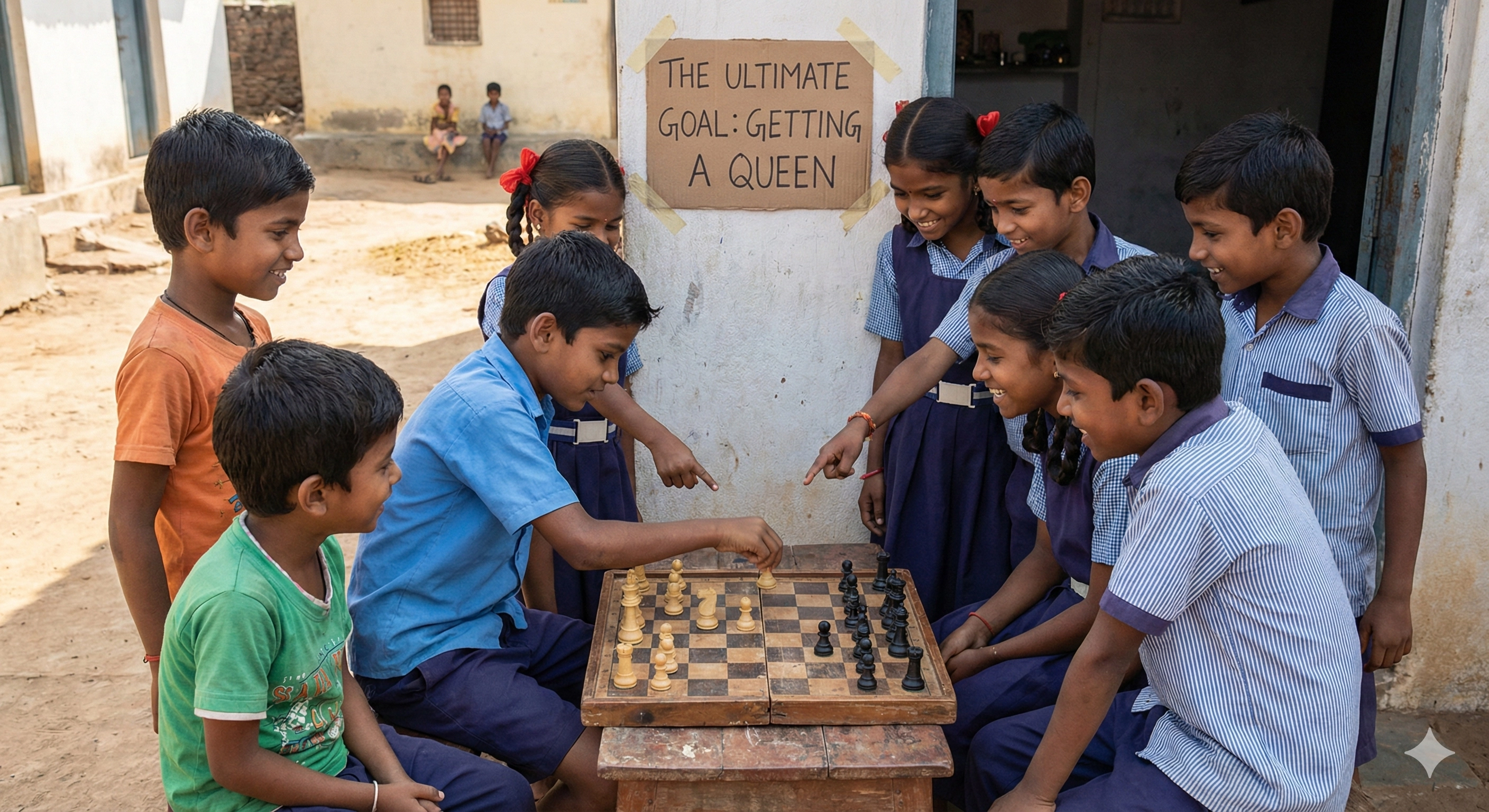
When the heavy pieces are gone, checkmating the enemy King with just a Knight or a Bishop is often impossible. You need firepower. You need a Queen.
So, your entire strategy often revolves around this single goal:
Preserve your pawns.
Push a pawn to the other side.
Get a new Queen.
Checkmate.
Every other principle piece activity, weak squares, king safety is usually a stepping stone to help one of your little foot-soldiers (pawns) become a Queen. Keep this "North Star" in mind whenever you feel lost in a position. Ask yourself: "How does this move help me get a Queen?"
Practical Strategy 1: The Magic of Passed Pawns
If the goal is to get a Queen, then the Passed Pawn is your MVP (Most Valuable Player).
What is a Passed Pawn?
For our beginners, a passed pawn is a pawn that has no opposing pawns in front of it, nor on the adjacent files. There is no enemy pawn to stop its march to glory. It only has to worry about enemy pieces.
Creating a Passed Pawn: The Pawn Majority
But what if you don't have a passed pawn? You have to manufacture one! This is where the concept of Pawn Majority comes in.
Imagine the board is split into two sides: the Queenside (files a, b, c, d) and the Kingside (files e, f, g, h).
Let’s say on the Queenside, you have 3 pawns and your opponent has 2 pawns. This is a "3 vs 2 majority."
Even if the material is equal overall (maybe they have a majority on the other side), your goal on this side is to use that extra pawn to force a breakthrough.
How to do it?
You march your pawns together. You trade pawns.
You push your candidate.
They block with their pawn.
You use your other pawns to support the exchange.
Eventually, after the trades, you will be left with one extra pawn that has a clear path.
This creates a "Passed Pawn." Now, this pawn becomes a magnet. Your opponent must stop it. They will have to send their King or a piece to block it. This creates chaos in their defence and opens up opportunities for you elsewhere.
The Outside Passed Pawn
This is a term you should know. An "outside" passed pawn is one that is far away from the rest of the pawns (usually on the 'a' or 'h' file). This is deadly! Why? Because it forces the enemy King to run all the way to the edge of the board to stop it. While their King is busy chasing your pawn on the far left, your King can gobble up all their undefended pawns on the right. It is a classic distraction technique.
Practical Strategy 2: King Activity – Waking the Giant
As we mentioned earlier, the King is a fighter in the endgame. But how exactly do you use him?
Centralisation is Key
In 90% of endgames, the first thing you should do is bring your King to the centre of the board. Why the centre? Because from the centre (e4, d4, e5, d5), the King can quickly move to either the Kingside or the Queenside depending on where the action is. A King stuck in the corner is useless.
The Aggressive King
Don't be afraid to walk your King right into the enemy territory if it is safe.
Imagine a position where you have a Rook and King, and they have a Rook and King. The pawns are locked. If you can march your King up to their pawns, you force their King to defend. If their King is passive, your King becomes an attacker.
"The Opposition"
You cannot talk about King activity without mentioning "The Opposition." This sounds technical, but it is simple.
Imagine the two Kings are facing each other with one square in between. Neither King can move forward because of the rules of chess.
The player who does not have the move is said to "have the opposition."
Why? Because the player who has to move must step aside, giving way to the other King.
It is like two people trying to pass each other in a narrow corridor. If you stand firm and the other person has to move, you gain ground. You use the opposition to shoulder-barge the enemy King away and penetrate their position to eat their pawns.
Practical Strategy 3: Targeting Weaknesses (Pawns and Squares)
Chess is a game of resources. When you have fewer pieces, every weakness becomes a major problem. Your strategy should be to identify these weaknesses in your opponent's camp and attack them mercilessly.
Weak Pawns
Not all pawns are created equal. Some are strong, and some are "sick."
Isolated Pawn: A pawn with no friendly pawns on the files next to it. It cannot be protected by another pawn. It must be protected by a piece. This ties down that piece.
Doubled Pawns: Two pawns of the same colour on the same file. They block each other and are hard to move.
Backward Pawn: A pawn that has lagged behind and cannot move forward without being captured.
The Strategy:
Identify the "sick" pawn. Attack it!
Attack it with your Rook.
They defend with their Rook.
Attack it with your King.
They defend with their King.
Attack it with your Knight.
Oops! They have run out of defenders. You win the pawn.
Weak Squares
A weak square is a "hole" in the opponent's positiona square that cannot be defended by their pawns.
For example, if your opponent has pushed their pawns to g3 and e3, the square f3 might be a hole.
These squares are perfect "homes" (outposts) for your pieces, especially Knights. A Knight sitting on a weak square in the enemy camp is a nightmare. It controls key areas and cannot be easily chased away.
Provoking Weaknesses
What if your opponent plays perfectly and has no weak pawns?
You have to create them!
You do this by creating threats.
Threaten to promote a pawn.
Threaten a checkmate.
Threaten to win a piece.
To stop your threat, they might be forced to push a pawn (e.g., ...g6).
Aha! Now the squares around g6 (f6 and h6) have become weak. You have created a target.
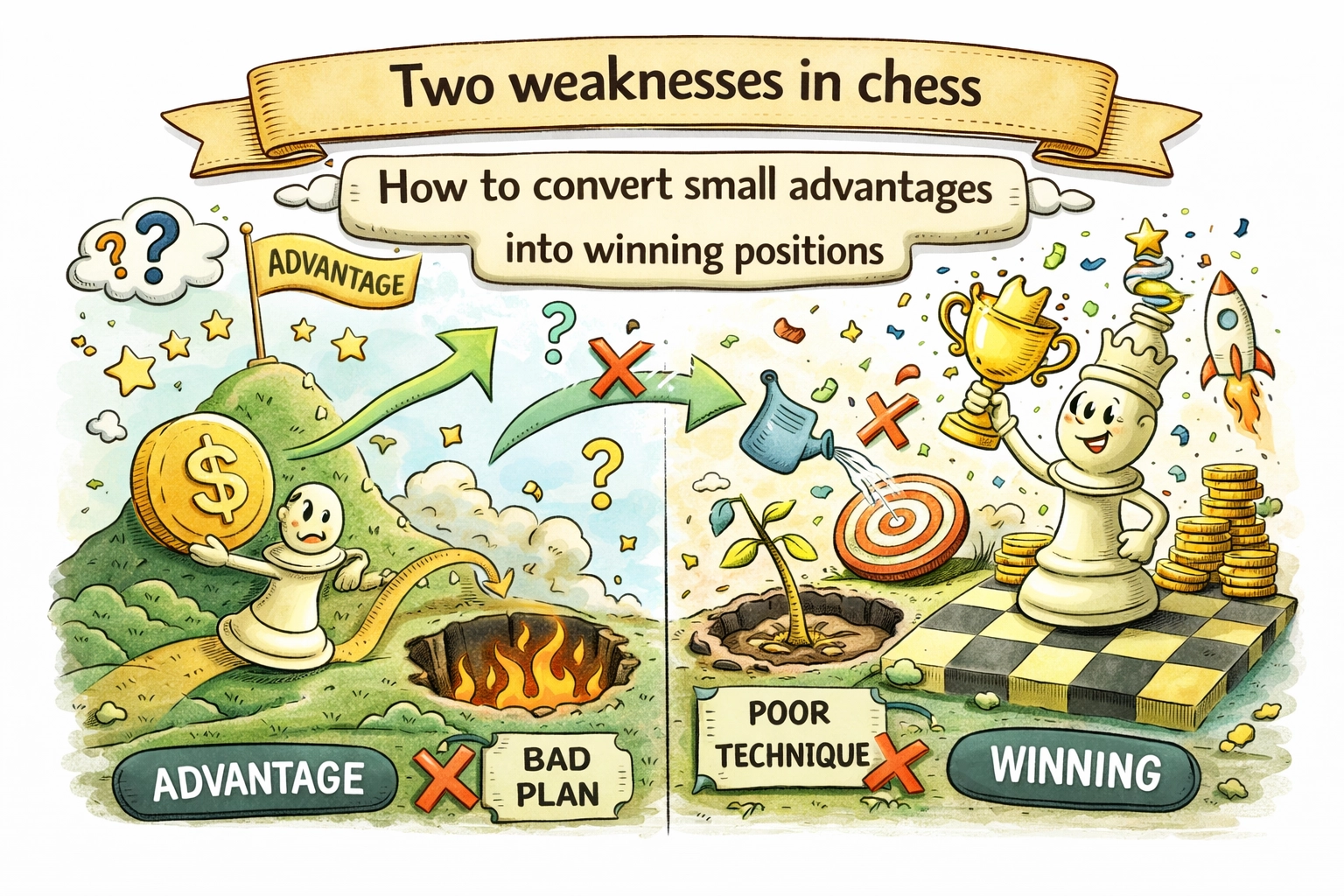
Practical Strategy 4: Converting Material Advantage
One of the most common questions we get at Enthuziastic is: "I am a Knight up, but I still drew the game. Why?"
Converting a winning advantage is a skill. Here is the roadmap:
1. Simplify, Simplify, Simplify
If you are up material (e.g., you have an extra Bishop), your goal is to trade pieces, not pawns.
Trade Pieces: If you trade Queens and Rooks, your extra Bishop becomes more powerful because there are fewer defenders.
Keep Pawns: You need pawns to promote. If you trade off all the pawns, you might end up with just a King and Bishop vs King, which is a draw!
2. Don't Rush
When you are winning, you don't need to play risky moves. Play solid. Slowly improve your position. Bring your King up. Restrict their pieces. Let them suffer. As the great Garry Kasparov would show, you slowly squeeze the life out of the position.
3. Watch out for Stalemate
This is the heart-breaker. You have a Queen, two Rooks, and a Bishop. You are hunting their lone King. You make one move without thinking, and suddenly... the enemy King has no legal moves but is not in check. Draw.
Always, always check: "If I make this move, does his King have a square to go to?"
Additional Perspectives: Direct Attacks in the Endgame
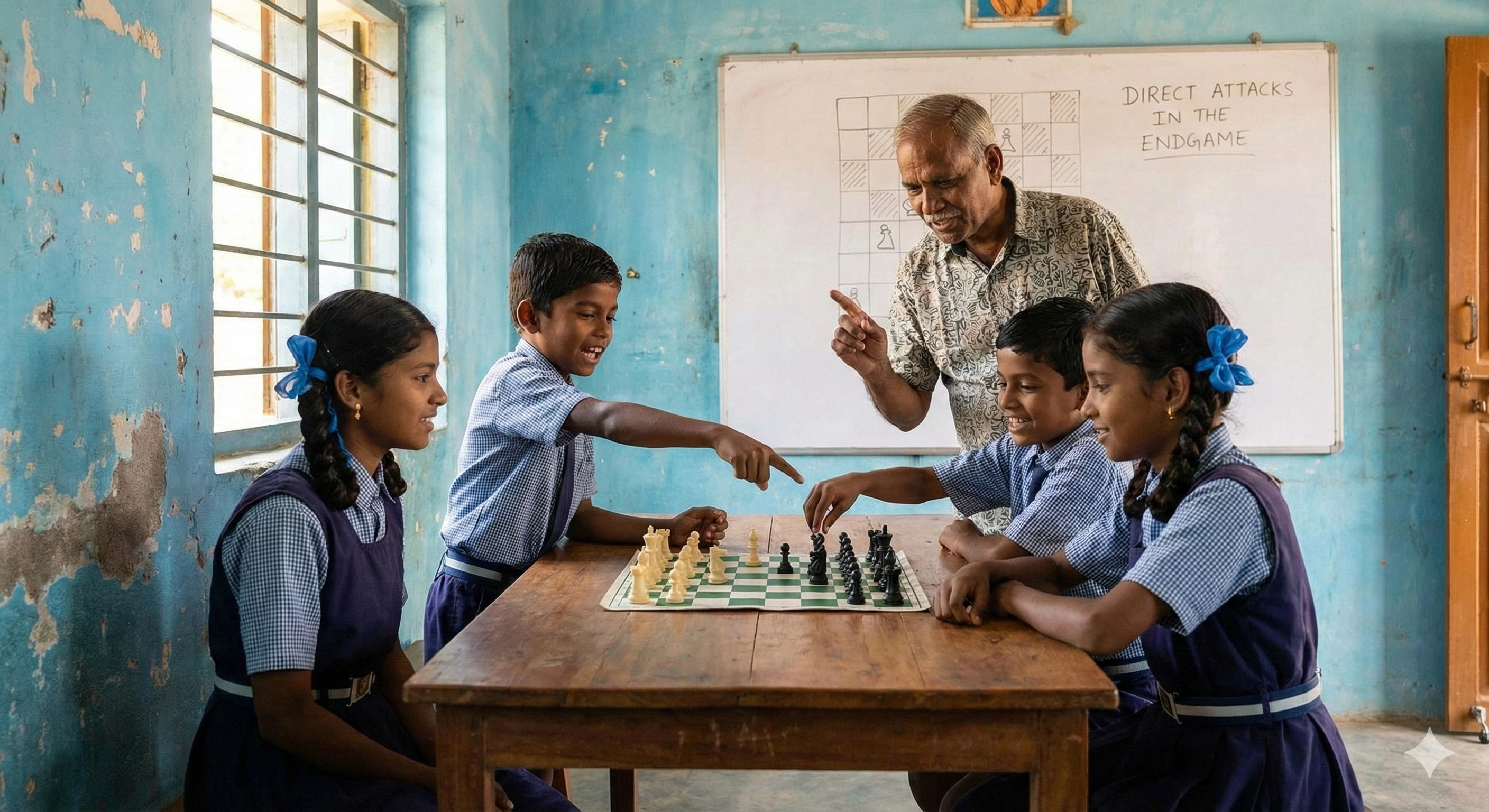
Since there are fewer pieces, the Kings are often more exposed. If you can coordinate your Rook and Knight, or Queen and Pawn, you can create a "mating net."
Back Rank Mate: Always keep an eye on their back rank. If their pawns are blocking their King, one Rook check could end the game immediately.
The Seventh Rank: Rooks are absolute beasts on the 7th rank (the 2nd rank for your opponent). If you get two Rooks on the 7th rank, they are like Pac-Man, eating everything (pawns) and trapping the King.
Tactics are Everywhere
Never turn off your "tactical radar." Just because it is an endgame doesn't mean there are no forks, pins, or skewers. In fact, skewers are very common in Rook endgames.
Scenario: Their King and Rook are on the same file. You check the King with your Rook. The King moves, and you capture their Rook behind him. Game over.
How to Practice and Improve Your Endgame
Learning these strategies is one thing, but how do you actually get better? Here is a study plan from us at Enthuziastic.
1. Study "The Classics"
Don't just rely on engines. Look at the games of endgame masters.
Capablanca: The genius of simple, clear endgames.
Rubinstein: The master of Rook endgames.
Magnus Carlsen: The modern king of "squeezing water from a stone." Watch how he wins equal positions.
2. Solve Endgame Puzzles
Most tactic trainers focus on middlegame attacks. Find puzzles specifically for endgames. Look for "mate in 3" puzzles or "white to play and win" in pawn endings.
3. Play Out "Won" Positions
This is a great exercise. Set up a position on a board where you are up a pawn (e.g., Rook + 4 pawns vs Rook + 3 pawns).
Play against a friend or a computer. Try to convert the win.
If you fail, reset the board and try again. This builds the "muscle memory" of technique.
4. Analyze Your Own Games
When you finish a game, don't just look at the opening. Scroll to the end.
Did you miss a chance to create a passed pawn?
Did you leave your King on the back rank too long?
Did you trade pawns when you should have kept them?
Honest reflection is the best teacher.
A Practical Roadmap Summary
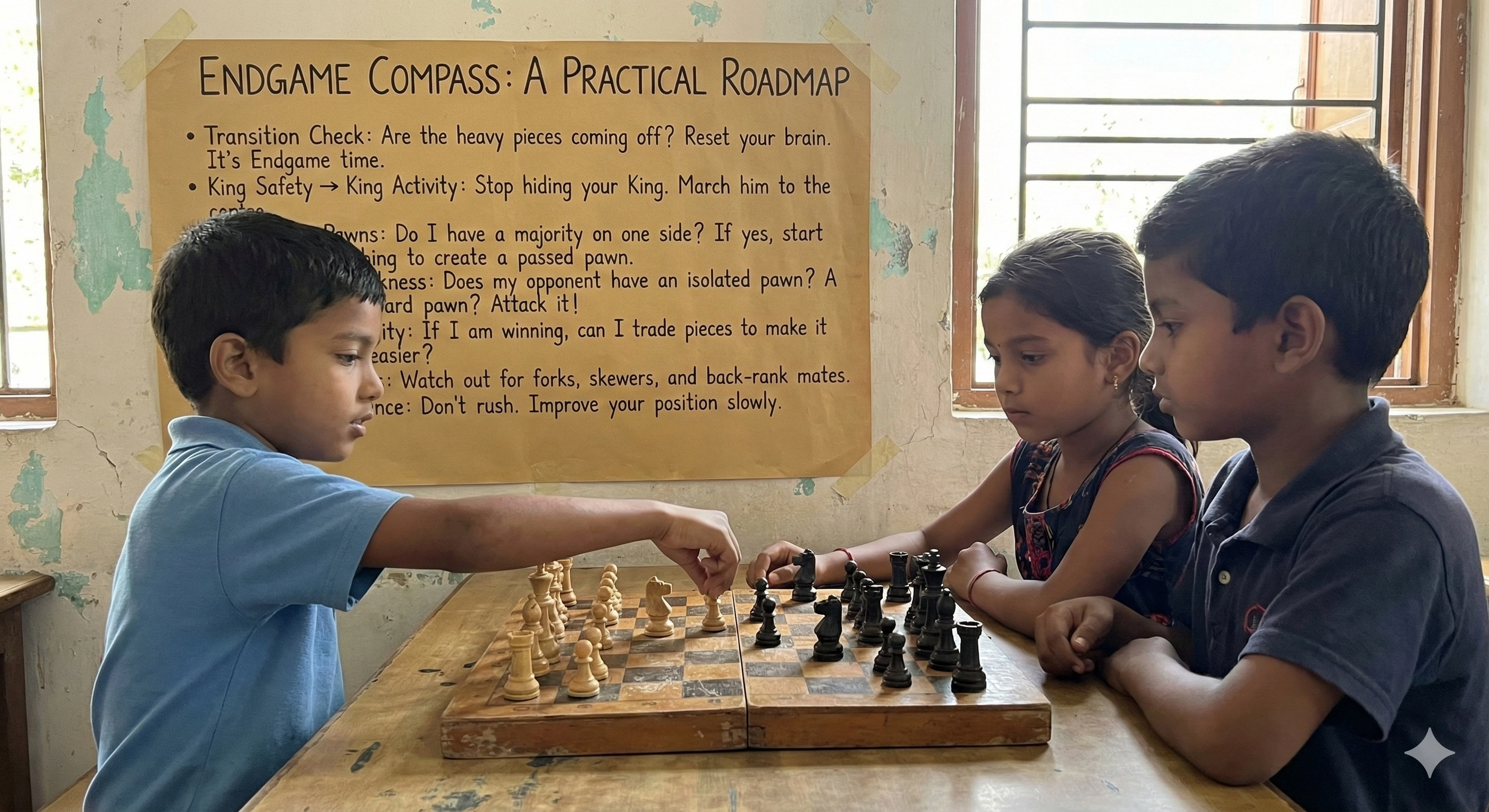
Transition Check: Are the heavy pieces coming off? Reset your brain. It’s Endgame time.
King Safety -> King Activity: Stop hiding your King. March him to the centre.
Count the Pawns: Do I have a majority on one side? If yes, start pushing to create a passed pawn.
Scan for Weakness: Does my opponent have an isolated pawn? A backward pawn? Attack it!
Simplicity: If I am winning, can I trade pieces to make it easier?
Tactics: Watch out for forks, skewers, and back-rank mates.
Patience: Don't rush. Improve your position slowly.
Conclusion
The endgame is where the beauty of chess truly shines. It is pure, logical, and unforgiving. It strips away the noise and leaves you with the bare essentials. Mastering the endgame requires patience, calculation, and a strong understanding of these core principles.
At Enthuziastic, we believe that every player has the potential to master these skills. It is not about being a genius; it is about having the right mindset and the right guidance. So next time you find yourself in an endgame, don't panic. Remember the sleeping giant (your King), look for that passed pawn, and guide your army to victory.
We hope this guide helps you turn those draws into wins and those losses into draws. Keep practicing, keep learning, and keep playing!
Do you have more questions about chess strategies? Join our community at Enthuziastic, where we connect people for live learning experiences. Let’s grow together!
Frequently Asked Questions (FAQs)
Q1: Why is the King so important in the endgame?
In the opening and middlegame, the board is full of dangerous pieces, so the King must hide to avoid checkmate. In the endgame, most dangerous pieces (like Queens) are often gone. This makes it safe for the King to come out. An active King can support pawns, attack enemy pawns, and even help in checkmating attacks. It effectively becomes an extra fighting piece.
Q2: What is the difference between a "Passed Pawn" and a "Pawn Majority"?
A Pawn Majority means you have more pawns than your opponent on one side of the board (e.g., 3 pawns vs 2 pawns on the queenside). A Passed Pawn is the result of utilizing that majority. It is a pawn that has advanced past all enemy pawns and has a clear road to promotion. You use your majority to create a passed pawn.
Q3: Is it better to trade pieces or pawns when I am winning?
When you are winning (have more material), it is generally better to trade pieces (Knights, Bishops, Rooks, Queens) but keep your pawns. Trading pieces reduces your opponent's counterplay and makes your advantage more significant. However, you need pawns to promote to a Queen eventually, so don't trade them all off!
Q4: What should I do if I am losing in the endgame?
If you are down material, your best strategy is to complicate things or try to exchange pawns. If you can trade off all the pawns, your opponent might not have enough material to checkmate you (e.g., King + Knight vs King is a draw). Also, fight for "activity"keep your pieces active rather than just passively defending.
Q5: What is the "Rule of the Square"?
This is a quick way to calculate if a King can catch a passed pawn. Imagine a square box drawn from the pawn to the promotion square. If the enemy King can step into that "square" on their move, they can catch the pawn. If they cannot step in, the pawn will promote. It saves you from calculating "I move, he moves, I move..."
Q6: How can I practice endgames without a partner?
You can use chess software or websites to set up specific positions (like King + Pawn vs King) and play against the computer. You can also solve endgame studies or puzzles. Reading endgame books and trying to visualize the moves without a board is also excellent practice.
Q7: What is an "Outpost" in chess?
An outpost is a square (usually in the opponent's territory) that is protected by your pawn and cannot be attacked by enemy pawns. It is a perfect home for a Knight because it can sit there safely, controlling key squares and annoying your opponent, without being easily chased away.
Q8: Why is the "Outside Passed Pawn" considered an advantage?
An outside passed pawn is far away from the main group of pawns. It acts as a decoy. The enemy King is forced to travel across the board to stop it from promoting. This leaves their other pawns unprotected, allowing your King to invade the other side of the board and capture them. It basically splits the enemy's defenses.

Comments