

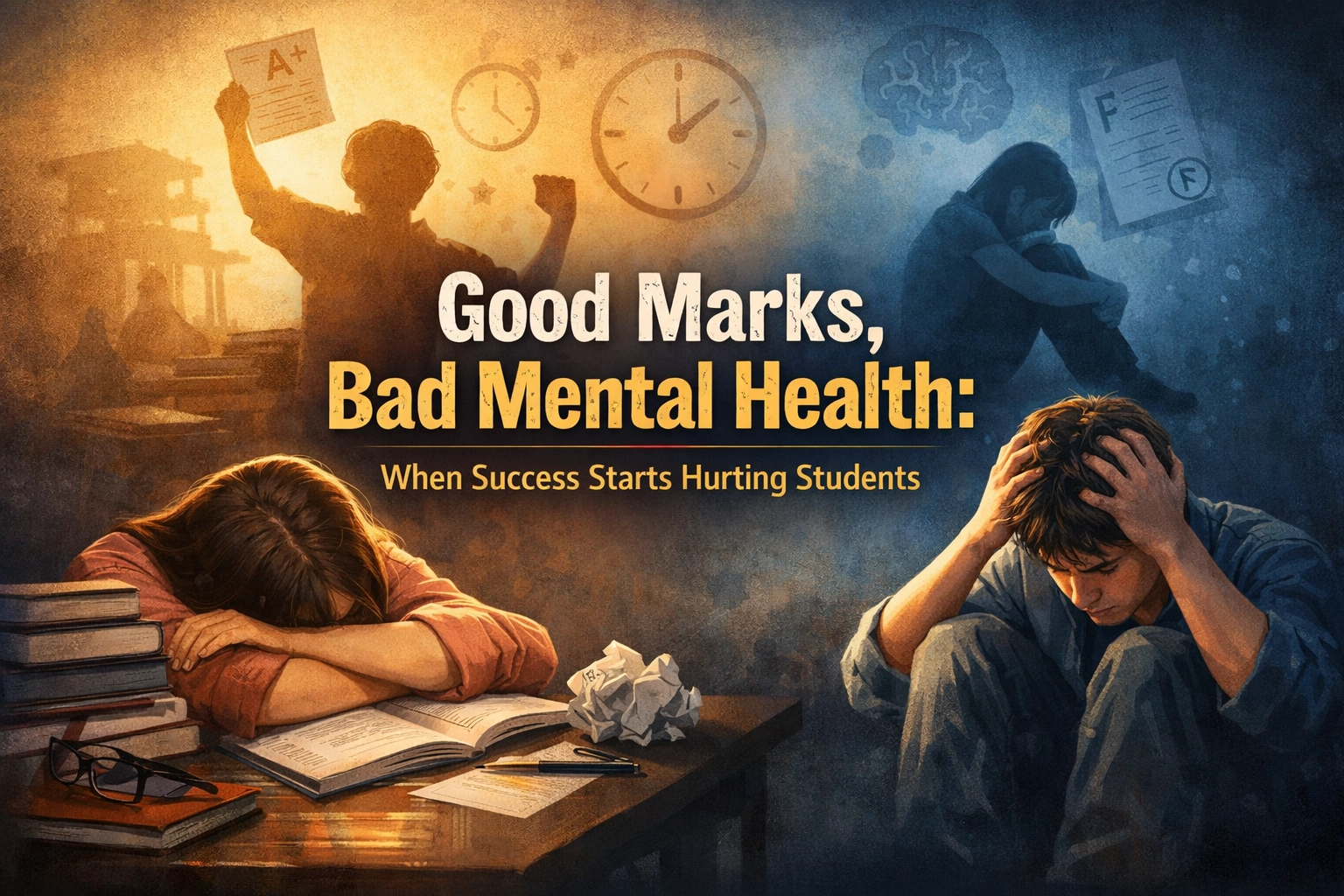
For decades, good marks have been treated like a personality trait. Score high and congratulations, your life is apparently sorted. Families celebrate report cards, schools reward ranks, and society assumes academic success equals emotional stability. Nobody pauses to ask how the student actually feels. Behind those polished numbers, many high achievers are surviving on anxiety, sleepless nights, and the constant fear of slipping up. The pressure to maintain perfection slowly replaces the joy of learning. Mistakes feel dangerous, rest feels guilty, and self-worth becomes tied to grades. Over time, students learn how to perform well, not how to cope with failure or stress. This version of success demands emotional silence and relentless comparison. When marks matter more than mental wellbeing, students may look successful on the outside while quietly burning out on the inside.
- The Pressure Behind the Performance of “Good Marks”
- When Achievement Turns Into Anxiety
- The Silent Burnout Nobody Notices
- The Fear of Falling Behind
- Why Good Marks Are Not the Same as Wellbeing
- What Needs to Change
- Conclusion
- Frequently Asked Questions (FAQs)
- 1. Can good marks really harm a student’s mental health?
- 2. Why do high-achieving students feel anxious all the time?
- 3. What are common signs that a student is struggling mentally despite good grades?
- 4. Is academic pressure worse today than before?
- 5. How can parents support a child who gets good marks but seems unhappy?
- 6. What role do teachers play in protecting students’ mental health?
- 7. Is burnout common among students?
- 8. How can students balance success and mental wellbeing?
- 9. Are good marks meaningless if mental health is poor?
- 10. What is the biggest mindset shift students need to make?
The Pressure Behind the Performance of “Good Marks”
Academic pressure today starts early and almost never loosens its grip. From the moment children enter school, they are placed on an invisible conveyor belt of expectations. Exams, grades, rankings, homework, projects, competitions, certificates. Add extracurricular activities, leadership roles, personality development, and future planning before they even understand what they enjoy. The message is not shouted, but it is relentless: your value depends on how well you perform.
Students are expected to be excellent at everything, all the time. Average is treated like a failure and rest is mistaken for laziness. A bad score is no longer just feedback; it becomes a personal flaw. Slowly, students internalize the idea that success is fragile and conditional. One slip, one low mark, and everything could fall apart.
Over time, this pressure stops being motivating. It becomes frightening. Students do not study because they are curious or excited to learn. They study because they are scared of disappointing parents, teachers, and themselves. Fear replaces interest. Anxiety replaces growth. Learning turns into survival.

Marks stop being an achievement and start functioning like armor. Students chase grades not for pride, but for safety. A good score feels like temporary relief, not happiness. A bad score feels catastrophic. This constant emotional rollercoaster trains students to associate their self-worth with external validation. When results are good, they feel acceptable. When results dip, they feel like they are failing at life.
The competitive environment worsens this cycle. Students are no longer just learning; they are constantly comparing. Who scored more, who ranks higher, who is “ahead.” Social media quietly amplifies this comparison, turning achievements into public performances. Success becomes something to display rather than something to experience. The pressure to look successful adds another layer of stress to an already overloaded system.
This mindset takes a serious toll on mental health. Chronic stress leads to burnout, anxiety disorders, sleep problems, emotional numbness, and in some cases, depression. Many high-achieving students appear calm and capable on the outside while feeling overwhelmed and exhausted on the inside. Because they are “doing well,” their struggles often go unnoticed or are dismissed. After all, how could someone with good marks be struggling?
Students also lose an important skill in this process: the ability to fail safely. Mistakes are treated as disasters instead of learning opportunities. Fear of failure discourages creativity, risk-taking, and independent thinking. Students choose safe answers over original ones. They avoid challenges that might lower their scores. Education becomes about minimizing damage rather than exploring potential.
The saddest part is that many students do not even realize when they are burning out. They normalize stress, exhaustion, and constant pressure because that is all they have known. They believe that feeling overwhelmed is just part of being “serious” about success. By the time they reach adulthood, many are accomplished but emotionally drained, unsure of who they are outside their achievements.
None of this means that marks do not matter. They do. But they were never meant to matter at the cost of mental health. Education should build capable, confident individuals, not anxious performers running on fear. When success is measured only by results, we raise students who know how to score well but struggle to cope with life.
If we truly care about students, the definition of success has to expand. It must include wellbeing, resilience, curiosity, and balance. Otherwise, we will keep producing impressive report cards and quietly breaking the people behind them.
When Achievement Turns Into Anxiety
Many high-performing students live with constant anxiety, even when they are surrounded by praise, awards, and good marks. On the surface, they look confident and capable, the kind of students teachers admire and parents proudly talk about. Underneath, however, there is often a quiet fear that never really switches off. The fear of disappointing parents, teachers, peers, and most painfully, themselves. For these students, a single low score does not feel like feedback. It feels like failure.
Good marks are supposed to be reassuring, proof that things are going well. Instead, they often raise the stakes. Once a student is labelled “bright” or “topper,” expectations harden around them. They feel pressure to maintain a standard that leaves no room for mistakes. Every exam becomes a test of identity. Every result feels like a verdict on their worth. Anxiety grows not because they are doing badly, but because they are doing well and are terrified of losing it.
This anxiety shows up in subtle but damaging ways. Chronic stress and overthinking become normal. Students replay answers in their heads long after exams end, wondering what they got wrong. They struggle to relax because their minds are always preparing for the next test, the next evaluation, the next opportunity to prove themselves again. Rest feels undeserved unless it is earned through achievement.

Fear of exams and performance situations becomes intense. Even students with a history of good marks experience panic before tests. Their bodies react with racing hearts, nausea, and shaking hands. The pressure to perform perfectly can cause mental blocks, where knowledge they clearly have suddenly feels inaccessible. Ironically, anxiety about maintaining success can start to harm actual performance.
Sleep and concentration also suffer. Many high-performing students stay up late revising, not because they lack preparation, but because they cannot quiet their thoughts. Worry follows them into bed. Did I study enough? What if I mess up? What if this one exam ruins everything? During the day, exhaustion makes it harder to focus, creating a vicious cycle of stress and fatigue.
Perfectionism and harsh self-criticism are common companions. These students set unrealistically high standards and punish themselves mentally for the smallest mistakes. A score that would be celebrated by others feels disappointing to them. They struggle to feel proud, because achievement quickly becomes the baseline rather than something to enjoy.
Ironically, the students who appear most “successful” are often under the greatest emotional strain. Because they are getting good marks, their anxiety is rarely taken seriously. Their stress is dismissed as ambition or discipline. They are told they will be fine, even as they feel overwhelmed inside.
Good marks should reflect learning and growth, not constant fear. When success is measured only by results, students learn to tie their self-worth to performance. Over time, this emotional burden becomes heavy. Recognizing the hidden anxiety behind academic success is the first step toward creating an education system that values mental wellbeing as much as achievement.
The Silent Burnout Nobody Notices
Burnout is no longer something reserved for overworked adults in offices and boardrooms. Students experience it too, and often much earlier than anyone expects. Long study hours, packed schedules, constant assessments, and the pressure to maintain good marks slowly drain the joy out of learning. What begins as dedication turns into exhaustion. What once felt motivating starts to feel heavy and endless.
A burnt-out student does not always look like they are struggling. In fact, many of them continue to score well. Their good marks become a disguise, convincing everyone around them that everything is fine. On the inside, however, these students feel emotionally empty, mentally detached, and physically tired all the time. Studying becomes mechanical. Learning loses meaning. They keep going not because they want to, but because stopping feels impossible.
Burnout develops quietly. Students push through late nights, skipped meals, and weekends filled with revision. Rest is postponed and emotions are ignored. There is always another test, another deadline, another expectation to meet. Over time, the body and mind begin to shut down in subtle ways. Motivation fades. Concentration drops. Even simple tasks start to feel overwhelming. Yet the pressure to maintain good marks forces students to keep performing, even when they are running on nothing.
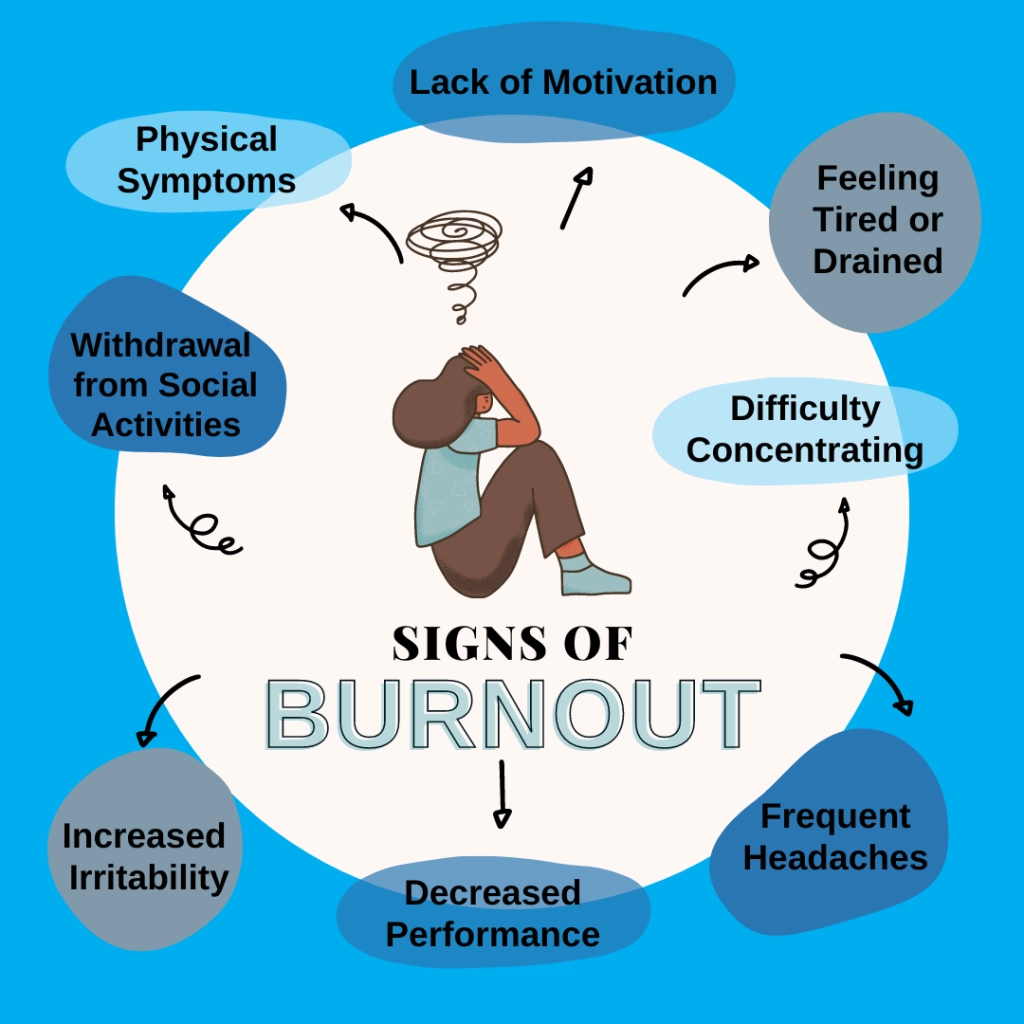
One of the most damaging aspects of student burnout is how easily it goes unnoticed. Teachers see scores and assume competence. Parents see report cards filled with good marks and feel reassured. Praise continues, but support does not increase, because no one realizes it is needed. The student learns to hide their exhaustion behind results. Admitting struggle feels risky when everyone expects success.
Emotionally, burnout creates numbness. Students stop feeling excited about achievements that once mattered to them. A high score brings relief, not happiness. There is little sense of pride, only the brief comfort of having survived another evaluation. Over time, this emotional flatness can turn into detachment from school, from goals, and even from oneself.
Burnout also affects a student’s relationship with learning. Curiosity is replaced by survival. Creativity feels dangerous because it takes energy and carries the risk of failure. Students choose the safest paths to protect their good marks, even if those paths no longer interest them. Education becomes about endurance rather than growth.
Because good marks remain intact, burnout is often misunderstood or dismissed. Students are told to be grateful, to keep working hard, to not complain. The emotional cost of constant pressure is ignored, reinforcing the idea that exhaustion is simply part of being successful.
Burnout in students is not a sign of weakness. It is a sign of a system that values performance over wellbeing. Good marks should never come at the cost of mental and emotional health. When we only pay attention to results, we miss the quiet suffering behind them. Recognizing student burnout requires looking beyond grades and asking a far more important question: not how well are they scoring, but how well are they coping.
The Fear of Falling Behind
In competitive environments, students are trapped in constant comparison. Someone is always scoring higher, studying longer, or achieving faster, even when their own good marks are impressive. This creates a quiet fear of falling behind, especially among top performers. Instead of building confidence, success breeds insecurity. Every achievement feels temporary, easily threatened by someone else’s progress. Students stop trusting their abilities and start measuring themselves against others. Rest begins to feel like laziness. Balance feels like weakness. Productivity becomes a moral standard. In this mindset, worth is calculated through performance, and learning turns into a race with no finish line.
Why Good Marks Are Not the Same as Wellbeing
Good marks measure academic performance, not the full reality of a student’s life. They reflect how well someone can recall, apply, and perform under exam conditions, but they say nothing about emotional health, resilience, creativity, or self-worth. A system that values only outcomes reduces students to numbers and ignores the human experience behind those results.
When praise is tied solely to marks, students quickly learn what is rewarded and what is not. Effort, curiosity, and emotional honesty begin to matter less than final scores. Stress is hidden. Exhaustion is normalized. Emotions are pushed aside because they are seen as distractions rather than signals. Students learn to function through pressure instead of understanding it.
Over time, this emotional suppression comes at a cost. Constant stress can develop into anxiety disorders. Prolonged pressure and self-criticism can lead to depression. Some students respond by emotionally shutting down altogether, disconnecting from their feelings to survive the demands placed on them. On the outside, they may continue to achieve and maintain good marks. On the inside, they struggle to cope.
Education should build healthy, capable individuals, not just high scorers. When we widen the definition of success to include wellbeing, balance, and emotional growth, we give students the chance to thrive rather than merely endure.
What Needs to Change
Students need more than academic validation, though the system behaves like marks are oxygen and everything else is optional. They need safe spaces where stress can be spoken about without being dismissed as drama. They need permission to rest without guilt. They need reassurance that failure is not a character flaw but a normal, necessary part of learning. Without these things, even the most capable students slowly start to break under pressure.
Right now, many students grow up believing that emotions are inconveniences. Stress is something to “manage quietly.” Anxiety is something to push through. Exhaustion is proof of hard work. When a student struggles, the first question asked is rarely “How are you feeling?” It is usually “What happened to your marks?” That question alone teaches students what truly matters.

Safe spaces are essential because students often feel they cannot be honest. They fear being labelled weak, lazy, or ungrateful. High-performing students especially feel trapped by expectations. They worry that admitting stress will make others doubt their ability. So they smile, nod, and keep going, even when they are overwhelmed. A safe space does not fix everything, but it tells students one critical thing: you are allowed to be human.
Permission to rest is equally important. Many students believe rest must be earned, and even then, it feels undeserved. Breaks are taken with guilt. Free time is filled with anxiety about productivity. This mindset is dangerous. Rest is not a reward for burning out; it is a requirement for healthy functioning. When students are never allowed to pause, learning turns into endurance rather than growth.
Failure also needs to be reframed. In many academic environments, failure is treated like a threat instead of a teacher. One mistake can feel like a permanent stain. Students learn to avoid risks, play safe, and choose marks over curiosity. When failure is normalized and discussed openly, students develop resilience. They learn that setbacks do not define them and that growth often comes from discomfort.
Parents and educators play a powerful role in this shift. When conversations revolve only around scores, ranks, and comparisons, students absorb the message that their value lies in outcomes. Simply changing the question can change everything. Asking “How are you feeling?” opens a door. It tells students that their inner experience matters as much as their performance. It creates trust, not fear.
Success should not hurt. It should not require emotional silence, constant anxiety, or chronic exhaustion. Education is meant to build capable minds, confident thinkers, and resilient individuals. When students are supported emotionally, they do not become less ambitious. They become healthier, more balanced, and more engaged.
If we truly want students to succeed, we need to stop measuring success only by results. We need to value wellbeing, self-awareness, and balance. Otherwise, we will continue producing impressive achievements at the cost of broken spirits. And no set of marks is worth that.
Conclusion
Good marks may open doors, but mental health determines whether students can walk through them without collapsing halfway. Academic success, when built on fear, exhaustion, and emotional neglect, creates students who look accomplished but feel empty. Marks can secure admissions, opportunities, and approval, but they cannot teach confidence, resilience, or self-understanding. Without mental wellbeing, success becomes fragile. One setback, one failure, one moment of pressure is enough to make everything feel like it is falling apart.
True success lies in balance, something the current education system treats like a luxury instead of a necessity. Learning should happen without constant fear of failure. Achievement should not come with anxiety as a permanent side effect. Growth should stretch students, not emotionally damage them. When pressure becomes the primary motivator, curiosity dies. When fear drives performance, learning turns into survival. Students may continue to score well, but they slowly lose their connection to why they started learning in the first place.
Mental health is not separate from academic success. It supports it. A student who feels safe, supported, and emotionally stable is more likely to take risks, think creatively, and handle challenges with confidence. They are better equipped to manage failure, adapt to change, and grow from feedback. These are the skills that matter long after exams are over, long after report cards stop being relevant.
Valuing students as humans first requires a cultural shift. It means listening when students say they are overwhelmed instead of telling them to “push a little more.” It means recognizing effort, progress, and honesty, not just outcomes. It means understanding that rest is productive, emotions are valid, and struggle does not cancel talent. When students feel seen beyond their performance, they stop equating self-worth with results.
When success is defined only by good marks, students learn to perform rather than exist authentically. They hide stress, suppress emotions, and ignore their limits to meet expectations. Over time, this creates adults who are capable but disconnected, ambitious but anxious, successful but unfulfilled. Education should do better than that.
When we start valuing balance, something shifts. Success stops feeling threatening. Learning becomes meaningful again. Students begin to trust themselves instead of constantly comparing. Confidence replaces fear. Growth feels sustainable rather than exhausting. Achievement becomes something to enjoy, not something to survive.
Good marks will always matter to some extent. They should. But they should never matter more than a student’s mental health. When we prioritize wellbeing alongside achievement, we raise students who can walk through every door their hard work opens with confidence, clarity, and strength. That is when success stops hurting and finally starts meaning something again.
Frequently Asked Questions (FAQs)
1. Can good marks really harm a student’s mental health?
Yes. When good marks come from constant pressure, fear of failure, and unrealistic expectations, they can lead to anxiety, burnout, and chronic stress. The problem is not achievement itself, but the emotional cost attached to maintaining it.
2. Why do high-achieving students feel anxious all the time?
High achievers often tie their self-worth to performance. They fear disappointing parents, teachers, or themselves. This creates constant pressure to stay “perfect,” leaving no room for mistakes or rest.
3. What are common signs that a student is struggling mentally despite good grades?
Some warning signs include extreme stress before exams, irritability, lack of sleep, emotional numbness, perfectionism, fear of small failures, loss of interest in learning, and frequent self-criticism.
4. Is academic pressure worse today than before?
Yes. Increased competition, social comparison, parental expectations, and constant evaluation have intensified academic pressure. Students today feel they must excel in everything, all the time, to be considered successful.
5. How can parents support a child who gets good marks but seems unhappy?
Parents should focus on emotional check-ins rather than only results. Ask about feelings, stress levels, and challenges. Normalize failure, encourage breaks, and reassure children that love and respect are not dependent on grades.
6. What role do teachers play in protecting students’ mental health?
Teachers can reduce fear-based learning by valuing effort over perfection, allowing mistakes, encouraging open conversations about stress, and creating supportive classroom environments instead of purely competitive ones.
7. Is burnout common among students?
Yes. Student burnout is increasingly common. Long study hours, high expectations, and lack of downtime can cause emotional exhaustion, even in students who continue to perform well academically.
8. How can students balance success and mental wellbeing?
Balance comes from realistic goal-setting, healthy study routines, regular breaks, sleep, emotional expression, and understanding that self-worth is not defined by marks alone.
9. Are good marks meaningless if mental health is poor?
Good marks are not meaningless, but they are incomplete. Without mental wellbeing, success becomes fragile and unsustainable. Long-term growth requires both academic achievement and emotional health.
10. What is the biggest mindset shift students need to make?
Students need to understand that learning is a process, not a performance. Mistakes are not failures, and rest is not weakness. Growth happens when pressure is replaced with purpose.


Comments