

By Enthuziastic Team
Hello chess friends! Welcome back to the Enthuziastic blog. Today, we are going to talk about something very special, something that has been the favourite weapon of many world champions. If you are looking to fight for a win with Black pieces against 1. e4, you have definitely heard of the Sicilian Defence. But the Sicilian is a huge jungle, right? There is the Dragon, the Najdorf, the Scheveningen... So many names!
Today, we are going to focus on one of the most logical, sound, and fighting variations out there: The Classical Sicilian.
You see, in chess, you want an opening that is solid but also gives you chances to attack. You don’t want to just sit and defend for 40 moves. That is why the Classical Sicilian is such a great choice. It is based on simple logic, fast development, and strong central control.
In this massive guide, we will break down everything you need to know about the Classical Sicilian. We will look at the main ideas, the plans for both sides, and how you can actually improve your chess understanding by playing this opening. Whether you are a club player or just starting your serious chess journey, this guide is for you.
So, grab a cup of chai or coffee, set up your chessboard, and let’s dive deep into the world of the Classical Sicilian.
- Introduction to the sicilian defence
- Understanding the basics: the move order
- Key principles and core ideas
- Typical plans for white and black
- How the classical sicilian tests your strategy
- Common pitfalls and practical guidance
- Detailed strategic deep dive: the richter-rauzer
- Detailed strategic deep dive: the sozin attack
- Training methods and study tips
- Transition to middlegame and endgame
- Why this opening suits the Indian style
- Conclusion
- Frequently Asked Questions (FAQs)
Introduction to the sicilian defence
Before we jump into the Classical variation specifically, let us first understand the mother of all these lines: The Sicilian Defence.
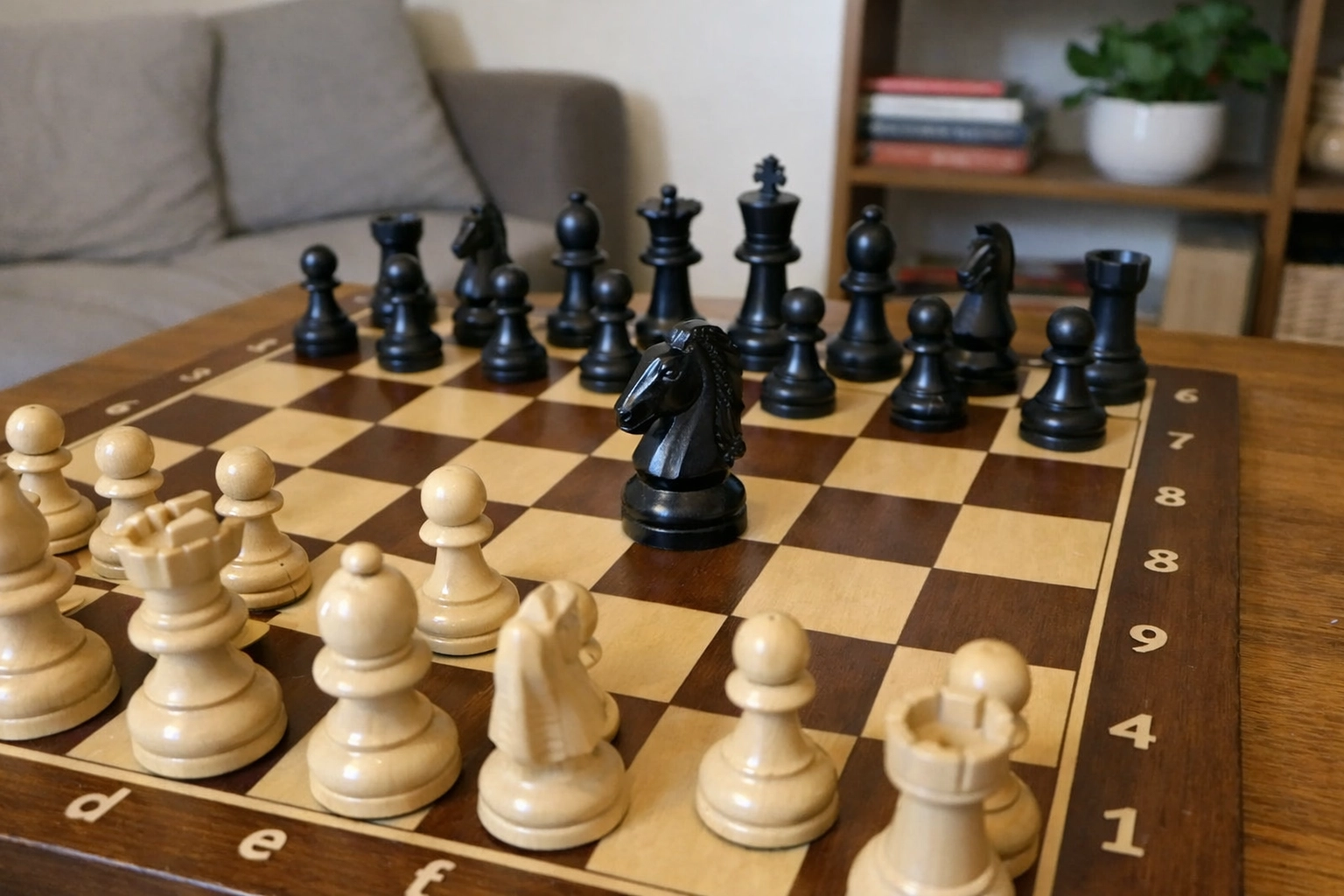
When White plays 1. e4, they are trying to take space in the center immediately. They want to play d4 next and control everything. If you reply with 1... e5, you are playing a symmetric game. It is solid, but sometimes it allows White to dictate the game.
But when you play 1... c5, the Sicilian, you are creating an imbalance right from move one. You are saying, "Okay, you take the center with your e-pawn, but I will control the critical d4 square from the flank with my c-pawn." This exchange of a flank pawn (c-pawn) for a central pawn (White's d-pawn) is the core reason why the Sicilian gives Black a better central pawn majority in the long run.
Now, within this Sicilian universe, the Classical Sicilian holds a very prestigious place. It is not as crazy and risky as the Dragon, and it is not as theoretically heavy as the Najdorf. It is the "Golden Mean" it is active, logical, and relies on developing your pieces to good squares.
Why is it Popular?
It is popular because it follows the basic principles of chess.
Develop your pieces: You bring your knights out early.
Control the center: You fight for the d4 and e5 squares.
Flexibility: You don't commit your pawns too early, so you can react to what White does.
For Indian players especially, who love to play logically and solidly like our legend Vishy Anand, this opening is a gem.
Understanding the basics: the move order
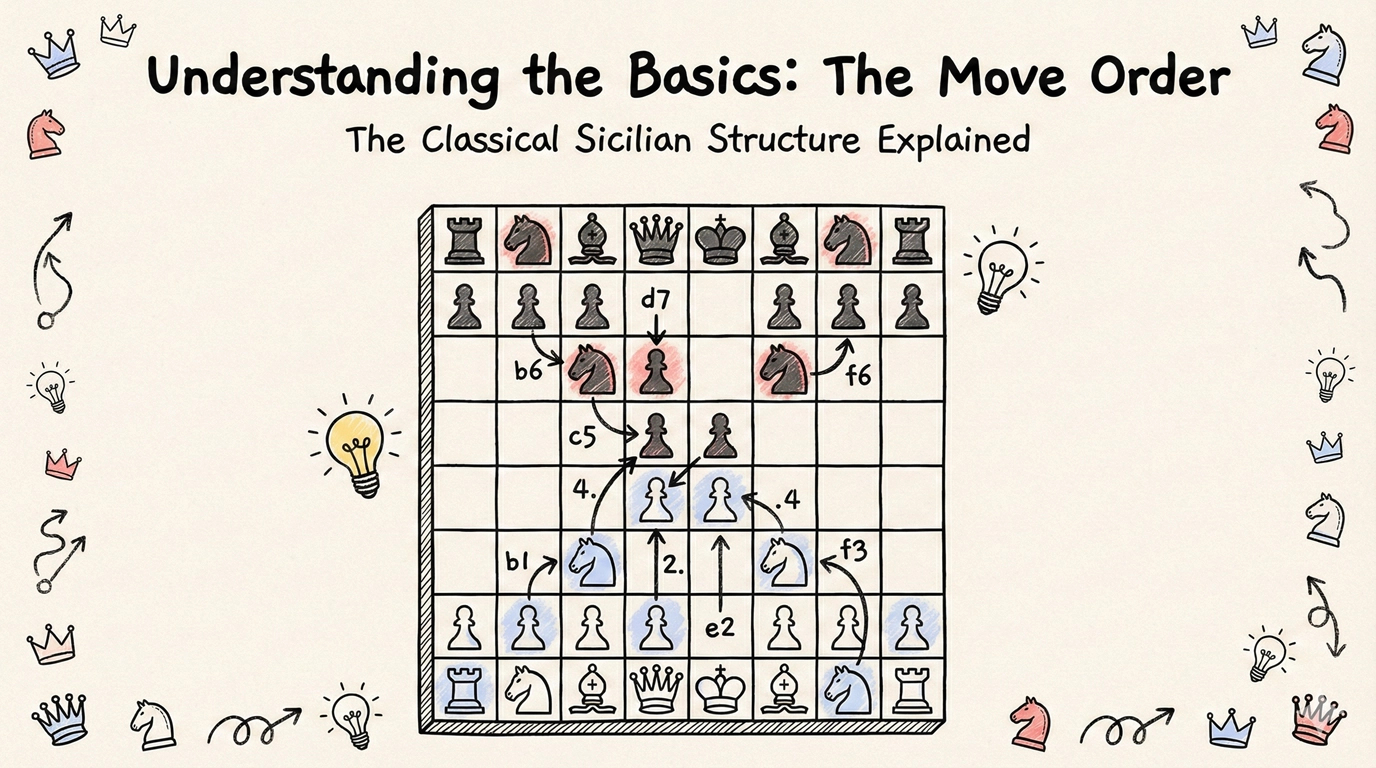
Let’s look at the moves that define the Classical sicilian. It usually goes like this:
1. e4 c5 2. Nf3 d6 3. d4 cxd4 4. Nxd4 Nf6 5. Nc3 Nc6
This position right here, after 5... Nc6, is the starting point of the Classical Sicilian.
Let’s analyze why we played these moves.
2... d6: We stop White from pushing e5 and we open the diagonal for our light-squared bishop.
3. d4 cxd4: White opens the center. We exchange our c-pawn for their central d-pawn. Now we have two central pawns (e and d) against White's one (e). This is a long-term advantage!
4... Nf6: We develop with a threat! We are attacking the e4 pawn. This forces White to defend it.
5... Nc6: This is the defining move. In the Najdorf, Black plays 5...a6. In the Dragon, Black plays 5...g6. But in the Classical, we simply develop the Knight.
Why is this good? Because the Knight on c6 is a very strong piece. It controls the center, it eyes the d4 square, and it puts pressure on White immediately. We are not wasting time with pawn moves on the edges; we are bringing our army out.
Key principles and core ideas
To play the Classical Sicilian well, you don't just need to memorize moves. You need to understand the "soul" of the opening. What are we trying to achieve?
1. Central control is everything
In the Classical Sicilian, the battle is often about the d4 and d5 squares. White has a Knight on d4. Black has a Knight on c6 challenging it. We want to make sure White cannot just roll over us in the center. By keeping our e-pawn flexible (we haven't played e6 or e5 yet), we keep White guessing.
2. Piece development priority
Many beginners make the mistake of moving the same piece twice or pushing too many pawns in the opening. The Classical Sicilian teaches you discipline. We bring out the Kingside Knight, then the Queenside Knight. We are ready to bring out the Bishop next. It is very principled.
3. Asymmetry and imbalance
This is a fancy way of saying "the position is not equal on both sides." White usually castles Kingside or Queenside and attacks. Black has counter-chances on the Queenside. This imbalance means a draw is less likely. If you want to win, you need this imbalance.
4. The d6 pawn structure
The pawn on d6 is very important. It stops White from dominating the center. However, it can also be a weakness if we are not careful. We have to defend it. But it also supports the e5 break or the c5 break later in the game.
Typical plans for white and black
Now, let’s talk about the real action. What are the plans? Since we are playing Black, we need to know what White is planning so we can stop them, and we need to know our own plans to win the game.
White’s aggressive plans
White usually has two main ways to play against the Classical Sicilian.
The Richter-Rauzer Attack (6. Bg5)
This is the most critical test. White plays Bishop to g5.
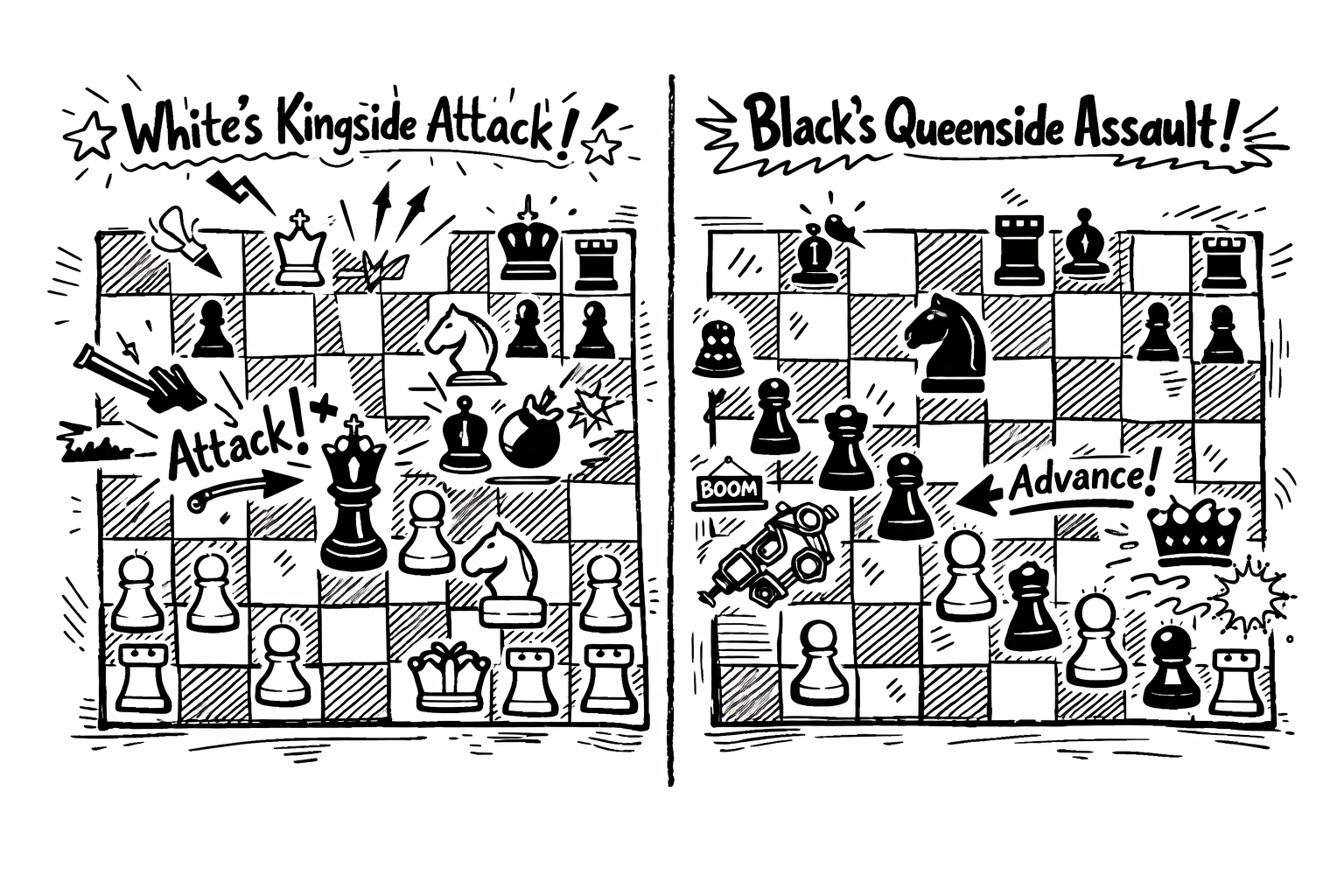
The Idea: White wants to pin the Knight on f6. They plan to play Qd2, castle Queenside (0-0-0), and then launch a massive attack on our King with pawns f3, g4, h4.
The Danger: If Black plays passively, White’s attack can be very fast. The Kingside pawn storm is scary.
The Sozin Attack (6. Bc4)
This was a favourite of the legendary Bobby Fischer.
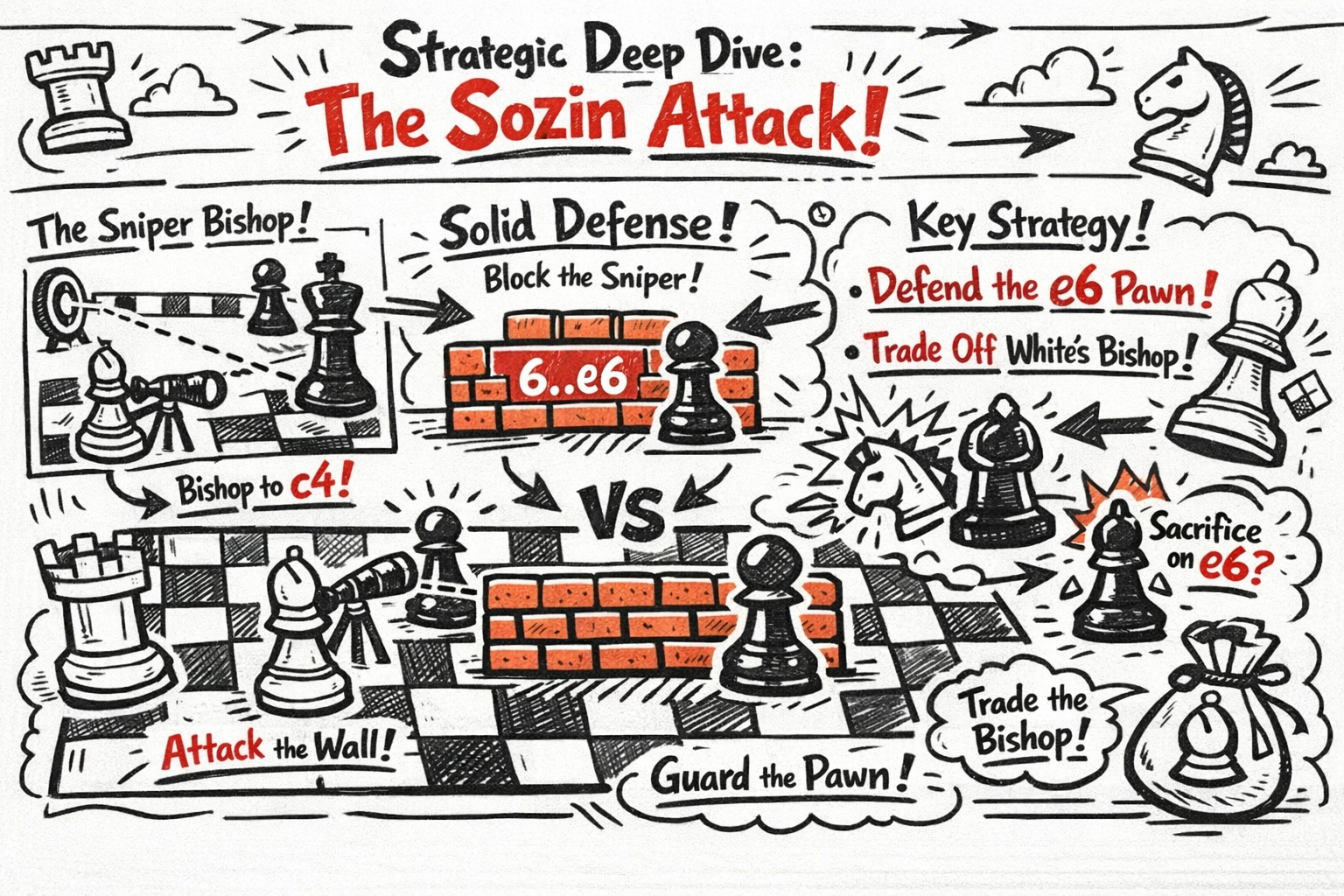
The Idea: White places the Bishop on c4, eyeing the f7 pawn the weak point in Black's camp.
The Danger: White tries to sacrifice pieces on e6 or f7 to rip open Black's King. It is very tactical.
Black’s counterplay and strategy
So, if White is attacking us, what do we do? Do we cry? No! We fight back. Black’s counterplay in the Classical Sicilian is legendary.
1. The Queenside Expansion
While White is trying to attack on the Kingside, we expand on the Queenside. We often play moves like ...a6 and ...b5. This attacks White's Knight on c3 and threatens to open lines for our Rooks.
2. The Exchange Sacrifice
This is a classic Sicilian defence idea. Sometimes, Black gives up a Rook for a Knight on c3 (Rxc3).
Why? Because it destroys White's pawn structure around their King (if they castled Queenside) and removes a key defender. It changes the game completely.
3. The d5 Break
This is the dream move. If Black can safely push the pawn to d5, we usually equalize or get a better game. It opens up the center and activates all our pieces.
How the classical sicilian tests your strategy
Playing the Classical Sicilian is like going to a gym for your brain. It is not just about moving pieces; it is about deep strategy.
Dynamic imbalance
You learn how to play in positions where material is equal, but the activity is different. White has space; Black has structure. White has attack; Black has counter-attack. Learning to handle this tension makes you a strong player.
Calculation demands
Because the game can get sharp (especially in the Richter-Rauzer), you have to calculate variations. "If he goes here, I go there." You cannot play on "autopilot." This improves your tactical awareness significantly.
The art of defense
You will learn to defend cool-headedly. When White throws pawns at your King, you learn not to panic. You learn to block, to trade the right pieces, and to find the moment to strike back.
Common pitfalls and practical guidance
Even though the Classical Sicilian is great, many players make mistakes. Here are some common pitfalls you should avoid.
1. Playing too passively
This is the biggest mistake. You cannot just sit and wait. If White plays Bg5 and f4, and you just shuffle your pieces, you will get checkmated. You must create your own threats. Remember, the best defence is a good offence.
2. Neglecting king safety
Sometimes we get so busy attacking on the Queenside that we forget our King is still in the center. Don't leave your King in the middle for too long. Castle! Usually, Kingside castling is safer, but you have to watch out for White's attack.
3. The "dragon" confusion
Some players mix up ideas. They try to fianchetto the Bishop (g6 and Bg7) in the Classical setup at the wrong time. This loses time. In the Classical, the Bishop often goes to e7. Stick to the Classical plans; don't mix it with the Dragon unless you really know what you are doing.
4. Allowing e5
If White manages to push e5 safely and kick your Knight away, it can be annoying. Always keep an eye on the e5 square.
Detailed strategic deep dive: the richter-rauzer
Let's zoom in on the main battleground. If you play the Classical, you must know the Richter-Rauzer (6. Bg5). It is the most common response you will face at club level and online.
After 6. Bg5, the most solid response for Black is 6... e6. Why? We need to stop White from doubling our pawns on f6. Also, we open lines for our dark-squared Bishop.
Then White usually plays 7. Qd2. They are preparing to castle long (Queenside). Here, Black usually plays 7... a6. Why? We prevent the White Knight from jumping to b5. Also, we prepare our own b5 push.
Then 8. 0-0-0. Now the game is "Opposite Side Castling". White King is on Queenside, Black King will likely be on Kingside (or stay center for a bit). This is a race! Who gets to the enemy King first?
Pro Tip: In these positions, pawns are not just units; they are battering rams. White will throw g4, h4. You must be ready to throw b5, b4. Don't be afraid to sacrifice a pawn to open a file for your Rook.
Detailed strategic deep dive: the sozin attack
The Sozin (6. Bc4) feels very different. White is less focused on a pawn storm and more focused on piece play.
After 6. Bc4, White’s Bishop is a sniper on the a2-g8 diagonal. Black often responds with 6... Qb6 or 6... e6. The move 6... e6 is very solid. It blunts the Bishop's diagonal. It puts a concrete wall in front of the sniper.
Key Strategy against Sozin: Focus on the e6 pawn. White will try to sacrifice on e6. You must defend it. Also, try to trade off White's light-squared Bishop if possible. Without that Bishop, the Sozin attack loses its venom.
Training methods and study tips
Okay, so you want to master the Classical Sicilian. How do you actually do it? You can't just read this blog and become a Grandmaster. You need to put in the work. Here is a study plan for you.
1. Study master games
This is the best way. Look at the games of players who loved this opening.
Boris Spassky: He played the Classical beautifully.
Vladimir Kramnik: He used it at the highest level.
Vishy Anand: Our own Indian legend has played many Sicilian variations; studying his handling of dynamic positions is pure gold.
Efim Geller: A master of the system.
Don't just watch the moves. Cover the losing side's moves and try to guess what the master played. Ask yourself "Why?" after every move.
2. Practice tactics
The Classical Sicilian is tactical. You need to be sharp. Solve puzzles that feature "Sicilian themes" like:
The exchange sacrifice on c3.
Back rank mates.
Discovered attacks on the d-file.
Knight forks on e4 or c4.
3. Play blitz games
I know, usually coaches say "don't play blitz." But to learn an opening, playing some rapid or blitz games online is good to get a "feel" for the positions. Don't worry about losing. Just try to reach the standard positions and see what happens. Afterwards, analyze your games!
4. Analyze your losses
If you lose a game in the Classical Sicilian, that is a learning opportunity. Did you get checkmated? Why? Did you forget to develop? Did you miss a tactic? Use an engine to check where you went wrong, but try to understand the human reason for the mistake first.
Transition to middlegame and endgame
One thing many players forget is that the opening is just the start. What happens after moves 15 or 20?
Middlegame transitions
In the middlegame, your plan will depend on the pawn structure.
If White attacks: Your goal is survival and counter-attack.
If the Queens come off: The endgame in the Sicilian is often favorable for Black.
Why? Remember the pawn structure! We have 2 center pawns vs 1. In a King and Pawn endgame, this central majority is a huge asset.
The "good knight vs bad bishop"
Often in the Classical Sicilian, we trade our Bishop for a Knight, or we maneuver our Knights to beautiful squares like e5 or c4. A Knight on e5 that cannot be driven away is a monster. It is often better than a Bishop. Look for these outposts.
Why this opening suits the Indian style
In India, we have a great tradition of chess. We are known for being resilient, calculating well, and being resourceful. The Classical Sicilian fits this style perfectly. It is not a gambling opening. It is an opening for players who want to outplay their opponent. It requires patience and calculation qualities that many Indian players naturally possess or aspire to develop.
At Enthuziastic, we believe that learning chess should be fun and logical. We don't want you to just memorize 20 moves of theory without understanding. We want you to understand the ideas. When you understand the idea, you can find the move even if you forget the theory. That is the power of true learning.
Conclusion
So friends, that is the Classical Sicilian for you. It is a beautiful, fighting, and sound opening. It has stood the test of time. From the coffee houses of the 19th century to the World Championship matches of today, it has been played by the best.
By choosing the Classical Sicilian, you are choosing to play active chess. You are telling your opponent, "I am not afraid of you. Let's have a fight."
Remember the key takeaways:
Develop fast (Nc6 before moving pawns aimlessly).
Fight for the center (d4 and e5 squares).
Know your enemy (Is it Richter-Rauzer or Sozin?).
Create counterplay (Don't just defend; attack on the Queenside!).
Enjoy the imbalance.
Chess is a journey. The Classical Sicilian is a wonderful companion on this journey. Give it a try in your next game. You might lose a few at first, but once you get the hang of it, you will feel the power of the Sicilian!

Frequently Asked Questions (FAQs)
Q1: Is the Classical Sicilian suitable for beginners? A: Yes, absolutely! While some Sicilian variations are very complex, the Classical is more based on logical piece development. It teaches beginners the importance of fighting for the center and developing Knights before Bishops. It is a great starting point to learn Sicilian.
Q2: What is the main difference between the Classical and the Dragon variation? A: The main difference is the placement of the dark-squared Bishop and the pawn structure. In the Dragon, Black plays g6 and fianchetto the Bishop to g7. In the Classical, Black plays Nc6 and d6, keeping the Bishop more flexible (often going to e7). The Dragon is sharper and more risky; the Classical is more solid and strategic.
Q3: What do I do if White doesn't play the Open Sicilian (d4)? A: Good question! If White plays the "Anti-Sicilians" like the Closed Sicilian (Nc3 and g3) or the Alapin (c3), you cannot play the standard Classical moves exactly. You have to adapt. However, the move ...Nc6 is usually a good response to almost anything White plays. You just need to learn a few different setups for those side-lines.
Q4: Is the Richter-Rauzer the only dangerous line for Black? A: It is the most common dangerous line, but not the only one. The Sozin (Bc4) is also dangerous if you are not careful. Even the quiet lines like 6. Be2 needs precise play. But if you learn how to handle the Richter-Rauzer, you will be well-prepared for the sharpest battles.
Q5: Can I play the Classical Sicilian in blitz games? A: Yes! In fact, it is a great weapon for blitz. Because Black’s development is natural and the counterplay plans (like ...a6, ...b5) are easy to remember, you can play it quickly. White often has to think harder to find the right way to attack.
Q6: How long does it take to master the Classical Sicilian? A: Mastering any opening takes a lifetime! But to get "playable" competence, you probably need a few weeks of study and practice. Focus on understanding the plans (which we discussed in this blog) rather than memorizing endless moves. If you know the plans, you are 80% there.
Q7: Why does Black delay castling in some lines? A: In Sicilian, the center is often closed or semi-closed, so the King is relatively safe in the middle for a while. Delaying castling allows Black to keep options open, sometimes we might even castle Queenside! Also, it allows us to use moves to develop our attack first. But be careful not to leave him there too long!
Q8: Where can I learn more about chess strategy with Enthuziastic?A: You are already in the right place! Keep following our blog for more guides. We also offer live classes and interactive sessions where we go deep into these topics. Check out our website for more details on how to join our learning community.


Comments