


Chess has always been more than just a board game in India. It is a thinking sport that teaches discipline, decision-making, and patience. Whether it is a school student learning the basics or a tournament player facing intense pressure, the game constantly challenges the mind. At Enthuziastic, where live learning brings people together, chess becomes a powerful tool to build confidence, logical thinking, and emotional balance.
In this blog, we explore two important aspects of chess: chess psychology and chess integration into education. You will learn how mindset, focus, and emotional strength influence tournament performance, and how schools can use chess to teach math, logic, and problem-solving. We also discuss how a structured curriculum can help students grow from beginner to advanced levels in a smooth and planned way.
Understanding chess psychology
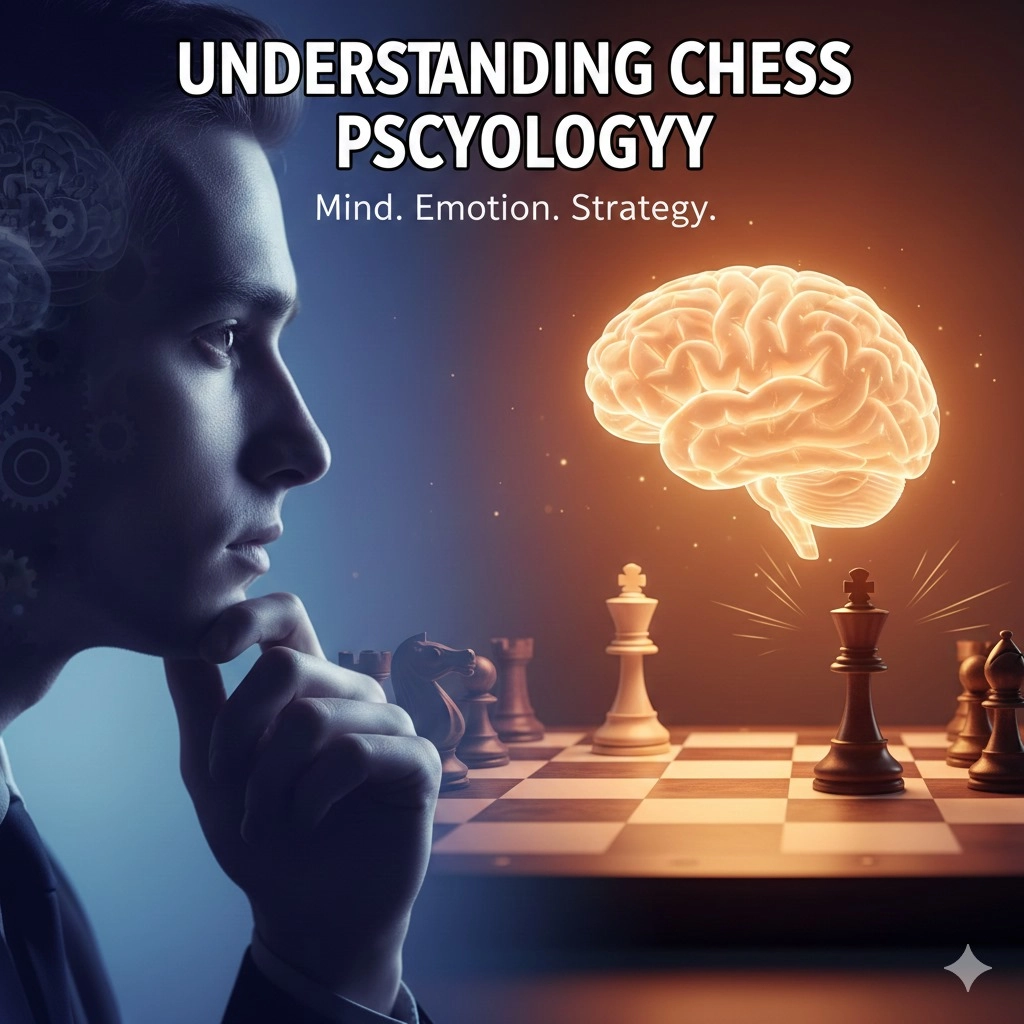
Chess psychology focuses on how a player thinks, reacts, and handles emotions during a game. While knowledge of opening theory and tactics is important, the mental side of chess often decides whether a player wins or loses.
The role of mindset in chess
A positive and stable mindset can completely change the way a player approaches the board. When players trust their preparation, stay calm, and believe in their abilities, they make better decisions. A strong mindset also prevents players from getting overwhelmed by the opponent's rating, reputation, or playing style.
Your mindset shapes your focus, confidence, and willingness to take calculated risks. Students who learn chess early often develop a growth mindset, meaning they are ready to improve continuously and learn from mistakes.
Building focus during tournaments
Chess requires deep concentration because one small mistake can change the entire game. Tournament halls are usually silent, but the pressure is high. Players must block out distractions like noise, their opponent’s expressions, or time pressure.
To maintain focus, many players use simple techniques:
Take a deep breath before every critical move.
Avoid looking at other boards.
Stick to your plan even if the opponent tries psychological tricks.
Keep your thoughts clear instead of doubting every move.
With consistent practice, players learn to stay aware and calm throughout the game, leading to better decisions.
Developing emotional resilience
Emotional resilience means staying strong even when the game becomes difficult. Every chess player experiences blunders, time pressure, and tough losses. But emotionally resilient players recover faster and stay motivated.
Resilience helps players:
Bounce back after a mistake.
Continue fighting in a difficult position.
Stay confident even after losing a game.
Maintain sportsmanship and respect for the game.
Young learners who build emotional strength through chess often carry this skill into real life, helping them handle exam pressure, competition, and everyday challenges.
Handling pressure and decision fatigue
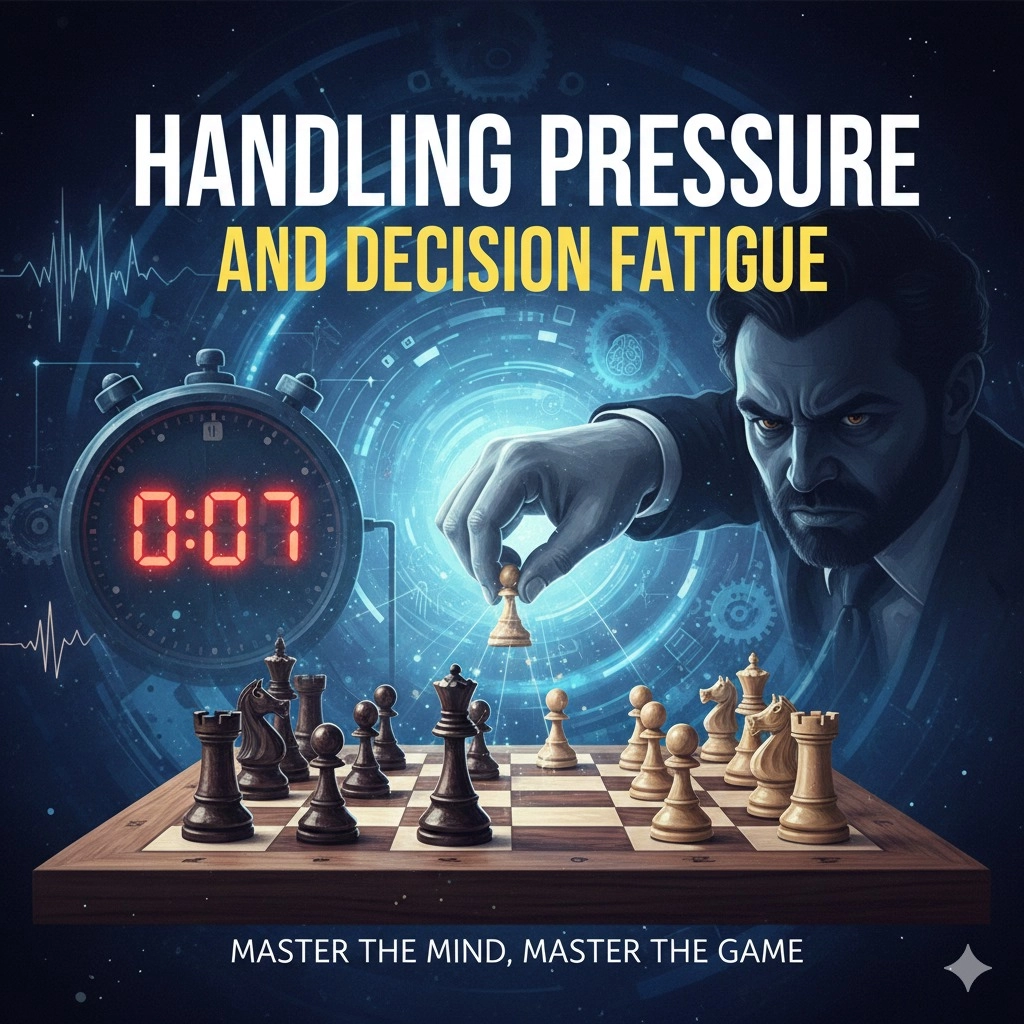
Pressure is natural in tournaments, whether it comes from the clock, the opponent, or the position on the board. Understanding how to manage pressure can help both beginners and experienced players perform better.
Why pressure affects chess performance
Under pressure, even top players sometimes miss simple tactics or forget their preparation. This happens because the brain becomes overloaded and decision-making slows down. Continuous calculation, evaluation, and planning can cause mental exhaustion, especially during long games or back-to-back rounds.
Techniques to handle pressure
Here are some practical methods that players can use:
Time management awareness
Players who manage their time well reduce unnecessary stress. Setting small time goals for each phase of the game helps avoid panic during the final moments.
Relaxation exercises
Short breathing exercises before and during the game help calm the mind. Many Indian players find that practicing yoga or meditation improves clarity.
Structured thinking
Following a clear decision-making process reduces confusion. For example:
Check threats
Identify candidate moves
Evaluate consequences
Choose the safest and strongest move
This step-by-step thinking prevents rushed decisions.
Post-game reflection
Players who review their games regularly understand their emotional patterns. This helps them identify what triggers pressure and how to avoid similar situations in the future.
Fighting decision fatigue
Decision fatigue happens when the brain becomes tired after making multiple choices. In chess, this usually occurs after 20–30 moves in a long game.
To reduce decision fatigue:
Maintain good sleep during tournaments.
Stay hydrated.
Avoid analyzing other games between rounds.
Stick to familiar openings during long events.
Trust your intuition when calculation becomes difficult.
The best chess players balance intuition and calculation to stay mentally fresh.
Chess as a powerful educational tool
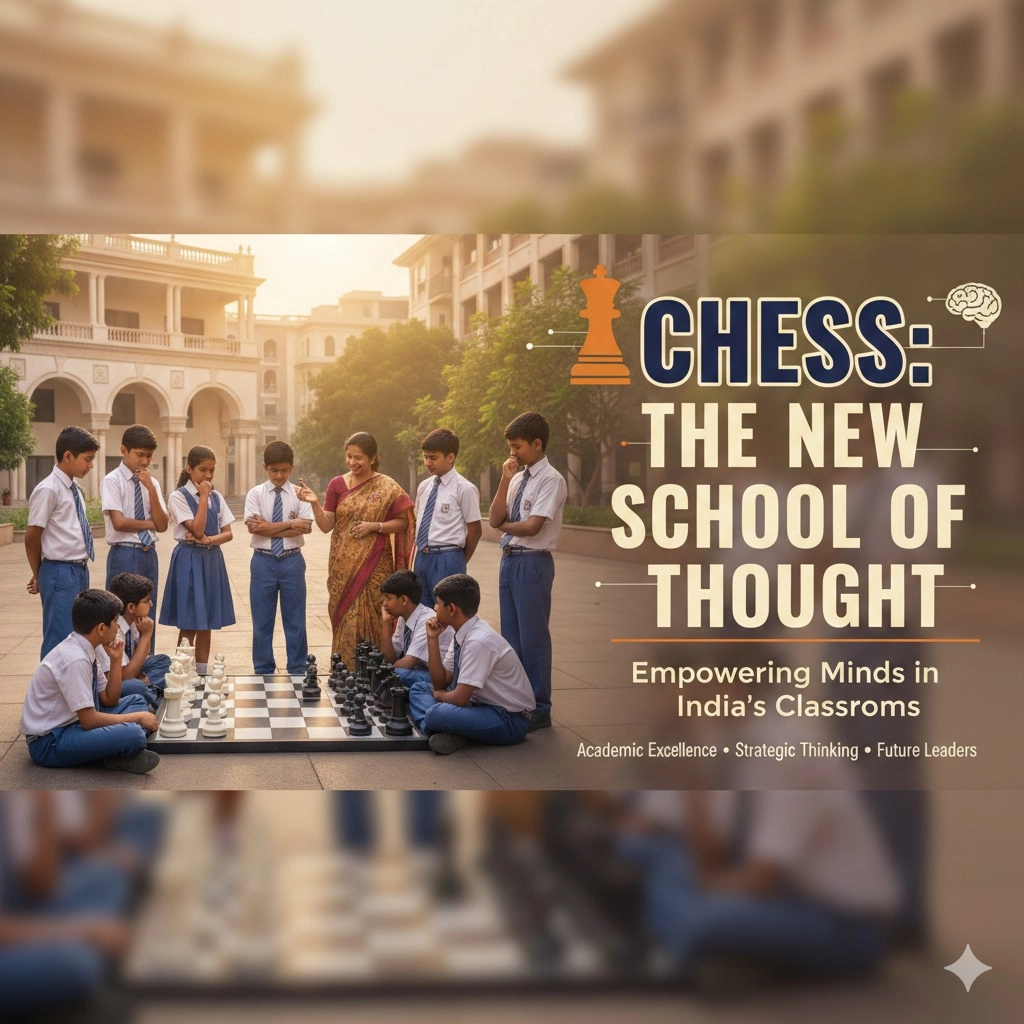
In India, more schools are now adopting chess as a part of their learning system. This is because chess supports academic performance and builds strong thinking skills.
Teaching math through chess
Chess naturally introduces children to mathematical concepts. For example:
The board teaches coordinates and grid-based thinking.
Piece movement patterns encourage geometric understanding.
Planning requires counting moves and evaluating sequences.
Endgames develop knowledge of patterns and distances.
Teachers who use chess in math classes often notice improved number sense and problem-solving abilities in students.
Enhancing logical reasoning
Logic is at the heart of every chess position. Students learn to:
Recognize patterns
Understand cause and effect
Make predictions
Test possibilities
Solve complex problems step by step
These skills are extremely useful in science, coding, robotics, and analytical subjects.
Improving problem-solving skills
Every chess move is a small problem. Students must think ahead, identify risks, and find solutions under time pressure. Over time, this builds:
Critical thinking
Strategic planning
Creativity
Adaptability
Children who practice chess regularly show better performance in academic competitions, reasoning tests, and real-life decision-making.
Designing a structured chess curriculum for schools
A structured approach helps students learn chess in a systematic manner. At Enthuziastic, we design programs that match the learning pace of students and ensure a smooth journey from beginner to advanced level.
Key components of a strong curriculum
Level-based learning
Students are grouped according to their skill levels. Each level includes specific goals, from understanding the board to mastering complex strategies.
Interactive digital lessons
Smart boards, online lessons, and video analysis make learning more engaging. Students understand concepts faster when taught with visuals and demonstrations.
Regular practice sessions
Practice is essential in chess. Daily mini-games, puzzles, and short tournaments help students apply what they learn.
Instructor support
Experienced coaches track progress, provide feedback, and help students overcome weaknesses. Personalized attention ensures steady improvement.
Tournament exposure
School-level events give students confidence and help them understand practical strategies. Participation in tournaments also builds sportsmanship and emotional maturity.
Benefits of a well-designed chess curriculum
A structured curriculum helps schools:
Improve student concentration.
Boost academic performance.
Encourage discipline and patience.
Build teamwork and leadership skills.
Create a positive and competitive learning culture.
Schools that integrate chess into their daily timetable see long-term improvements in student behaviour and decision-making abilities.
Final thoughts
Chess is one of the most effective tools to shape young minds. From enhancing psychology and emotional resilience to improving mathematical and logical skills, the game offers enormous value. With the right curriculum and expert guidance, chess can help students grow into confident, focused, and intelligent individuals.
At Enthuziastic, our mission is to create a strong community of learners who grow through real-time interaction and meaningful engagement. Chess is one of the best paths to achieve this goal. ( Enthuziastic - Global People to People Live Learning Network )
Frequently asked questions
1. Is chess difficult for beginners?
No, chess is easy to start and gradually becomes more interesting as students learn step by step. A structured curriculum makes the process smooth.
2. How does chess improve focus?
Chess requires constant attention to the board, opponent’s moves, and future plans. This naturally builds strong concentration over time.
3. Can chess help children perform better in school?
Yes. Chess improves memory, problem-solving, logic, and patience, which directly support academic subjects like math and science.
4. Do students need special coaching to learn chess?
Basic skills can be learned at school, but professional coaching helps students progress faster and perform well in tournaments.
5. How can schools include chess in their timetable?
Schools can introduce weekly chess periods, dedicated clubs, or structured programs designed by experts.
6. Is chess useful for emotional development?
Yes. Chess teaches resilience, patience, and the ability to handle pressure, which helps children manage emotions better.
7. What is the ideal age to start learning chess?
Children can start as early as 5–6 years, but people of all ages can enjoy and benefit from the game.
8. How does Enthuziastic support chess learning?
Enthuziastic provides live interactive sessions, trained instructors, structured levels, and engaging tools to help students learn effectively.
Comments