

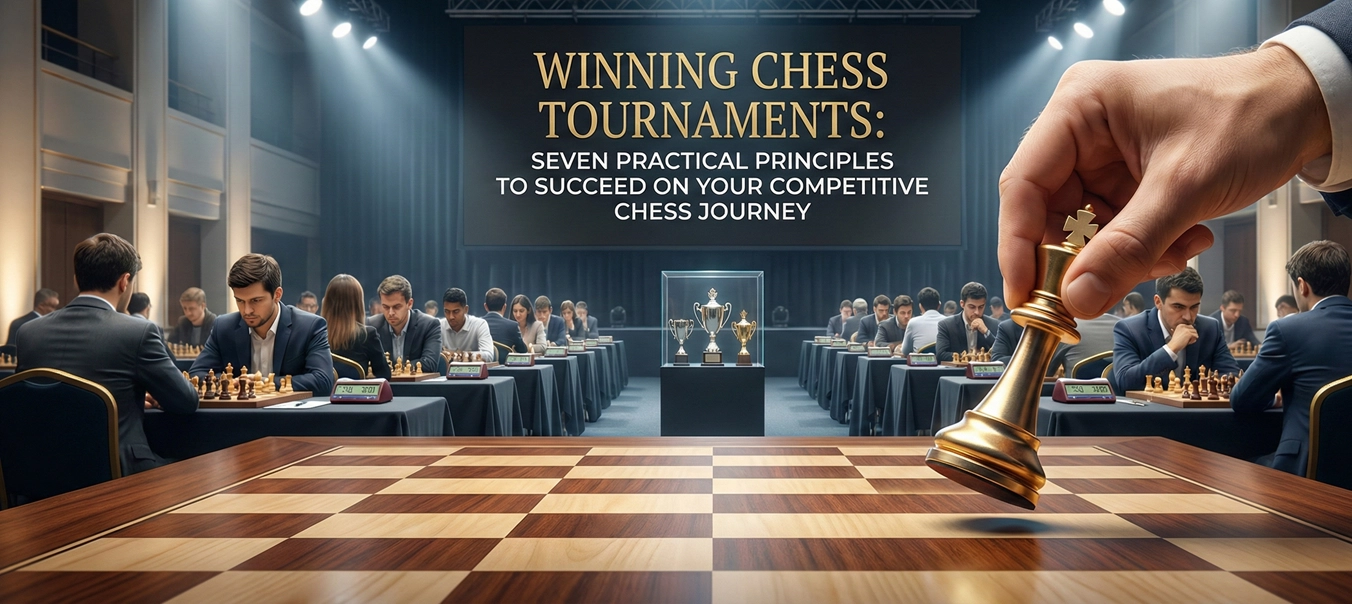
Introduction: Winning Chess and the Unique Challenge of the Tournament Hall
Imagine the scene: It is a Sunday morning in a community hall in Pune or perhaps a school auditorium in Kolkata. There is a pindrop silence, broken only by the rhythmic clicking of chess clocks and the nervous tapping of feet. Hundreds of minds are locked in battle. You are there, sitting at Board 15. You have played three rounds, won two, and lost one. Your back hurts a little, you are hungry, and your next opponent is rated 200 points higher than you.
This is the reality of tournament chess.
At Enthuziastic, we know that winning a casual game online while sipping chai is very different from performing well in a weekend Swiss league or a FIDE-rated tournament. A tournament is not a sprint; it is a marathon. It tests not just your knowledge of openings or tactics, but your physical stamina, your emotional control, and your ability to bounce back from failure.
Many players study hard but crumble during tournaments. Why? Because they prepare for the game, but they do not prepare for the event. They focus on the moves, but forget the mindset.
If you are ready to stop just "participating" and start "competing" for the top spots, you need a shift in perspective. Drawing from deep experience and the psychology of champions, we have put together seven practical principle to help you navigate the chaos of competition and succeed in 2026.
1st Principle Winning Chess Tournaments: Build Habits That Survive Pressure
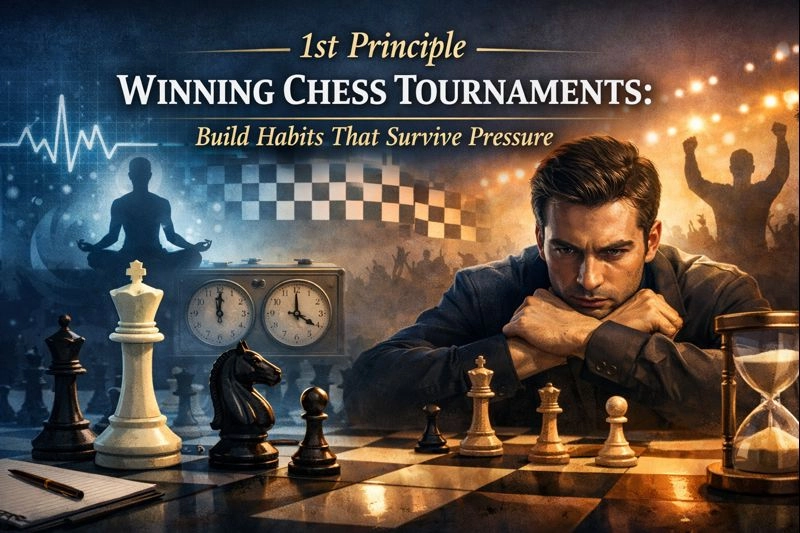
Automating Your Best Decisions Winning a tournament requires consistency over 5, 7, or 9 rounds. You cannot rely on "feeling good" every single round. You need habits that carry you when you are tired.
The Time Management Habit: Do you always spend 20 minutes on move 10? Or do you play fast? Good tournament players have a habit of checking the clock after every move. They don't have to "remember" to do it; they just do it.
The blunder-check Habit: Before every move, ask yourself: "If I go here, is my piece safe?" This sounds simple, but under tournament pressure, even 1800-rated players forget this. Make it a reflex, like looking both ways before crossing the road.
Actionable Advice: Don't try to invent a new playing style during the tournament. If you are an aggressive player, play aggressively. If you like solid positional play, stick to that. Trust the habits you built at home. The tournament hall is a place for performance, not experimentation.
Principle 2: Physical Stamina – The Engine of Your Mind
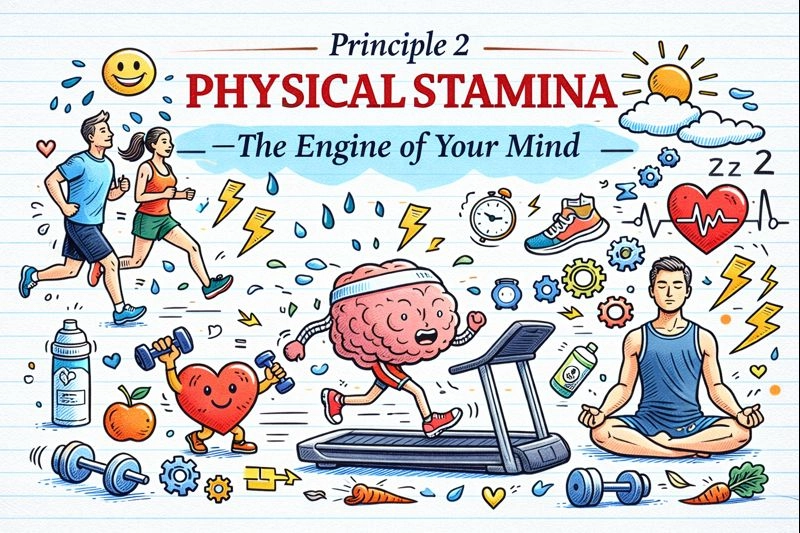
Fueling for the Long Haul Tournament success is often decided by who has more energy in the final round.
Watch Your Diet: It is very tempting to eat heavy, oily food (like chole bhature or biryani) during the lunch break because it is available near the venue. Avoid this! Heavy food makes you lethargic (sluggish). It induces a "food coma." Eat light fruits, nuts, curd rice, or a simple sandwich. Keep your blood sugar stable.
Hydration: Dehydration causes headaches and loss of concentration. Keep a water bottle at your table. Sip, don't gulp.
The "Walk" Strategy: Don't sit in your chair for 4 hours straight. When it is your opponent's turn, and you have a clear plan, stand up. Walk behind the chairs. Stretch your legs. This gets blood flowing back to your brain. Look at experienced Grandmasters; they are always pacing like tigers. They are keeping their bodies awake so their minds stay sharp.
Principle 3: The "Goldfish Memory" – Reset After Every Round
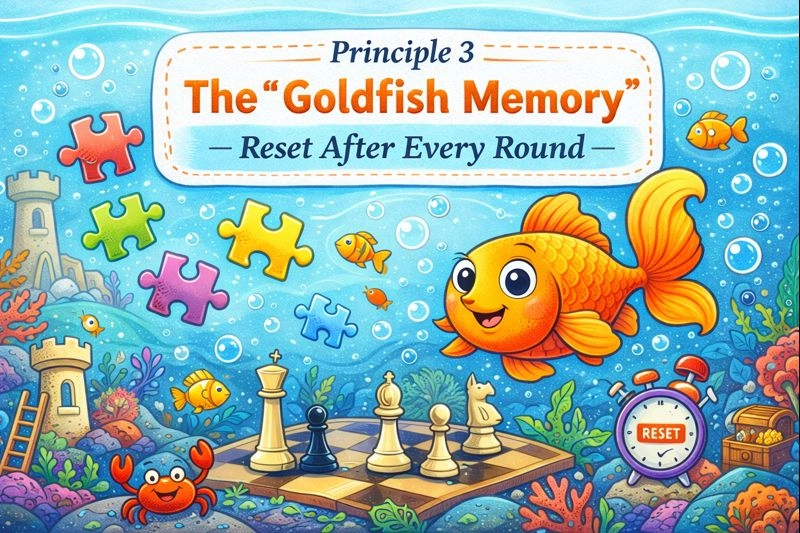
If you won: You might become overconfident. You enter the next game feeling invincible, you play carelessly, and you get punished.
If you lost: You enter the next game feeling depressed or angry. You try to "win quickly" to get revenge, and you end up losing again.
Be Like a Goldfish They say goldfish have a memory of only a few seconds (scientifically debatable, but a great metaphor!). In a tournament, be a goldfish. Once you sign the scoresheet, the game is dead. It is history. It does not exist anymore.
The Reset Ritual: Create a physical action that signifies "The End." Maybe you wash your face with cold water. Maybe you go for a 5-minute brisk walk outside the hall. Maybe you listen to one specific song. Whatever it is, use it to wipe the slate clean.
Practical Tip: Never analyze your game immediately with a computer engine during the tournament. If you see you missed a "mate in 3," it will haunt you for the rest of the day. Save the deep analysis for after the tournament is over. Between rounds, just rest.
Principle 4: Ignore the Standings – Play the Board, Not the Table
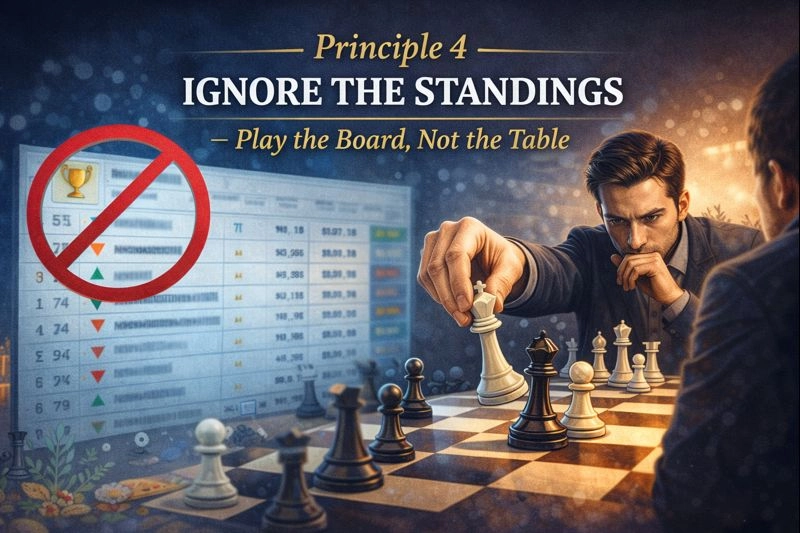
Focus on the Present Your job is to play the position in front of you. That’s it. The tournament standings are out of your control. You cannot control how others play. You can only control your pieces. At Enthuziastic, we teach our students to ignore the "Board Number." Whether you are playing on Board 1 (the top table) or Board 50, the rules of chess are the same. The Knight still moves in an L-shape. Don't let the prestige of the top tables intimidate you, and don't let the lower tables make you complacent.
Principle 5: Respect Everyone, Fear No One
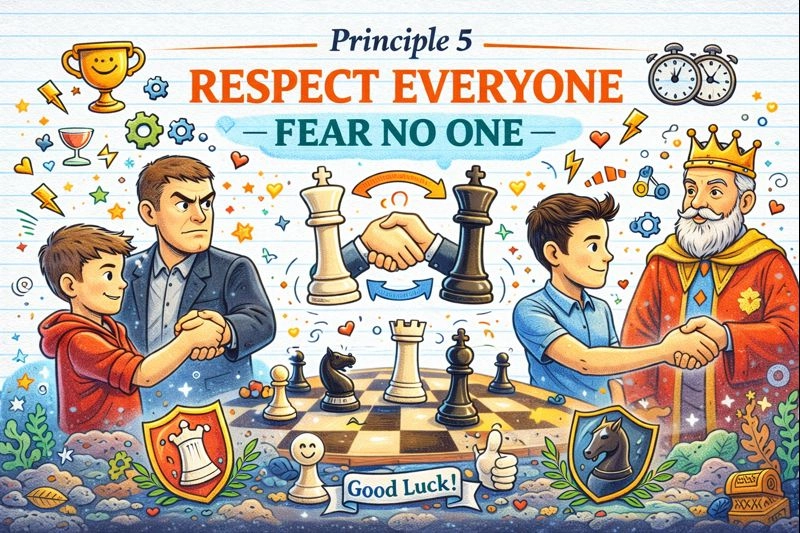
The Mistake of Fear: If you see your opponent is rated 2000 and you are 1600, do not lose the game before it starts. Do not play passively, just waiting to resign. Higher-rated players make mistakes too, especially if you put pressure on them.
The Mistake of Disrespect: If you play a lower-rated player, do not assume you will win easily. "He is only 1200, I can play anything." That is exactly when you get checkmated.
The Correct Mindset Treat every opponent as a puzzle to be solved. Do not look at their face, their age, or their rating. Look at their moves.
If they play a good move, respect it and respond carefully.
If they make a mistake, punish it ruthlessly, regardless of who they are.
There is a saying: "The chess pieces do not know your rating." Play the position, not the reputation.
Principle 6: The Game Ends Only at the Handshake
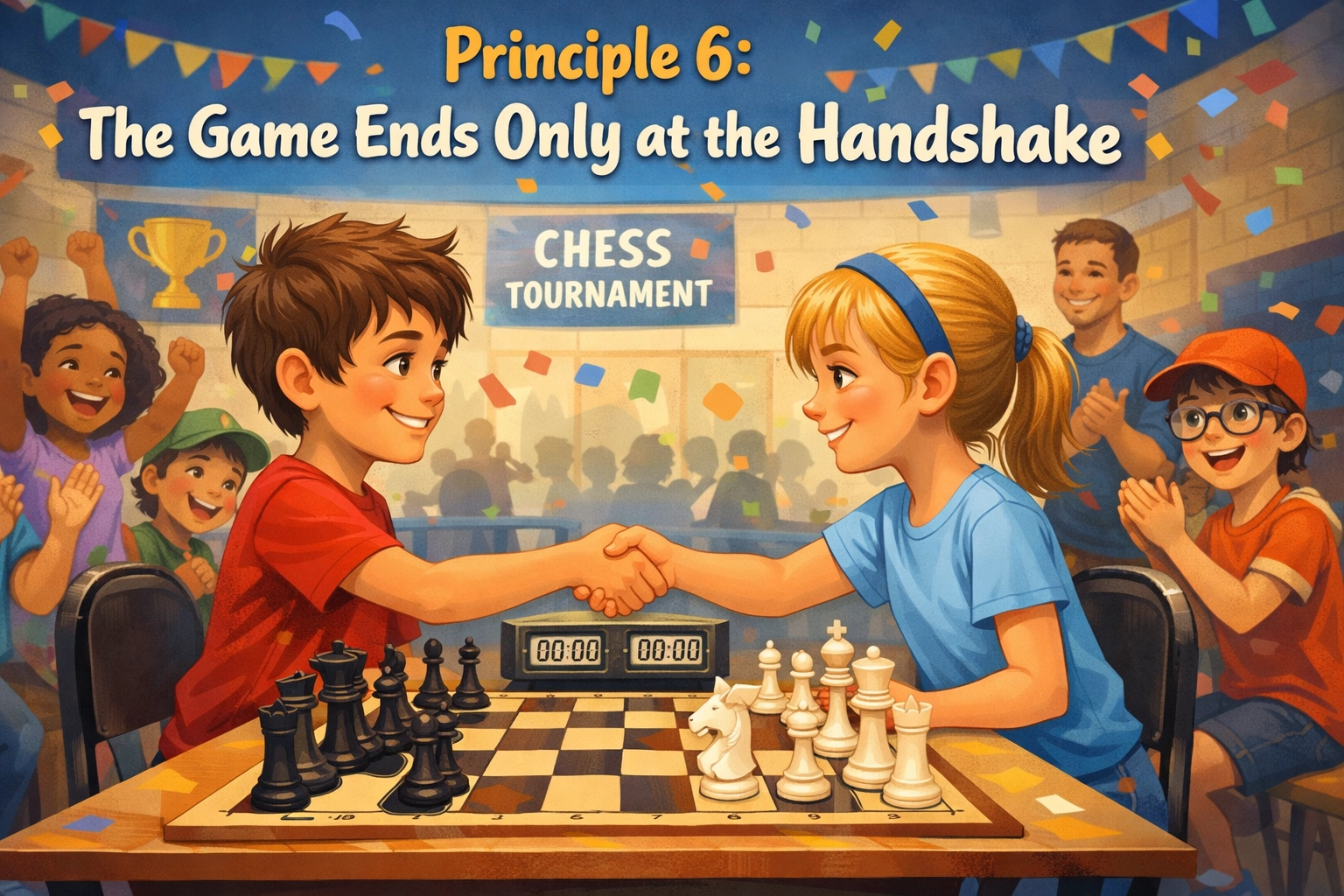
"It's Not Over Until It's Over" This is one of the most painful ways to lose points in a tournament. When you have a winning position, that is the moment of maximum danger. Your opponent has nothing to lose. They will try every cheap trick, every trap, and every desperate sacrifice to confuse you. If you relax, you will fall for it.
The "Killer" Instinct When you are winning, you must become even more focused than before. Do not play "lazy" moves. Do not play "fancy" moves to show off. Play the simplest, most brutal moves to finish the game. Imagine you are nailing a door shut. You don't put the nail halfway in and walk away. You hammer it all the way down.
Rule: Do not get up from the board when you are winning. Sit there. Focus. Calculate. Wait until your opponent shakes your hand before you let your guard down.
Principle 7: Trust Your Intuition and Confidence
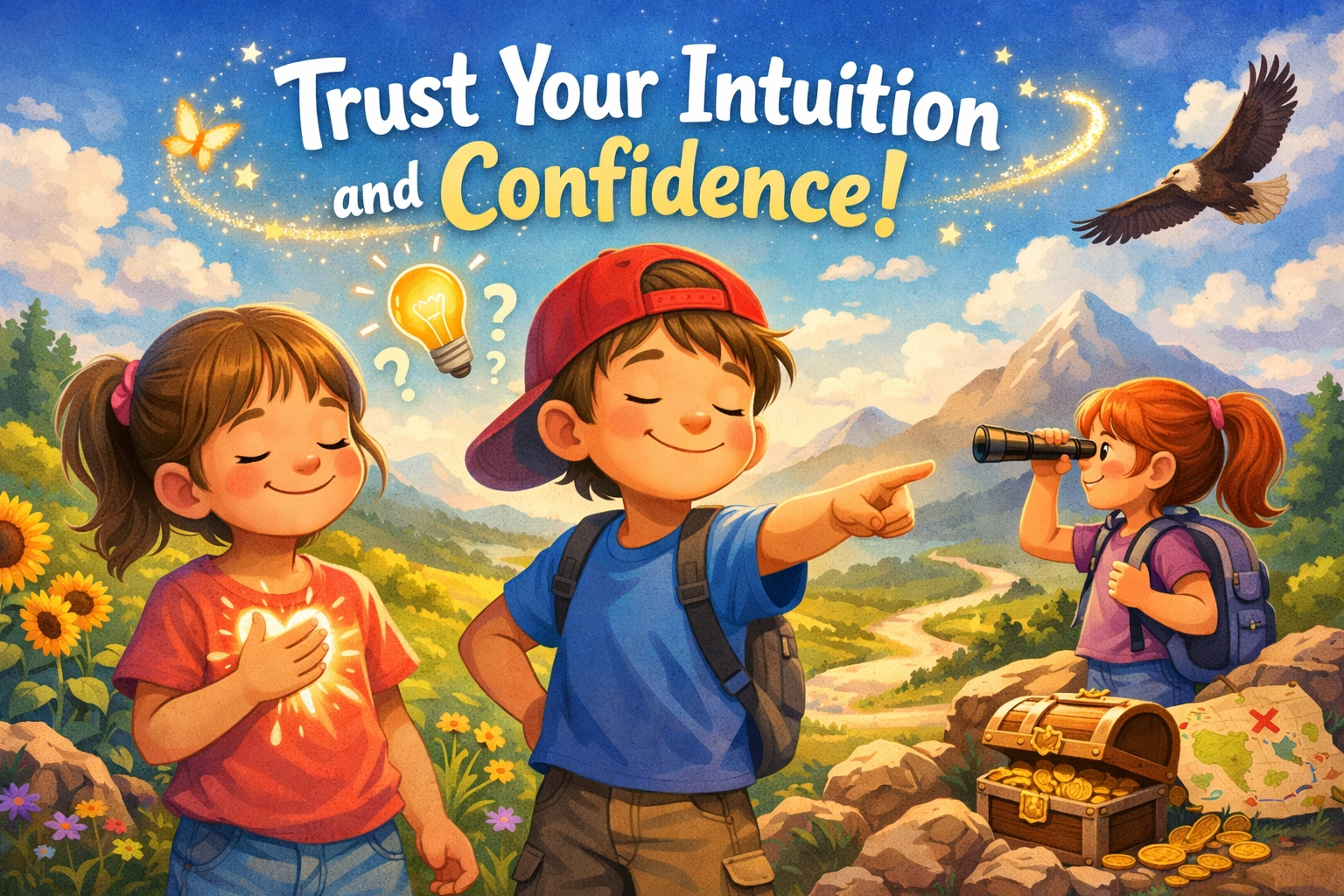
Back Yourself You have trained for this. You have solved hundreds of puzzles on Enthuziastic or other platforms. Your subconscious mind recognizes patterns faster than your conscious mind can explain them. Sometimes, a move just "looks" right. If you have calculated it and don't see a refutation, play it!
Fake It Till You Make It: Even if you feel nervous, sit confidently. Posture matters. If you slump in your chair and look scared, your opponent senses it and gains confidence. If you sit straight and look calm, your opponent might second-guess their own attacks.
Confidence is a Weapon Your opponent is also human. They are also nervous. If you play with confidence and move your pieces with authority, you put pressure on them. Winning tournaments is 50% skill and 50% convincing your opponent that you are going to win.
Conclusion: Your Journey Beyond the Board
Winning a chess tournament is a beautiful achievement. But remember, the trophy is just a piece of metal or plastic. The real victory lies in the person you become during the process. Did you stay calm under pressure? Did you recover from a painful loss? Did you focus when you were exhausted? These are the skills that stay with you for life, long after the tournament is over.
In 2026, approach your tournaments with this new mindset.
Prepare your habits.
Respect your body.
Control your emotions.
Focus on the present.
At Enthuziastic, we are here to support that journey. We believe every player has a champion inside them waiting for the right guidance. Whether you are playing your first district tournament or aiming for a state championship, remember: The strongest move is always the one made with a clear mind and a brave heart.
Go out there, play your best, and let the results follow. Good luck, and checkmate!
Frequently Asked Questions (FAQs)
1. How should I prepare the night before a tournament? The most important preparation the night before is sleep. Do not study openings until 2 AM. Your brain needs rest to calculate well the next day. Pack your bag (water, snacks, pens, clock if needed) so you don't panic in the morning. Relax, listen to music, and sleep early.
2. What should I do if I lose the first two rounds? Should I withdraw? Never withdraw! Losing the first few rounds is tough, but it puts you in a lower score bracket, meaning you will face easier opponents next. This is a great chance to build confidence and score a winning streak. Treat the remaining games as a fresh start. Finishing a tournament despite a bad start builds massive mental strength.
3. How do I handle "Time Trouble" (low time on the clock)? Panic is the enemy. When you are low on time, stop trying to find the "perfect" move. Look for a "good enough" move that is safe. Keep your King safe, don't hang pieces, and play practically. Practicing blitz chess at home can help you get used to thinking faster.
4. Is it okay to offer a draw if I am tired? This is a personal choice, but generally, at the amateur level, you should fight. You learn much more from playing a position out than from agreeing to a quick draw. Only offer a draw if the position is truly dead equal and there is no play left. Don't offer a draw just because you are afraid of losing.
5. How do I deal with a noisy tournament hall? Indian tournament halls can be noisy people talking, traffic sounds outside, fans whirring. If you are sensitive to noise, you can ask the arbiter if earplugs are allowed (some tournaments allow non-electronic earplugs). Otherwise, practice concentrating in slightly noisy environments at home so you get used to it.
6. My opponent is staring at me and making me uncomfortable. What should I do? In chess psychology, some players try to intimidate you. Ignore them. Look at the board, not their eyes. If they are doing something against the rules (like kicking you under the table or making annoying sounds), politely ask them to stop. If they continue, pause the clock and call the arbiter immediately.
7. How much gap should I keep between eating and playing? Try to finish your meal at least 45 minutes to 1 hour before the round starts. This gives your body time to digest so the blood can go to your brain when the game begins.
8. How can Enthuziastic help me prepare for tournaments? At Enthuziastic, we don't just teach moves; we teach match temperament. Our mentors simulate tournament conditions, help you analyze your psychological weaknesses, and provide a community of peers to practice with. We turn chess students into chess competitors.

Comments